

Soft, creamy, and carrying the sweet whispers of Southeast Asia, Thai Coconut Custard is a dessert that dances on the palate with every silky spoonful. Experience the Sweet Harmony of Thai Coconut Custard as you indulge in layers of velvety custard infused with tropical coconut milk and the delicate fragrance of vanilla. This dish brings together humble ingredients—eggs, palm sugar, and a hint of pandan leaf—to create something truly special. The gentle sweetness of palm sugar lends a caramel-like depth, while coconut milk wraps everything in a lush, tropical embrace. Whether you’re new to Asian sweets or a seasoned home cook looking for a fresh twist on classic custard, this recipe offers a delightful balance of flavor and texture.
Beyond its delicious taste, this custard is surprisingly simple to prepare. With a beginner-friendly difficulty level, you’ll spend just 15 minutes on prep work before letting the oven work its magic for about an hour. After a 30-minute rest, you’re rewarded with a smooth, firm custard that holds its shape beautifully—perfect for serving in individual ramekins or as part of a larger family-style dish. At roughly 300 calories per serving, it’s a decadent treat that still feels light and refreshing. Get ready to transform everyday ingredients into an elegant dessert that’s sure to impress.
KEY INGREDIENTS IN THAI COCONUT CUSTARD
Before diving into the step-by-step process, let’s explore the stars of this recipe. Each ingredient plays a vital role in creating the perfect balance of sweetness, creaminess, and aroma. Understanding their individual contributions will help you customize the custard to your taste and ensure a flawless result every time.
- Eggs
Provide structure and richness. When gently beaten, eggs give the custard its smooth, set texture without becoming rubbery.
- Coconut milk
Brings tropical creaminess and subtle sweetness. Its high-fat content creates that signature silky mouthfeel and enriches the overall flavor.
- Palm sugar
Imparts a deep, caramel-like sweetness with hints of molasses. Using palm sugar is traditional, but brown sugar works as a convenient substitute.
- Salt
Enhances the sweetness and balances the flavors. A small amount ensures the custard tastes rounded rather than cloying.
- Vanilla extract
Adds warmth and aromatic sweetness. A teaspoon elevates the custard with delicate vanilla notes that complement the coconut.
- Pandan leaves
Offer a fragrant, floral aroma when placed at the bottom of the baking dish. Optional, but they infuse a subtle, exotic scent.
- Sticky rice
Creates a layered dessert when soaked, drained, and spread at the bottom of the dish. It absorbs coconut custard, adding chewiness and textural contrast.
HOW TO MAKE THAI COCONUT CUSTARD
Now that we’ve covered the essentials, let’s walk through the process of turning these ingredients into a luscious custard. Each step ensures a smooth texture and perfect bake.
1. Preheat your oven to 350°F (175°C). If using, place the pandan leaves at the bottom of a baking dish or individual ramekins to infuse the custard with their aromatic fragrance while baking.
2. In a mixing bowl, gently beat the eggs until they are well combined and pale. This gentle mixing helps avoid incorporating too much air, which can cause unwanted bubbles.
3. Add the coconut milk, palm sugar, salt, and vanilla extract to the beaten eggs. Mix gently but thoroughly until the sugar has fully dissolved and the mixture is homogenous, ensuring a uniform sweetness throughout.
4. Pour the mixture through a fine sieve into another bowl or large measuring cup to remove any small egg lumps. This step guarantees an ultra-smooth custard.
5. If desired, spread an even layer of sticky rice at the bottom of your baking dish or ramekins. The rice will absorb the custard’s flavor, creating a delightful chewy bottom layer.
6. Carefully pour the custard mixture over the sticky rice or directly into the baking dish, taking care not to disturb the rice layer if used.
7. Place the dish in a larger baking pan and fill the pan with hot water until it reaches halfway up the sides of the custard dish or ramekins. This water bath (bain-marie) ensures gentle, even cooking, preventing the custard from cracking.
8. Bake in the preheated oven for 45 minutes to 1 hour, or until the custard is set and a knife inserted into the center comes out clean, indicating it’s perfectly cooked through.
9. Remove the dish from the water bath and let it cool to room temperature before serving. For a firmer texture, chill the custard in the refrigerator for at least 30 minutes.
SERVING SUGGESTIONS FOR THAI COCONUT CUSTARD
Once your Thai Coconut Custard is perfectly set, serving it in a way that highlights its creamy texture and vibrant flavors can elevate the entire experience. This section offers creative ideas to showcase the custard and enhance its tropical character, whether you’re hosting a dinner party or simply indulging in a quiet evening treat.
- Warm with Fresh Fruit
Serve the custard slightly warm alongside slices of ripe mango, pineapple, or papaya. The fruit’s bright acidity and sweetness contrast beautifully with the rich, creamy custard.
- Toasted Coconut Topping
Sprinkle a handful of toasted coconut flakes over the top just before serving to add a satisfying crunch and an extra layer of coconut flavor.
- Layered Dessert Cups
In clear glasses, alternate layers of cubed custard, sweet sticky rice, and diced tropical fruit. The visual appeal and different textures will impress your guests.
- Drizzled Palm Sugar Syrup
Warm some extra palm sugar with a splash of water to create a quick syrup. Drizzle over each serving for intensified caramel notes and a glossy finish.
HOW TO STORE THAI COCONUT CUSTARD
Proper storage ensures your custard stays fresh and maintains its signature silky texture. Whether you have leftover servings or want to prepare in advance, these tips will help you preserve flavor and quality.
- Refrigeration
Once completely cooled, cover the custard dish or individual ramekins with plastic wrap or an airtight lid. Store in the refrigerator for up to 3 days. This method keeps the texture firm and the flavors well-preserved.
- Individual Portions
Divide the custard into small, sealed mason jars or containers. This makes grab-and-go desserts easy and prevents cross-contamination of flavors in your fridge.
- Gentle Reheating
If you prefer a warm custard, reheat individual portions in the microwave for 10–15 seconds on low power, checking frequently to avoid overheating and curdling.
- Avoid Freezing
Freezing is not recommended, as it can alter the custard’s smooth texture and cause water separation upon thawing. For best results, enjoy fresh or refrigerated.
CONCLUSION
Thai Coconut Custard brings together simple, accessible ingredients to create a dessert that feels both exotic and comforting. From the creamy coconut milk and rich egg custard to the subtle caramel notes of palm sugar and the optional chew of sticky rice, each element plays its part in a harmonious symphony of flavors. This recipe is perfect for beginners, requiring just 15 minutes of active prep and an hour in the oven, followed by a brief rest. You’ll find that with a little patience and attention to detail—like passing the mixture through a fine sieve and baking in a water bath—you can achieve professional-quality results at home. Whether you’re entertaining guests or treating yourself after a long day, this custard makes for a stunning end to any meal.
Feel free to print this article and save it for later reference. You can also find a FAQ section below to answer any lingering questions about ingredients, variations, or troubleshooting. If you try this recipe, I would love to hear how it turned out! Leave a comment, share your own tips, or let me know if you have any questions or feedback. Happy cooking, and enjoy every creamy, coconut-kissed bite of your homemade Thai Coconut Custard!
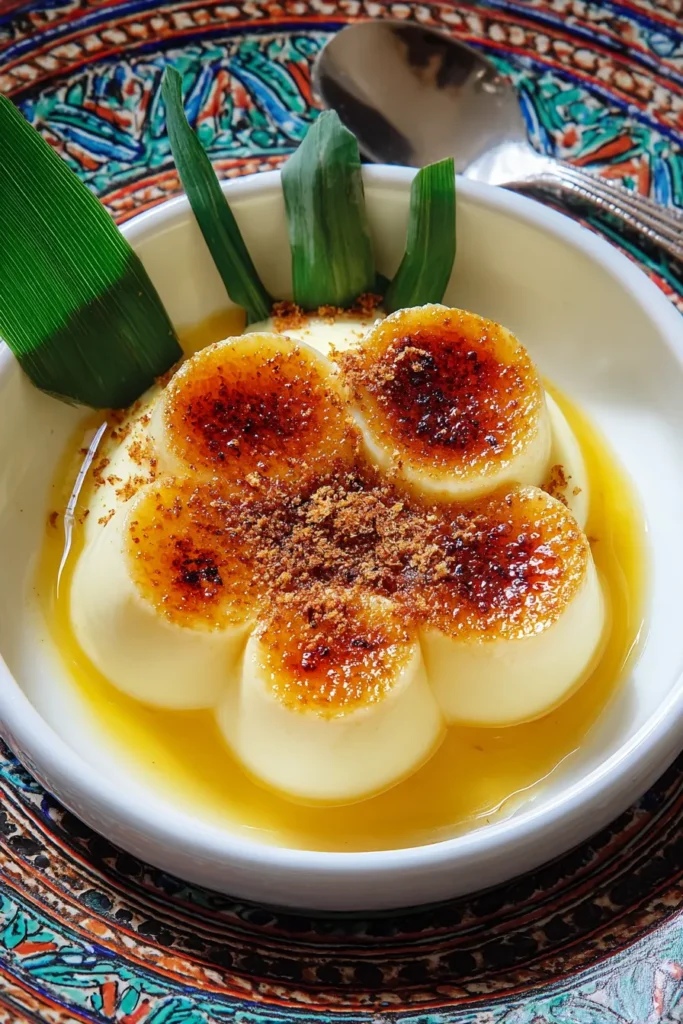

Thai Coconut Custard
Description
This Thai Coconut Custard is a rich, creamy dessert infused with coconut and a hint of vanilla, creating a delightful treat that’s both satisfying and refreshing.
Ingredients
Instructions
-
Preheat your oven to 350°F (175°C). If using, place the pandan leaves at the bottom of a baking dish or individual ramekins.
-
In a mixing bowl, gently beat the eggs until well combined.
-
Add the coconut milk, palm sugar, salt, and vanilla extract to the eggs. Mix gently but thoroughly until the sugar has dissolved and the ingredients are well incorporated.
-
Pour the mixture through a fine sieve to ensure a smooth custard texture, removing any egg lumps.
-
If desired, spread an even layer of sticky rice at the bottom of your baking dish or ramekins before adding the custard mixture.
-
Carefully pour the custard mixture over the sticky rice or directly into the baking dish.
-
Place the dish in a larger baking pan and fill the pan with hot water to halfway up the sides of the dish or ramekins to create a water bath.
-
Bake in the preheated oven for 45 minutes to 1 hour, or until the custard is set and a knife inserted into the center comes out clean.
-
Remove the dish from the water bath and let it cool to room temperature before serving; it can also be chilled in the refrigerator for a firmer texture.
Nutrition Facts
Serving Size 6
- Amount Per Serving
- Calories 67kcal
Note
- The pandan leaves are optional but add a unique, fragrant aroma to the custard.
- For a creative variation, add some mung beans or taro pieces over sticky rice.
- Palm sugar brings a unique caramel-like flavor, making the custard distinctively Thai.
- For a healthier alternative, consider using light coconut milk or a sugar substitute.

