

Every mouthwatering bite of Kung Pao Chicken Noodles transports you straight to the bustling streets of Sichuan, where heat and sweet mingle in perfect harmony. Soft rice noodles become the stage for tender pieces of chicken, each morsel coated in a glossy, spicy-sweet glaze that shimmers under the bright bell peppers. You’ll taste a subtle tang from rice vinegar, a deep umami note from hoisin and soy sauce, and that signature tingle of Sichuan peppercorns dancing on your tongue. Add toasted peanuts for a satisfying crunch, and you have a dish that’s equal parts comforting and exhilarating.
This recipe isn’t just a meal—it’s a conversation starter. I still recall the first time I whipped up these vibrant noodles after a long day in the kitchen. The garlic and ginger hit the hot oil with a sizzle, releasing waves of fragrant steam, while dried chilies popped and darkened in the wok. As the sauce thickened, I felt like a culinary alchemist, watching ordinary pantry staples transform into something extraordinary. Whether you’re cooking for friends or simply craving a weeknight pick-me-up, these Kung Pao Chicken Noodles promise both flavor fireworks and that cozy, homemade magic that keeps you coming back for seconds.
KEY INGREDIENTS IN KUNG PAO CHICKEN NOODLES
Before diving into the wok, it’s essential to gather the heart and soul of this recipe. Each ingredient lends its own personality: the noodles soak up every drop of sauce, the peppers add brightness and bite, and the peanuts bring a toasty counterpoint. Together, they create a symphony of textures and tastes that elevates simple chicken and rice noodles into a memorable feast.
- Rice noodles: Silky and delicate, these noodles absorb the vibrant sauce beautifully. They serve as the base, carrying every nuance of flavor to your taste buds.
- Vegetable oil: A neutral cooking oil that withstands high heat, ensuring the chicken and aromatics fry up without burning.
- Boneless, skinless chicken breast: Lean and tender, these bite-sized pieces soak up the sauce and develop a golden-brown crust when stir-fried.
- Red bell pepper: Adds a sweet crunch and vivid color, balancing the dish’s spiciness with its natural sugars.
- Green bell pepper: Brings a fresh, slightly bitter note and additional texture that complements the red pepper.
- Unsalted whole peanuts: Provide a nutty crunch and roasted depth, enhancing the overall mouthfeel.
- Garlic: Infuses the oil with pungent, savory heat, creating a robust flavor foundation.
- Ginger: Adds warmth and a subtle bite, harmonizing perfectly with the garlic.
- Scallions: The white parts deliver a mild onion aroma during cooking, while the green tops add a fresh finish when sprinkled on.
- Soy sauce: Contributes umami richness and savory saltiness, tying all elements together.
- Hoisin sauce: Imparts sweet, tangy complexity, deepening the sauce’s flavor profile.
- Rice vinegar: Offers a bright, acidic lift that cuts through the richness and balances the spiciness.
- Sesame oil: Just a touch at the end adds a fragrant, nutty aroma.
- Cornstarch slurry: Thickens the sauce, ensuring it clings to every noodle and piece of chicken.
- Sichuan peppercorns: Lightly crushed, these deliver that iconic, numbing tingle that distinguishes Sichuan cuisine.
- Dried red chilies: Infuse the oil with heat and color, letting you control the spice level.
- Sugar: Rounds out the flavors by adding sweetness that tempers the heat.
- Salt and pepper: Adjusted to taste, these seasonings ensure each component shines at its best.
HOW TO MAKE KUNG PAO CHICKEN NOODLES
Let’s get cooking! In this section, you’ll follow a straightforward sequence of stir-frying and tossing to achieve the ideal balance of textures and flavors. Each step highlights the importance of timing and heat control, ensuring your noodles stay tender and your vegetables crisp.
1. Cook the rice noodles according to package instructions. Drain well and set aside in a warm bowl to prevent sticking.
2. Heat 1 tablespoon of vegetable oil in a large pan or wok over medium-high heat. Season the chicken pieces with salt and pepper, then add them to the hot oil. Stir-fry until they are cooked through and golden brown, about 5–7 minutes. Transfer to a plate and set aside.
3. In the same pan, add the remaining tablespoon of oil. Add the minced garlic, ginger, and the white parts of the scallions. Sauté for about 1 minute, stirring constantly, until fragrant.
4. Sprinkle in the crushed Sichuan peppercorns and dried red chilies. Stir-fry for 1–2 minutes, allowing the chilies to darken slightly and infuse the oil with heat.
5. Add the chopped red and green bell peppers. Continue stir-frying for 3–4 minutes until the peppers are vibrant and slightly tender but still crisp.
6. Return the chicken to the pan, along with the cooked rice noodles. Pour in the soy sauce, hoisin sauce, rice vinegar, sesame oil, and the cornstarch slurry. Toss vigorously to combine, ensuring every strand of noodle and piece of chicken is coated.
7. Stir in the peanuts and sugar. Keep stirring until the sauce begins to thicken, about 1–2 minutes.
8. Allow everything to cook together for another 2–3 minutes, giving the ingredients time to meld and the sauce to cling.
9. Remove from heat and garnish with the green parts of the scallions before serving.
SERVING SUGGESTIONS FOR KUNG PAO CHICKEN NOODLES
Once your Kung Pao Chicken Noodles are ready, consider how you present them to maximize enjoyment. Whether you want a family-style dinner or a plated masterpiece, these tips will ensure your guests marvel at both flavor and flair.
- Serve in a deep bowl to help trap warmth and showcase the colorful peppers and peanuts on top, making every bite visually appealing.
- Pair with a side of lightly dressed cucumber salad to cleanse the palate between spicy bites and add a refreshing crunch.
- Garnish with a sprinkle of toasted sesame seeds and extra scallion greens for an elegant finish and a boost of aroma.
- Offer chilled Asian lager or jasmine tea alongside to soothe the heat and highlight the complex spice-and-nutty notes.
HOW TO STORE KUNG PAO CHICKEN NOODLES
If you have leftovers (and who doesn’t?), proper storage will keep the noodles tasting almost as fresh as the moment they came off the wok. Follow these methods to preserve flavor, texture, and safety.
- Refrigerate in an airtight container within two hours of cooking. This prevents moisture loss and keeps the noodles from drying out. Consume within 3–4 days.
- For longer storage, freeze portions in freezer-safe bags, removing as much air as possible. Thaw overnight in the refrigerator before reheating to maintain texture.
- When reheating, use a hot skillet with a splash of water or oil to prevent sticking and revive the crispness of the vegetables.
- Store the sauce and noodles separately if you anticipate longer storage. Combine only before serving to avoid sogginess and preserve freshness.
CONCLUSION
We’ve journeyed through every step of creating these vibrant Kung Pao Chicken Noodles, from gathering the bold ingredients to mastering the stir-fry technique that locks in heat and texture. This dish offers a burst of color, flavor, and contrast in every forkful: tender chicken, crunchy peanuts, crisp peppers, and noodles enrobed in a spicy-sweet sauce. Whether you’re a seasoned home cook or a newcomer to Sichuan cuisine, this recipe welcomes experimentation—tweak the chilies to suit your palate or swap in crunchy snap peas and tofu for a personalized twist. Don’t forget to score this page with a quick print or save it to your recipe collection for future weeknight dinners that feel special yet are ready in just 35 minutes.
Feel free to leave comments below if you tried this recipe or have questions about technique, ingredients, or serving ideas. Your feedback helps me and your fellow home cooks keep improving and sharing the joy of flavorful, approachable cooking. A handy FAQ follows this article for more tips, substitutions, and troubleshooting—be sure to check it out. Happy cooking, and here’s to many delicious bowls of Kung Pao Chicken Noodles in your future!
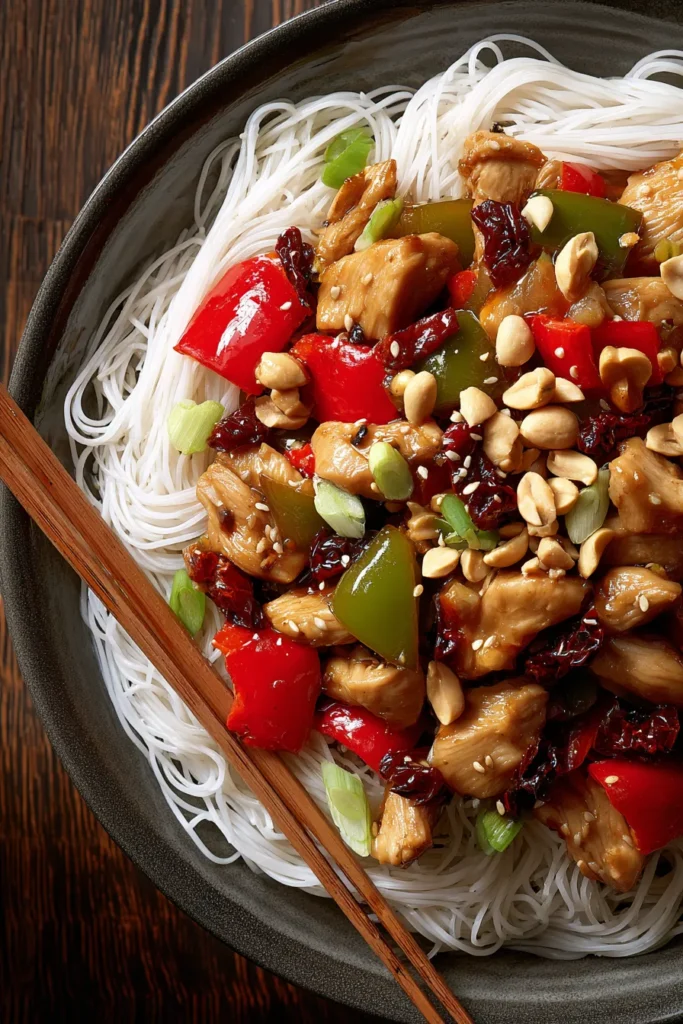

Kung Pao Chicken Noodles
Description
Bright bell peppers, tender chicken, and crunchy peanuts come together in this flavorful dish, all tossed with rice noodles and a spicy-sweet sauce that will tantalize your taste buds.
Ingredients
Instructions
-
Cook the rice noodles according to package instructions. Drain and set aside.
-
Heat 1 tablespoon of vegetable oil in a large pan or wok over medium-high heat. Add the chicken pieces and season with salt and pepper. Stir-fry until cooked through and golden brown. Remove the chicken from the pan and set aside.
-
In the same pan, add the remaining tablespoon of oil. Stir in the minced garlic, ginger, and white parts of the scallions. Sauté for about 1 minute until fragrant.
-
Add the Sichuan peppercorns and dried red chilies. Stir-fry for 1-2 minutes until the chilies darken slightly.
-
Add the chopped bell peppers and continue stir-frying for 3-4 minutes, until the peppers are slightly tender.
-
Return the chicken to the pan. Add the cooked rice noodles and pour in the soy sauce, hoisin sauce, rice vinegar, sesame oil, and the cornstarch water mixture. Stir well to combine everything evenly.
-
Stir in the peanuts and the sugar. Allow the sauce to thicken, stirring continuously to prevent sticking.
-
Cook for another 2-3 minutes, allowing all the ingredients to meld together and the sauce to coat the noodles thoroughly.
-
Garnish with the green parts of the scallions before serving.
Nutrition Facts
Serving Size 4
- Amount Per Serving
- Calories 150kcal
Note
- For an authentic flavor, toast the Sichuan peppercorns lightly before crushing.
- Adjust the number of dried chilies to suit your spice preference.
- Feel free to substitute chicken with tofu for a vegetarian option.
- Add other vegetables of your choice, such as broccoli or snap peas, for extra nutrition.
- Make sure to stir-fry quickly over high heat to preserve the crisp texture of the vegetables.

