

The first time I discovered Korean spinach side dish, Sigeumchi Namul, I was blown away by how simple ingredients could deliver such vibrant flavor. Bright green spinach leaves get a quick blanch, then are dressed in a savory mix of soy sauce, fragrant sesame oil, pungent garlic, and nutty sesame seeds. This humble banchan instantly became one of my go-to recipes for busy weeknights and special gatherings alike. It’s astonishing how in just under 15 minutes you can transform a bundle of leafy greens into an irresistible side dish that elevates any meal.
What really makes Sigeumchi Namul shine is its balance of textures and tastes—the tender but slightly crisp spinach, the crunchy sesame seeds, the subtle sweetness from a pinch of sugar, and that finishing touch of fresh green onion. Whether you’re a seasoned home cook or a culinary newbie, this recipe welcomes you with open arms. The straightforward method means you can chop, blanch, dress, and serve with minimal fuss, leaving you more time to savor the company at your table. Plus, it’s a fabulous way to sneak more greens into your diet without sacrificing an ounce of flavor.
I still remember the first time I whipped up a batch for friends during a cozy dinner party. As I drained the vibrant spinach into a colander and felt its warmth in my hands, the kitchen was filled with an electric anticipation. Moments later, watching everyone reach for that little bowl of seasoned spinach—some piling it onto rice bowls, others enjoying it solo—reminded me why I fell in love with Korean cooking in the first place. That night I shared stories of my travels in Seoul, the bustling markets, and the joy of discovering new banchan at neighborhood eateries.
From that point on, Sigeumchi Namul became more than just a recipe; it was a conversation starter, a bridge between cultures, and a gentle nudge to try something new. Whether you’re serving it alongside juicy bulgogi, layering it into bibimbap, or keeping it wholesome in a vegan spread, this spinach side dish always delivers. So roll up your sleeves, grab that bunch of spinach, and let’s dive into one of the easiest, most delightful Korean banchan you’ll ever make.
KEY INGREDIENTS IN KOREAN SPINACH SIDE DISH SIGEUMCHI NAMUL
Before we dive into the cooking steps, let’s meet the cast of characters that bring Sigeumchi Namul to life. Each ingredient plays its own starring role, contributing to the dish’s vibrant color, texture, and harmonious blend of flavors.
- Fresh spinach
Tender yet slightly crunchy when blanched, spinach serves as the base of this side dish. Its bright green hue and delicate leaves offer a nutritious canvas for the savory seasoning.
- Soy sauce
This umami-rich seasoning adds depth and a savory backbone to the spinach, balancing the freshness of the greens with a salty kick.
- Sesame oil
A little drizzle of sesame oil infuses the dish with its signature nutty aroma and smooth mouthfeel, instantly elevating those simple spinach leaves.
- Garlic
Freshly minced garlic brings a sharp, pungent bite that cuts through the richness of sesame oil and adds complexity to each mouthful.
- Sesame seeds
These tiny seeds add a delightful crunch and subtle pop of roasted flavor, boosting both the texture and visual appeal of the dish.
- Salt
A pinch of salt rounds out all the flavors, ensuring the spinach doesn’t taste flat and keeps everything in perfect balance.
- Sugar (optional)
A touch of sugar lightly sweetens the savory marinade, creating a more rounded flavor profile and counteracting any bitterness.
- Green onion
Finely chopped, green onion offers a fresh, oniony bite and bright color contrast, lifting the overall presentation and taste.
HOW TO MAKE KOREAN SPINACH SIDE DISH SIGEUMCHI NAMUL
Now that our ingredients are lined up and ready, let’s bring them together to create this effortless and delicious Korean side dish. Follow these steps closely to achieve that perfectly seasoned spinach with vibrant color and balanced flavors:
1. Rinse the spinach thoroughly in cold water to remove any dirt or grit. Gently swish the leaves around, shaking off excess debris, and repeat until the water runs clear.
2. Bring a large pot of water to a rolling boil over high heat. Once boiling, carefully lower the spinach into the pot using tongs or a spider strainer and blanch the leaves for about 30 seconds, just until they turn bright green.
3. Immediately transfer the spinach to a bowl of ice water to stop the cooking process and lock in that vibrant color. Let it chill for a minute or two, ensuring the leaves cool completely.
4. Once the spinach is cool, drain it well in a colander and then place it on a clean towel. Gently squeeze out excess water by hand, being careful not to crush the delicate leaves.
5. Place the squeezed spinach in a mixing bowl, and add the soy sauce, sesame oil, minced garlic, sesame seeds, salt, sugar (if using), and finely chopped green onion.
6. Toss all the ingredients gently using your hands or salad tongs, making sure each leaf is thoroughly coated with the flavorful marinade.
7. Serve immediately for the best freshness, or cover and chill in the refrigerator for up to a few hours to let the flavors meld even further.
SERVING SUGGESTIONS FOR KOREAN SPINACH SIDE DISH SIGEUMCHI NAMUL
Bringing Sigeumchi Namul to the table opens up a world of serving possibilities. Its bright green color and bold flavors make it an eye-catching addition to any spread. Whether you’re planning a full Korean feast or just a simple weeknight dinner, these ideas will help you present this dish in style and keep your guests coming back for more.
- Classic Banchan: Dish out the seasoned spinach in small, individual bowls alongside an array of other banchan like kimchi and pickled radishes. This traditional setup creates a colorful and balanced plate that highlights the spinach’s fresh taste.
- Rice Bowl Booster: Nestle a generous scoop of Sigeumchi Namul on top of a steaming bowl of short-grain rice. The warm rice absorbs the savory juices, turning each spoonful into a mouthwatering combination of textures.
- Wrapped in Lettuce: For a lighter, hand-held bite, place the spinach in a crisp lettuce leaf, add a slice of grilled tofu or chicken, and finish with a dab of gochujang. The interplay of cool greens, savory dressing, and spicy kick makes every wrap irresistible.
- Noodle Salad Addition: Toss chilled soba or glass noodles with sesame oil, a splash of soy sauce, and a handful of your spinach side dish. Garnish with extra sesame seeds and enjoy a refreshing, veggie-packed noodle salad.
HOW TO STORE KOREAN SPINACH SIDE DISH SIGEUMCHI NAMUL
Whether you’re prepping ahead for meal planning or simply want to keep leftovers tasting fresh, proper storage is key to maintaining the texture and flavors of your Sigeumchi Namul. While it’s best enjoyed the day you make it, here are some reliable methods to extend its shelf life without compromising quality.
- Refrigerate in an airtight container: Transfer the cooled spinach to a tightly sealed container. This prevents moisture loss and protects the dish from absorbing other refrigerator odors. Consume within 3 days for optimal flavor.
- Layer with a paper towel: Line the bottom of your storage container with a folded paper towel to absorb any excess moisture. A dry environment keeps the sesame seeds crisp and prevents the spinach from turning soggy.
- Store in a glass mason jar: For a charming presentation and secure seal, pack the spinach into a glass jar. Leave a small headspace to avoid crushing the leaves when closing the lid, and keep it upright in the fridge.
- Freeze in portions** (optional): If you need longer storage, portion the namul into freezer-safe bags, remove as much air as possible, and freeze. Note that the texture may soften slightly upon thawing, but it’ll still work well stirred into soups or stews.
CONCLUSION
As you can see, Korean Spinach Side Dish Sigeumchi Namul is more than just a simple salad—it’s a vibrant banchan that brings color, nutrition, and soul to any meal. From the first blanch that locks in the bright green hue to the last gentle toss that ensures every leaf is coated in savory sesame goodness, each step is designed to be straightforward and satisfying. Whether you’re serving it right away or chilling it for later, this dish adapts effortlessly to your schedule and menu, making it a perfect companion to rice bowls, barbecued meats, or as part of a vegan spread.
Feel free to print this article and save it in your recipe collection for quick reference. You’ll also find a FAQ below that tackles common questions about ingredient substitutions, storage tips, and ways to customize the flavor profile. If you give Sigeumchi Namul a try, I’d love to hear how it turned out—drop a comment with your thoughts, ask any questions you might have, or share your own creative twists on this timeless Korean favorite. Happy cooking, and may your kitchen be filled with delicious discoveries!
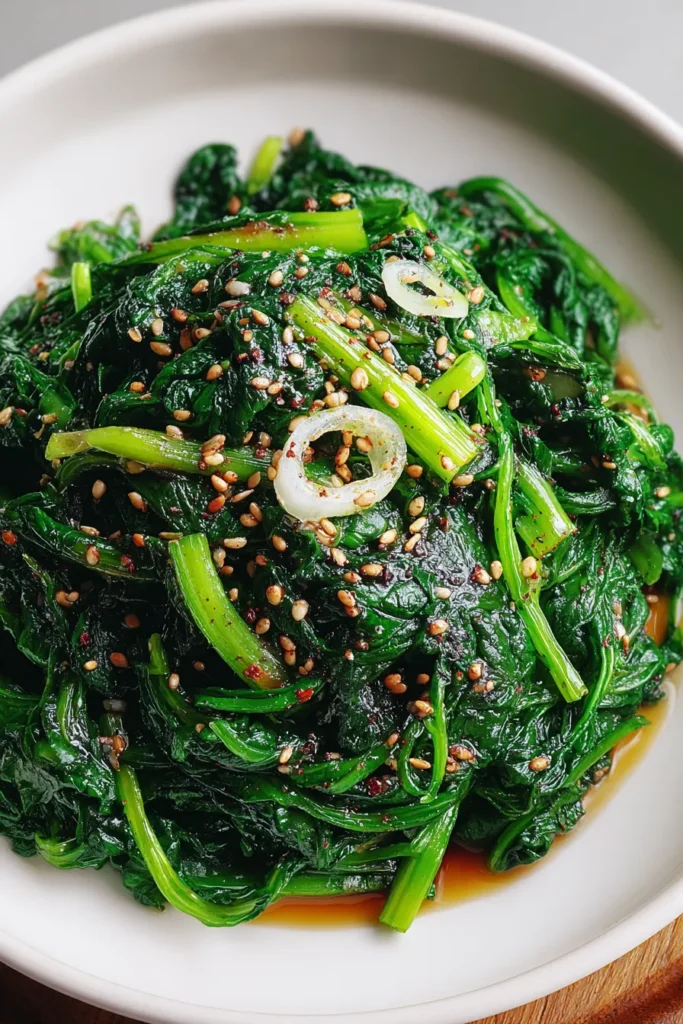

Korean Spinach Side Dish Sigeumchi Namul
Description
Sigeumchi Namul showcases the vibrant taste of blanched spinach dressed in a savory mix of soy sauce, garlic, and sesame oil, perfect for any meal.
Ingredients
Instructions
-
Rinse the spinach thoroughly in cold water to remove any dirt or grit.
-
Bring a large pot of water to a boil. Then add the spinach and blanch it for about 30 seconds.
-
Immediately transfer the spinach to a bowl of ice water to stop the cooking process and maintain its vibrant green color.
-
Once the spinach is cool, drain it well and gently squeeze out excess water using your hands. Be careful not to crush the spinach.
-
Place the squeezed spinach in a mixing bowl, and add soy sauce, sesame oil, minced garlic, sesame seeds, salt, sugar (if using), and chopped green onion.
-
Toss all the ingredients gently until the spinach is thoroughly coated with the seasonings.
-
Serve immediately or chill in the refrigerator for later.
Nutrition Facts
Serving Size 4
- Amount Per Serving
- Calories 30kcal
Note
- Sigeumchi Namul can be served as a banchan (side dish) in a traditional Korean meal or added to a bowl of rice.
- To add a bit of spice, consider including a pinch of Korean red chili flakes (gochugaru).
- This dish is a great option for a vegan diet, as it is both flavorful and nutritious.
- The use of sesame oil provides a distinct nutty aroma that is characteristic of Korean cuisine.

