

The chill of winter can seep into your bones, calling for something warm, nourishing, and utterly satisfying. That’s where Korean Winter Soup steps in like a cozy blanket for your taste buds. With tender beef brisket slowly braised in a fragrant broth, it’s the kind of dish that fills your kitchen with inviting steam and promises of comfort. Every spoonful delivers layers of flavor—from the earthy sweetness of Korean radish to the gentle heat of gochugaru and the delicate creaminess of soft tofu. This is more than a meal; it’s a ritual that transforms even the coldest evening into a moment of heartwarming indulgence.
Beyond its delicious taste, this soup brings a symphony of textures and aromas that feels like a warm hug from the inside. The napa cabbage adds a light crunch, contrasting beautifully with silky tofu cubes, while green onions and a sprinkle of toasted sesame seeds lend that final pop of freshness and nuttiness. Whether you’re curled up on the couch with a bowl or gathering around the table with loved ones, this soup has an uncanny ability to bring people closer—one spoonful at a time.
KEY INGREDIENTS IN KOREAN WINTER SOUP
Before we dive into the simmering process, let’s get acquainted with the building blocks of this soul-soothing soup. Each ingredient plays its part in creating that rich, balanced broth that warms the spirit as much as the body.
- Beef brisket
Thinly sliced brisket provides a robust, meaty foundation. As it simmers low and slow, the fibers break down into tender ribbons that melt in your mouth and infuse the broth with deep savory notes.
- Korean radish
With its firm texture and subtle sweetness, Korean radish adds body to the soup. It soaks up flavors beautifully and releases a gentle vegetal aroma as it cooks down.
- Onion
Quartered and simmered, onion contributes natural sweetness and depth, rounding out the broth with mellow undertones that balance the savory beef.
- Garlic
Crushed garlic cloves infuse the soup with aromatic warmth. When cooked briefly with ginger, they release essential oils that build the complexity of the broth.
- Ginger
Minced ginger brings a bright, zesty kick that counterbalances the richness of the meat. Its subtle heat also adds a layer of comfort, perfect for cold evenings.
- Soy sauce
A splash of soy sauce enhances umami and saltiness. It lends that signature soy depth that marries together the various flavors in the pot.
- Sesame oil
Added at the start for sautéing, sesame oil lends a toasty aroma and smooth richness, acting as a fragrant carrier for the beef and aromatics.
- Fish sauce
Just a hint of fish sauce pumps up the umami even further, delivering an authentic Korean flavor profile without overpowering the other ingredients.
- Soft tofu
Cubed soft tofu introduces a silky, creamy texture. It soaks up the broth while adding gentle protein, making the soup feel both hearty and light.
- Napa cabbage
Roughly chopped napa cabbage softens into tender ribbons, contributing freshness and a mild sweetness that lifts the overall taste.
- Green onions
Sliced green onions sprinkled on top add a crisp burst of color and fresh oniony brightness with each bite.
- Korean chili flakes (gochugaru)
Red chili flakes bring a gentle, lingering heat and a vibrant hue. They’re key to achieving that comforting spice without excessive burn.
- Salt and pepper
Simple seasoning that lets you adjust the final taste to your preference. A pinch here and there harmonizes the flavors.
- Water
The canvas for all these ingredients—8 cups of water form the base of the golden-hued broth that carries every savory, spicy, and sweet note.
- Toasted sesame seeds (optional garnish)
A final flourish of lightly toasted sesame seeds adds crunch and an extra touch of nutty aroma, making each bowl picture-perfect.
HOW TO MAKE KOREAN WINTER SOUP
Preparing Korean Winter Soup is an invitation to slow down and savor the process. From that first sizzle of meat in hot oil to the final garnish, every step builds layers of flavor in your pot.
1. In a large pot, heat the sesame oil over medium heat. Add the beef brisket slices and sauté until they are evenly browned on all sides, ensuring rich caramelization and depth of flavor.
2. Add the garlic and ginger to the pot, stirring continuously. Cook for another minute until fragrant, releasing those warm, aromatic oils that form the soul of the broth.
3. Pour in the water and add the Korean radish, onion, soy sauce, and fish sauce. Bring the mixture to a gentle boil over medium-high heat so the ingredients start to harmonize.
4. Once boiling, reduce the heat to low and allow the soup to simmer for approximately 45 minutes. This slow simmer is crucial: it helps the beef tenderize fully and lets every flavor meld into a cohesive, savory broth.
5. After 45 minutes, gently stir in the napa cabbage and tofu cubes. Maintain a low boil and simmer for an additional 10–15 minutes, giving the vegetables time to soften without breaking apart.
6. Season the soup with the gochugaru, then adjust with salt and pepper to taste. Feel free to add extra chili flakes if you crave more spice—this step puts you in control of the heat level.
7. Before serving, top each bowl with sliced green onions and, if desired, a dash of toasted sesame seeds for an elegant, garnished finish.
SERVING SUGGESTIONS FOR KOREAN WINTER SOUP
Bringing your Korean Winter Soup to the table is just the beginning of the experience. How you serve it can elevate a simple bowl into a memorable feast, and there are countless ways to tailor it to your taste and occasion.
- Serve in deep soup bowls alongside a steaming bowl of short-grain rice. Scoop a generous ladle of soup over the rice, letting the hot broth soak in for the ultimate comforting bite.
- Offer a selection of banchan—small Korean side dishes like kimchi, seasoned spinach, or pickled radish—to add textural contrasts and bursts of tangy flavor that complement the hearty broth.
- Garnish with a drizzle of toasted sesame oil and a sprinkle of extra sesame seeds just before serving. That final hint of nutty aroma will turn every spoonful into a fragrant delight.
- Serve family-style with extra gochugaru, soy sauce, and fish sauce on the side so each person can customize their bowl—perfect for gatherings where everyone has their own spice and salt preferences.
HOW TO STORE KOREAN WINTER SOUP
When you’ve got leftover soup, it’s nice to know it can stay just as delightful as it was on day one. Proper storage is key to maintaining both the integrity of the broth and the texture of the ingredients.
- Refrigeration in airtight containers: Allow the soup to cool to room temperature, then transfer portions into sealed, leak-proof containers. Stored in the refrigerator, it will remain fresh for up to three days.
- Freezing in portion-sized boxes: Ladle the cooled soup into freezer-safe containers, leaving a little headspace for expansion. Label with the date, then freeze for up to two months. Thaw in the refrigerator overnight before reheating.
- Gentle reheating on low heat: When ready to enjoy, warm the soup slowly over low heat to prevent the tofu from breaking apart and to preserve the vibrant flavors. Stir occasionally until heated through.
- Quick-cool method for food safety: To chill your soup rapidly, divide it into shallow bowls or containers. Once cooled, cover and store in the refrigerator or freezer for maximum freshness and safety.
CONCLUSION
This Korean Winter Soup is more than just a recipe—it’s a pathway to coziness, warmth, and shared moments around the dinner table. We explored how tender beef brisket, crisp napa cabbage, silky tofu, and a medley of aromatics come together in a rich, savory broth that’s perfect for chilly evenings. From selecting the key ingredients to mastering the simmering process, you now have the steps and tips to craft a bowl that’s bursting with comfort and nutrition. Whether you choose to garnish each serving with extra green onions, layer it over rice, or savor it alongside spicy banchan, this soup adapts to your personal style and appetite.
Feel free to print this article and save it in your recipe collection for easy reference whenever the temperature drops. You’ll even find a FAQ section below to address any lingering questions about substitutions, cooking times, or flavor adjustments. If you decide to give this soup a whirl, I’d love to hear how it turned out—drop a comment if you’re a gochugaru fanatic, have tricks for perfect tofu texture, or simply want to share a story from your own kitchen. Questions, feedback, or tales of winter nights warmed by this dish are more than welcome. Let’s keep the conversation going and make every bowl an opportunity for delicious connection.
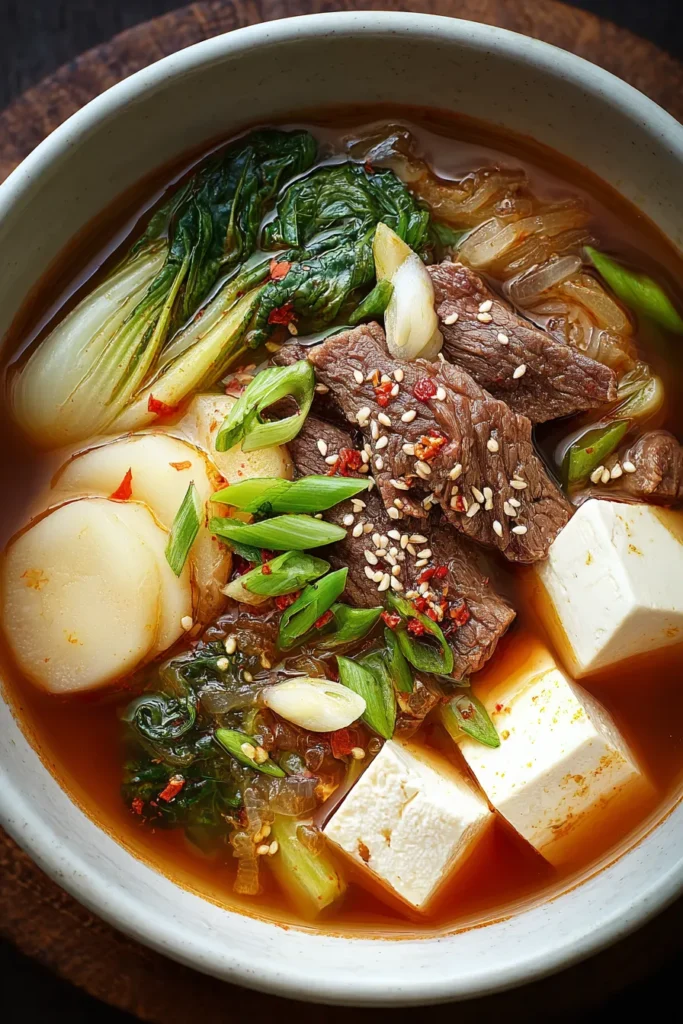

Korean Winter Soup
Description
This Korean Winter Soup combines tender beef brisket, aromatic garlic, and savory tofu in a rich broth, perfect for chilly evenings. Fresh napa cabbage adds crunch and vitality, while spices elevate every bite.
Ingredients
Instructions
-
In a large pot, heat the sesame oil over medium heat. Add the beef brisket slices and sauté until they are browned on all sides.
-
Add the garlic and ginger to the pot, stir and cook for another minute until fragrant.
-
Pour in the water and add the Korean radish, onion, soy sauce, and fish sauce. Bring the mixture to a gentle boil over medium-high heat.
-
Once boiling, reduce the heat to low and allow the soup to simmer for approximately 45 minutes. This allows the beef to tenderize and the flavors to develop.
-
After 45 minutes, add the napa cabbage and tofu cubes to the pot. Stir gently to combine and simmer for an additional 10-15 minutes, allowing the vegetables to soften.
-
Season the soup with gochugaru, plus salt and pepper to taste. If you prefer more heat, feel free to add extra chili flakes.
-
Before serving, garnish with green onions and a dash of toasted sesame seeds, if desired.
Nutrition Facts
Serving Size 4
- Amount Per Serving
- Calories 100kcal
Note
- This soup is a wonderful way to warm up during the chilly winter months.
- The beef can be substituted with chicken or kept vegetarian by adding more tofu and vegetables.
- Serve this soup with a side of steamed rice to make it a more filling meal.
- For a richer broth, consider adding a small piece of kombu (seaweed) during the simmering step, which later can be removed before serving.

