

There’s something truly comforting about slow-cooked beef that melts in your mouth and coats your senses with layers of rich, tangy tomato goodness. Short Rib Ragu isn’t just a pasta sauce; it’s a soul-warming hug on your plate. From the moment you start browning those hefty, meaty short ribs in olive oil, you know you’re in for something special. The diced onions, carrots, and celery sizzle away like a symphony of texture, and once garlic hits the pan, it feels like an invitation to a flavor party you didn’t know you needed. This is the kind of dish that turns an ordinary weeknight into a celebration and makes special occasions feel both grand and deeply personal.
As the red wine deglazes the pan, all those sticky browned bits lift off, carrying with them memories of kitchen confessions and late-night chats. The crushed tomatoes and tomato paste swirl together, forming a velvet-red canvas ready to cradle the succulent meat. A handful of dried herbs brings an earthy whisper, while beef broth deepens the experience. When you peek into the oven after hours of gentle baking at 325°F, you’ll find ribs so tender that they beckon you to shred them into the simmering sauce. Serve this over al dente pasta or creamy polenta, and you’ll understand why this Short Rib Ragu is destined to become a family legend.
KEY INGREDIENTS IN SHORT RIB RAGU
Every ingredient in this Short Rib Ragu plays a starring role, working in harmony to build a sauce that’s both hearty and nuanced. From the meaty foundation of beef short ribs to the finishing touches of fresh basil and Parmesan, each component contributes texture, body, and unforgettable flavor.
- Beef short ribs
These meaty bones are the heart of the ragu. Their rich marbling melts down during slow cooking, infusing the sauce with a deep, unctuous flavor and tender, fall-off-the-bone meat.
- Olive oil
A good-quality olive oil is essential for developing the base layers of flavor. It helps create a golden sear on the ribs and softens the vegetables without burning them.
- Salt and pepper
Simple but crucial, seasoning the ribs and vegetables allows each element to stand out and meld together. Salt enhances sweetness and umami, while pepper adds a gentle bite.
- Onion
Diced onion brings natural sweetness and depth. As it cooks down, it dissolves into the sauce, creating a silky texture that balances the acidity of the tomatoes.
- Carrots
Carrots lend a touch of natural sweetness and color. Their texture holds up well during long braising, adding subtle crunch before they soften completely.
- Celery stalks
Celery offers a savory backbone and slight bitterness that lifts the overall profile of the sauce, ensuring it never feels one-dimensional.
- Garlic
Minced garlic releases a fragrant punch that permeates every layer of the ragu, providing warmth and aromatic complexity.
- Red wine
A robust red wine adds acidity and tannins, cutting through the richness of the meat while contributing its own fruity, earthy notes.
- Crushed tomatoes
These form the vibrant, tomato-forward base of the sauce. Their texture and acidity are perfect for slow-cooked, hearty ragù.
- Tomato paste
Concentrated and tangy, tomato paste intensifies the sauce’s color and flavor, giving it that signature red richness.
- Beef broth
Adds savory depth and thins the sauce to the ideal consistency. Homemade stock boosts umami, but store-bought works beautifully, too.
- Dried thyme
A subtle herb with floral, minty undertones that pairs exquisitely with beef, adding an aromatic layer without overpowering the ragu.
- Dried oregano
Earthy and slightly peppery, oregano enhances the Italian character of the dish and harmonizes with the tomatoes.
- Bay leaf
A single bay leaf releases a delicate herbal aroma that rounds out the sauce, providing complexity beneath the surface.
- Fresh basil
Torn or chiffonade, basil adds a bright, fresh finish that cuts through the stew’s richness when sprinkled on top.
- Parmesan cheese
A generous grate of Parmesan contributes salty, nutty depth and creates an irresistible creamy contrast when melted into each forkful.
HOW TO MAKE SHORT RIB RAGU
Before diving into the detailed steps, take a moment to gather all your ingredients and equipment. A sturdy Dutch oven or heavy-bottomed pot is key for even heat distribution, ensuring each rib gets beautifully browned and the sauce simmers evenly. This recipe is as much about patience as it is about technique—every stage from searing to deglazing builds layers of flavor that culminate in a deeply satisfying ragu.
1. Preheat your oven to 325°F (165°C). Setting the correct temperature early ensures a gentle, consistent braise.
2. Season the short ribs generously with salt and pepper on all sides. This foundational seasoning permeates the meat as it cooks.
3. In a large Dutch oven, heat the olive oil over medium-high heat until shimmering.
4. Once the oil is hot, add the short ribs in batches, browning them on all sides for about 2–3 minutes per side. Work patiently to develop a dark, flavorful crust. Remove the ribs and set them aside.
5. In the same pot, add the diced onion, carrots, and celery. Sauté for about 5–7 minutes, stirring occasionally, until the vegetables are softened and the onion turns translucent.
6. Add the minced garlic and cook for an additional 1–2 minutes, until fragrant and golden.
7. Pour in the red wine, using a wooden spoon to scrape up any browned bits from the bottom of the pot. Let the wine simmer for about 5 minutes, allowing the alcohol to cook off and the liquid to reduce slightly.
8. Stir in the crushed tomatoes, tomato paste, beef broth, thyme, oregano, and bay leaf. Mix well to combine and create a uniform sauce.
9. Return the short ribs to the pot, nestling them into the sauce so they’re fully submerged.
10. Cover the Dutch oven with its lid and transfer it to the preheated oven.
11. Cook for about 2.5 to 3 hours, or until the meat is tender and falling off the bone.
12. Carefully remove the pot from the oven. Take out the short ribs and place them on a cutting board. Shred the meat, discarding the bones.
13. Return the shredded beef to the sauce, stirring until the strands of meat are fully coated and incorporated.
14. Taste and adjust seasoning with additional salt and pepper if needed. Serve the ragu hot over your choice of pasta or polenta, garnished with fresh basil and a generous grated Parmesan.
SERVING SUGGESTIONS FOR SHORT RIB RAGU
Once your Short Rib Ragu is ready, it’s time to elevate the eating experience with thoughtful pairings and presentation. A hearty sauce like this calls for accompaniments that can stand up to its richness while offering textural balance and complementary flavors. Here are four ideas to make every bite a delight:
- Serve over cilantro lime linguine or classic tagliatelle to showcase the ragu’s luxurious texture. The long, flat noodles catch every strand of shredded beef so each forkful is a perfect mouthful.
- Pair with garlic-infused crusty bread for sopping up every bit of sauce. A drizzle of extra virgin olive oil and a sprinkle of flaky sea salt make the bread both crunchy and irresistibly savory.
- Add a side of creamy polenta or mashed potatoes for a velvety base that contrasts the robust tomato-meat sauce. A pat of butter stirred into the starch brings an indulgent, silky finish.
- Complement with a glass of full-bodied red wine such as a Cabernet Sauvignon or Chianti. The tannins in the wine cut through the meat’s richness, enhancing both the beverage and the dish in perfect tandem.
HOW TO STORE SHORT RIB RAGU
Short Rib Ragu is one of those magical recipes that often tastes even better the next day. Proper storage is vital to preserve those complex flavors and ensure every future reheating is as sumptuous as the first serving. Follow these tips to keep your ragu fresh and delicious:
- Refrigeration: Allow the ragu to cool completely at room temperature (about 10–15 minutes), then transfer it into an airtight container. Store in the refrigerator for up to 4 days. Reheat gently on the stovetop over low heat, stirring occasionally to maintain creaminess.
- Freezing: Portion the ragu into freezer-safe bags or containers, removing as much air as possible to prevent freezer burn. Label with the date and freeze for up to 3 months. Thaw overnight in the refrigerator before reheating.
- Vacuum sealing: For optimal long-term freshness, use a vacuum sealer to remove air and seal the ragu in plastic pouches. Freeze the sealed pouches flat so they stack neatly. This method preserves flavor and texture for up to 3 months.
- Reheating: Thaw the frozen ragu in the fridge, then gently warm on the stovetop or in a low oven. If the sauce thickened too much, stir in a splash of beef broth or water until it reaches the desired consistency.
CONCLUSION
Cooking Short Rib Ragu is more than following a list of ingredients and steps—it’s an experience that brings warmth to your kitchen and comfort to your table. From the first sizzle of short ribs hitting the hot oil to the final sprinkle of fresh basil and Parmesan, you’re crafting a dish that resonates with tradition and genuine love for home cooking. This recipe, complete with tender beef, vibrant tomatoes, and fragrant herbs, is perfect for a cozy weeknight dinner or a special gathering where you want to impress without stress. Be sure to print this article and save it for later—you’ll treasure having it on hand whenever those cravings for rich, slow-cooked goodness strike.
Below, you’ll find an FAQ to answer any lingering questions about techniques, substitutions, and storage tips so that your Short Rib Ragu always turns out picture-perfect. If you give this recipe a try, I’d love to hear your thoughts: leave a comment, share adjustments you made, ask questions about any steps you found tricky, or simply let me know how your family reacted to this flavorful feast. Your feedback helps me refine each recipe and keeps our kitchen conversations alive. Happy cooking, and I can’t wait to see how your Short Rib Ragu story unfolds!
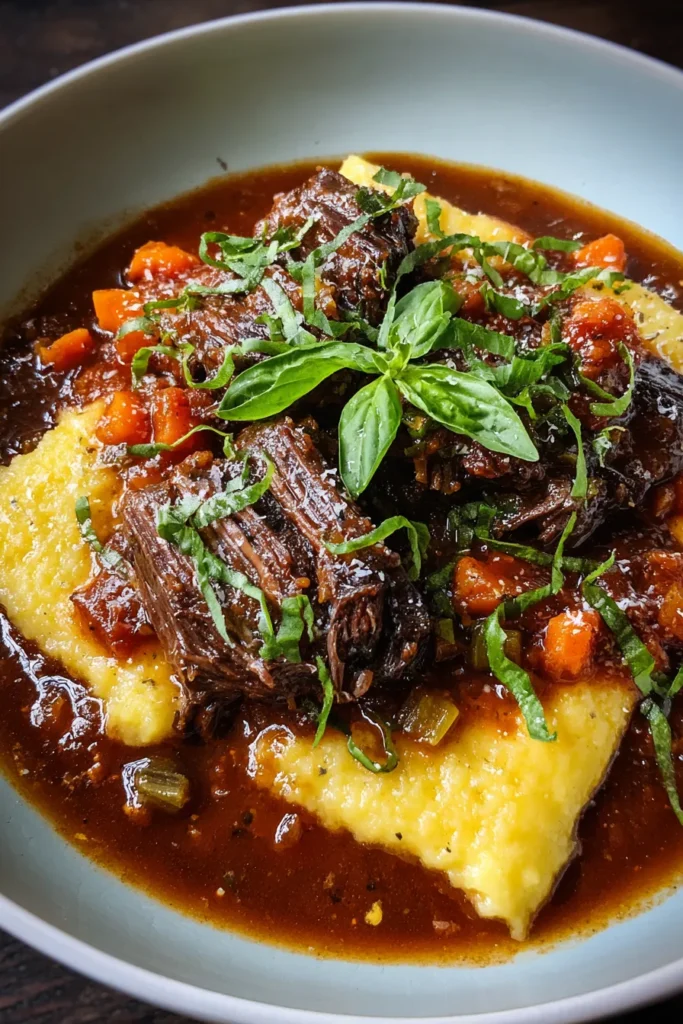

Short Rib Ragu
Description
Richly braised short ribs slow-cooked in a robust tomato and wine sauce create a dish brimming with layers of flavor. Serve it over pasta for a comforting meal.
Ingredients
Instructions
-
Preheat your oven to 325°F (165°C).
-
Season the short ribs generously with salt and pepper.
-
In a large Dutch oven, heat the olive oil over medium-high heat.
-
Once the oil is hot, add the short ribs in batches, browning them on all sides, about 2-3 minutes per side. Remove the browned short ribs and set them aside on a plate.
-
In the same pot, add the diced onion, carrots, and celery. Sauté for about 5-7 minutes, or until the vegetables are softened and the onion is translucent.
-
Add the minced garlic and cook for an additional 1-2 minutes, until fragrant.
-
Pour in the red wine, scraping the bottom of the pot to deglaze it, and let it simmer for about 5 minutes, allowing the alcohol to cook off.
-
Stir in the crushed tomatoes, tomato paste, beef broth, thyme, oregano, and bay leaf. Mix well.
-
Return the short ribs to the pot, ensuring they are submerged in the sauce.
-
Cover the Dutch oven with a lid and transfer it to the preheated oven.
-
Cook for about 2.5 to 3 hours, or until the meat is tender and falling off the bone.
-
Once cooked, remove the pot from the oven. Take out the short ribs and shred the meat, discarding the bones.
-
Return the shredded beef to the sauce, stirring until combined. Adjust seasoning with salt and pepper to taste.
-
Serve hot over your choice of pasta or polenta, garnished with fresh basil and grated Parmesan cheese.
Nutrition Facts
Serving Size 6
- Amount Per Serving
- Calories 100kcal
Note
- For added depth of flavor, you can substitute the beef broth with homemade stock.
- This ragu can be made a day in advance, allowing the flavors to meld even more.
- Short rib ragu pairs beautifully with a robust red wine, complementing the rich flavors of the dish.
- Feel free to add mushrooms or bell peppers to the vegetable mixture for additional texture and taste.
- Leftovers can be frozen for up to three months, making it a perfect meal prep option.

