

Craving a bold weeknight dinner that’s both quick and satisfying? These Korean Gochujang Noodles bring together chewy udon or ramen tossed in a fiery, slightly sweet gochujang sauce, crisp veggies, and nutty sesame notes—all ready in under 30 minutes. Dive into this vibrant dish and get ready to brighten your kitchen with spicy, saucy goodness you’ll want again and again.
Key Ingredients
Before you dive into the wok, gather these simple staples that transform into an irresistible, spicy-sweet feast.
- 200g noodles (preferably udon or ramen): Chewy base that soaks up the glossy gochujang sauce and provides satisfying texture.
- 2 tablespoons gochujang (Korean red chili paste): Signature spicy, savory paste that brings depth and a hint of fermentation.
- 1 tablespoon soy sauce: Adds umami saltiness to balance the chili heat.
- 1 tablespoon sesame oil: Delivers nutty aroma and richness to round out the sauce.
- 1 tablespoon honey or sugar: Provides sweet contrast that tames the spice and adds a glossy finish.
- 2 garlic cloves, minced: Infuses pungent garlic zing for extra flavor punch.
- 1 small carrot, julienned: Brings crisp sweetness and bright color to every bite.
- 1 bell pepper, sliced (any color): Offers crunchy freshness and a pop of vibrant hue.
- 100g shiitake mushrooms, sliced: Introduces earthy umami and a meaty texture.
- 1 cup spinach or bok choy, chopped: Adds tender greens and nutrient-packed volume.
- 2 green onions, sliced: Garnishes with mild onion flavor and a fresh green accent.
- 1 teaspoon sesame seeds (for garnish): Sprinkles on toasty flavor and extra crunch.
- Salt and pepper to taste: Seasons vegetables and balances overall flavors.
- Water (for boiling noodles): Essential for cooking noodles to perfect al dente.
How To Make Korean Gochujang Noodles
Let’s turn those ingredients into a mouthwatering dish in just a few simple steps. From cooking noodles to stir-frying crisp veggies and folding in that bold sauce, each technique builds layers of flavor and texture for a truly satisfying bowl.
1. Begin by boiling a large pot of water over high heat. Once it reaches a rolling boil, add the noodles and cook according to package instructions until al dente (about 3 to 5 minutes), stirring occasionally to prevent sticking.
2. While the noodles cook, whisk together gochujang, soy sauce, sesame oil, honey (or sugar), and minced garlic in a small bowl until perfectly smooth, then set aside.
3. Drain the cooked noodles in a colander and rinse under cold water to stop the cooking process and remove excess starch. Shake off any extra water and set the noodles aside.
4. Heat a tablespoon of oil in a large skillet or wok over medium heat. Add the julienned carrots and sliced bell pepper, then stir-fry for 2 to 3 minutes until they begin to soften and color intensifies.
5. Add the sliced shiitake mushrooms to the pan, continuing to stir-fry for another 2 minutes until the mushrooms turn tender and release a fragrant aroma.
6. Toss in the chopped spinach or bok choy, stirring constantly until the greens wilt (about 1 to 2 minutes). Season with salt and pepper to taste.
7. Return the drained noodles to the skillet, pour the prepared gochujang sauce over the top, and toss everything together until the noodles and vegetables are evenly coated and heated through.
8. Serve immediately, garnished with sliced green onions and a sprinkle of sesame seeds for an added layer of flavor and crunch.
Serving Suggestions
This colorful, spicy noodle dish shines on its own but also pairs beautifully with simple sides or garnishes to elevate your meal. Whether you’re hosting friends or enjoying a solo dinner, these serving ideas will add texture, contrast, and extra layers of taste.
- Serve in deep bowls to keep the glossy sauce contained and allow easy slurping of every strand.
- Complement with a side of chilled kimchi for a tangy, crunchy counterpoint that cuts through the spice.
- Top with a drizzle of chili oil and a squeeze of lime for an extra kick of heat and bright citrus notes.
- Pair alongside steamed edamame sprinkled with sea salt to boost protein and provide a satisfying finger food.
Tips For Perfect Korean Gochujang Noodles
Getting this dish just right is all about balancing spice, sweetness, and texture. Feel free to tweak the sauce, swap in your favorite veggies, or bulk it up with protein for a truly personalized bowl. Here are a few friendly pointers to keep in mind:
- Gochujang can vary in spiciness, so adjust the amount to your taste preference.
- Feel free to add protein such as tofu, chicken, or shrimp to make the dish more hearty.
- This dish can be served warm or chilled as a refreshing noodle salad.
- Leftover noodles can be stored in the refrigerator for up to 2 days and reheated with a splash of water.
- Experiment with different vegetables based on your preferences or what’s in season.
How To Store It
Whether you’ve made a big batch for meal prep or just want to enjoy leftovers, proper storage keeps your gochujang noodles tasting fresh and vibrant. Follow these tips to maintain texture and flavor the next day.
- Store in a airtight container in the refrigerator for up to 2 days to preserve both noodles and veggies.
- Reheat gently in a skillet over medium heat with a splash of water or oil to revive the sauce and prevent dryness.
- If you prefer, keep the gochujang sauce separate in a sealed jar for up to one week, then toss with freshly cooked noodles.
- Add a handful of fresh greens just before reheating to maintain a bright, crisp bite.
Frequently Asked Questions
Got a quick question before you dive in? Here are answers to the top queries, so you can cook with confidence.
- How long does it take to prepare this recipe?
A: It takes about 20 to 25 minutes in total. This includes 5 to 7 minutes for chopping vegetables and mixing the sauce, 3 to 5 minutes to boil the noodles, and 10 to 15 minutes to stir-fry the vegetables, combine everything, and finish cooking.
- What types of noodles can I use?
A: You can use udon, ramen, soba, rice noodles, or any wheat‐based noodle you prefer. Just follow the package instructions for cooking time and adjust stir-fry timing if the noodles are thinner or thicker than the recipe’s 200g udon/ramen.
- How can I adjust the spiciness of the sauce?
A: Gochujang varies in heat level. To reduce heat, use less gochujang or add extra honey/sugar. For more fire, add a pinch of Korean chili flakes (gochugaru) or a splash of chili oil. Taste and adjust until you reach your preferred spice level.
- Can I add protein to the dish?
A: Yes. Cube firm tofu, thinly slice chicken breast, or devein shrimp. Stir-fry your chosen protein in the skillet for 3 to 5 minutes before adding the vegetables, then proceed with the recipe. Make sure it’s fully cooked before tossing with the noodles and sauce.
- How do I store and reheat leftovers?
A: Store any leftovers in an airtight container in the refrigerator for up to 2 days. To reheat, warm a skillet over medium heat, add the noodles with a splash of water or oil, and toss until heated through. You can also microwave, stirring halfway through.
- Can I make this recipe gluten-free or vegan?
A: For gluten-free, choose a gluten-free gochujang or check labels, and use tamari instead of soy sauce. The recipe is inherently vegan if you use sugar or vegan honey alternatives in place of regular honey.
- Why do I rinse the noodles under cold water after boiling?
A: Rinsing under cold water stops the cooking process immediately, prevents the noodles from becoming mushy, and removes excess starch so they don’t clump when you stir-fry.
What Makes This Special
This gochujang noodle recipe hits all the right notes—spicy, sweet, nutty, and bright—while coming together in under half an hour. It works because the chewy noodles soak up that glossy chili paste, the veggies add crisp color, and the garlicky, sesame-kissed sauce ties it all together. Feel free to print this out and tuck it into your favorite recipe binder. If you try it, drop a comment below with your tweaks, questions, or your favorite protein add-in—I’d love to hear how you make it your own!
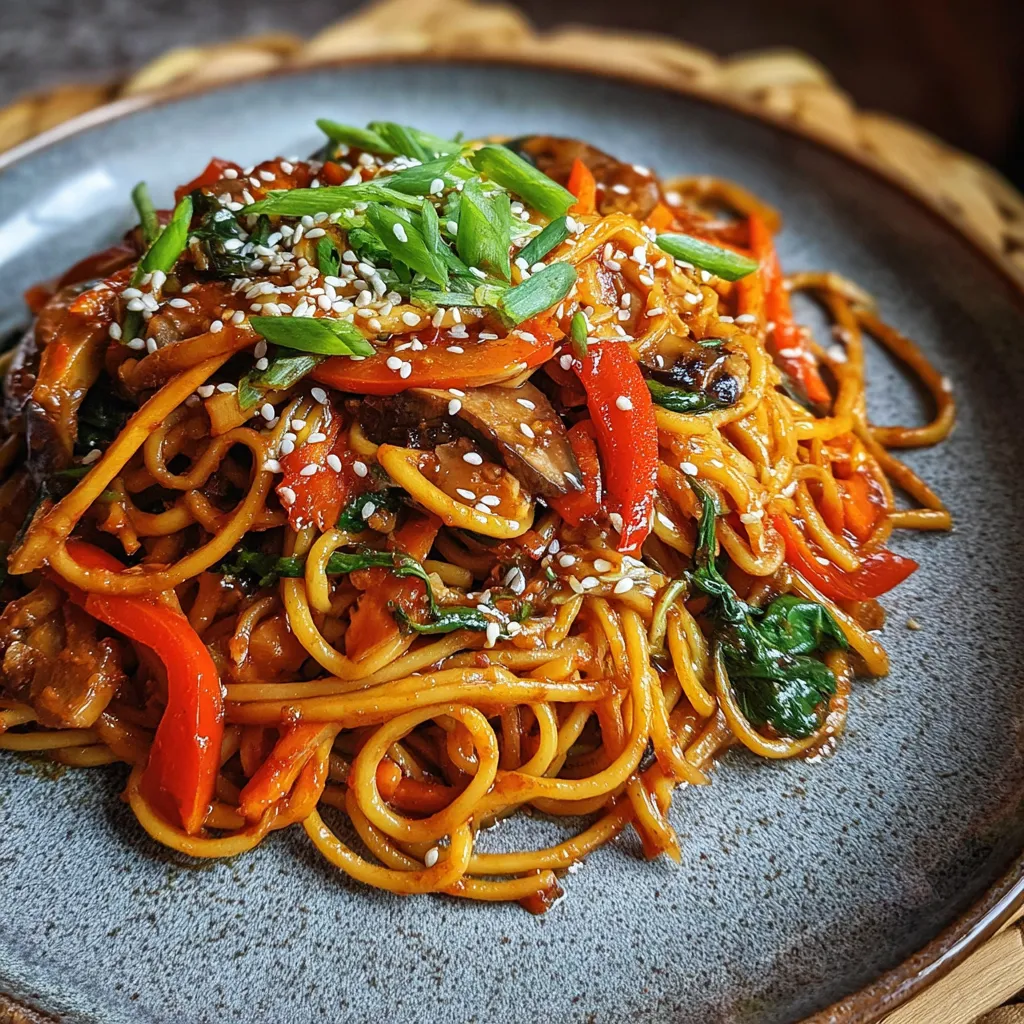

Korean Gochujang Noodles
Description
Fiery gochujang paste coats chewy noodles and tender veggies in a glossy, slightly sweet sauce, brightened by sesame and garlic aromatics. Ready in minutes for a bold at-home feast.
Ingredients
Instructions
-
Begin by boiling a pot of water over high heat. Once boiling, add the noodles and cook according to package instructions until al dente. This usually takes around 3 to 5 minutes.
-
While the noodles are cooking, prepare the sauce by combining gochujang, soy sauce, sesame oil, honey (or sugar), and minced garlic in a small bowl. Mix well until smooth and set aside.
-
After the noodles are cooked, drain them and rinse under cold water to stop the cooking process. Set the noodles aside.
-
In a large skillet or wok, heat a tablespoon of oil over medium heat. Add the julienned carrots and sliced bell pepper. Stir-fry for about 2-3 minutes until they begin to soften.
-
Next, add the sliced shiitake mushrooms to the skillet. Continue stir-frying for another 2 minutes until the mushrooms are tender and fragrant.
-
Add the chopped spinach or bok choy to the skillet, stirring until wilted, which should take about 1-2 minutes. Season with salt and pepper to taste.
-
Once the vegetables are cooked, add the drained noodles to the skillet with the veggies. Pour the gochujang sauce over everything. Toss together until the noodles and veggies are evenly coated in the sauce and heated through.
-
Serve the noodles warm, garnished with sliced green onions and a sprinkle of sesame seeds for added flavor and crunch.
Nutrition Facts
Serving Size 2
- Amount Per Serving
- Calories 168kcal
Note
- Gochujang can vary in spiciness, so adjust the amount to your taste preference.
- Feel free to add protein such as tofu, chicken, or shrimp to make the dish more hearty.
- This dish can be served warm or chilled as a refreshing noodle salad.
- Leftover noodles can be stored in the refrigerator for up to 2 days and reheated with a splash of water.
- Experiment with different vegetables based on your preferences or what's in season.

