

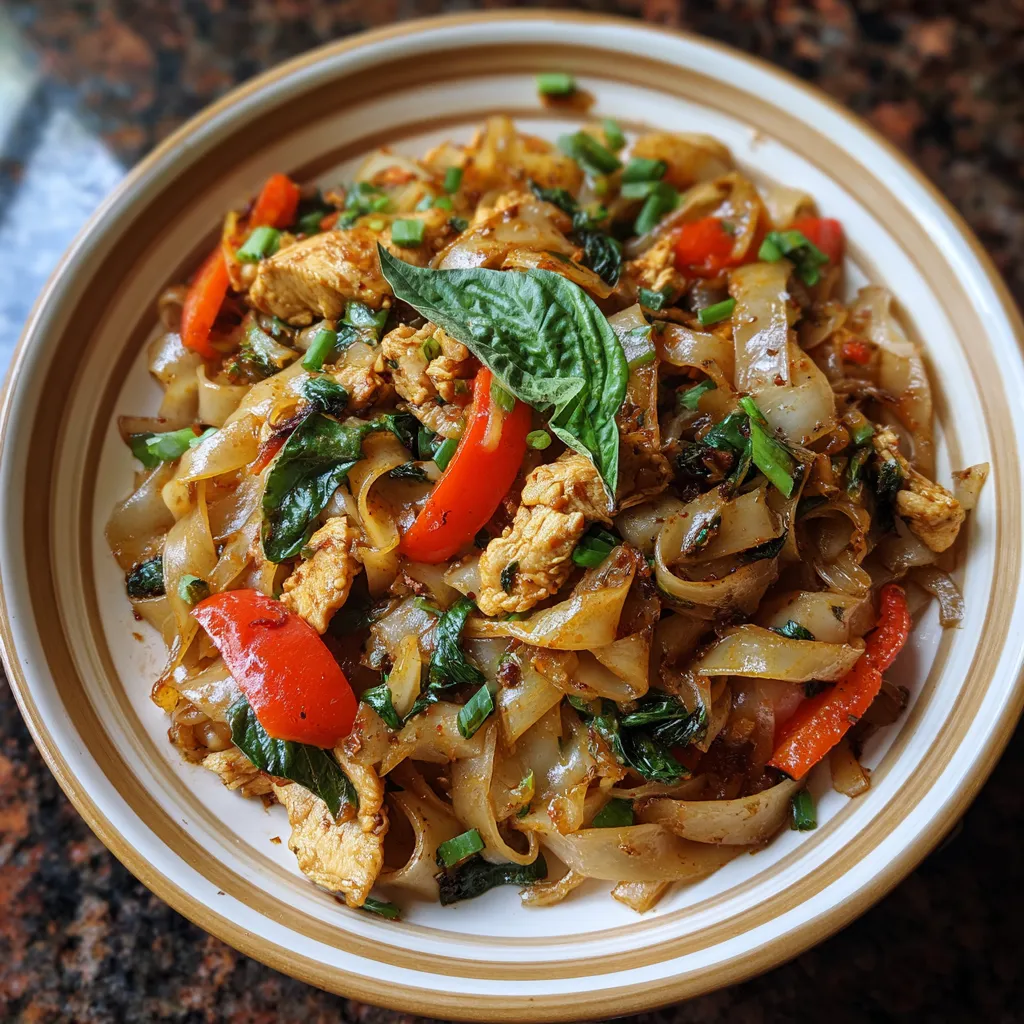
Street Style Thai Drunken Noodles are the ultimate weeknight craving buster, bringing together chewy rice noodles, tender chicken, crisp peppers, and fragrant Thai basil in one sizzling wok toss. This recipe delivers that smoky street-food char from cooking on high heat and keeps things saucy with soy, fish, and oyster sauces–all balanced by a hint of sweetness and a punch of chili. If you love bold flavors and a little kitchen adventure, these noodles are calling your name!
Key Ingredients
Before you start stir-frying, gather these essentials to nail authentic pad kee mao flavor:
- 200 grams wide rice noodles: Broad, flat noodles that soak up sauces and develop those desirable charred edges.
- 2 tablespoons vegetable oil: Neutral oil with a high smoke point for quick stir-frying.
- 3 cloves garlic, minced: Fragrant base that sizzles instantly and infuses the dish.
- 2 Thai chilies, chopped: Adds vibrant heat—adjust quantity for your spice preference.
- 200 grams chicken breast, thinly sliced: Lean protein that cooks quickly and stays juicy.
- ½ cup bell pepper, sliced: Provides sweet crunch and color contrast.
- 1 small onion, sliced: Brings sweetness and depth when briefly stir-fried.
- 2 tablespoons soy sauce: Delivers salty umami backbone.
- 1 tablespoon fish sauce: Imparts authentic briny depth.
- 1 tablespoon oyster sauce: Adds thick, sweet-savory richness.
- 1 teaspoon sugar: Balances salty and spicy flavors with a subtle sweetness.
- ½ cup Thai basil leaves: Tossed in at the end for fresh, peppery aroma.
How To Make Street Style Thai Drunken Noodles
Getting that perfect balance of char, saucy noodles, and tender chicken is all about timing and high heat. You’ll start by softening the rice noodles, then build layers of flavor by stir-frying aromatics and protein before tossing everything together with the sauces. Keep your wok hot, your movements swift, and watch as each ingredient transforms into a cohesive mouthwatering dish.
1. Soak the rice noodles in warm water for 15 minutes until pliable, then drain and set aside.
2. Heat the vegetable oil in a wok or large skillet over high heat until shimmering.
3. Add the garlic and Thai chilies and stir-fry for 30 seconds until fragrant and lightly toasted.
4. Add the sliced chicken and stir-fry until it starts to brown and is nearly cooked through.
5. Toss in the bell pepper and onion and stir-fry for another 1–2 minutes until slightly softened but still crisp.
6. Push the ingredients to one side of the wok and add the noodles, letting them make direct contact with the hot surface.
7. Pour the soy sauce, fish sauce, oyster sauce, and sugar over the noodles.
8. Use tongs or chopsticks to toss everything together over high heat until the noodles are evenly coated and heated through with some charred bits.
9. Remove from heat and stir in the Thai basil leaves until just wilted, preserving their bright fragrance.
10. Transfer to plates and serve immediately, while it’s still hot and saucy.
Serving Suggestions
Once your noodles are sizzling on the plate, think about how to enhance the experience for your dinner guests or family. A few thoughtful touches turn this simple street-style dish into a memorable meal:
- Fresh lime wedges on the side add a zesty brightness—squeeze over just before eating.
- Sliced cucumber offers a cool, crisp contrast to the spicy noodles.
- A small bowl of chili flakes or chopped fresh chilies lets everyone dial up the heat.
- Crispy shallots or crushed peanuts sprinkle over the top for unexpected texture and nuttiness.
Tips For Perfect Street Style Thai Drunken Noodles
Nail that authentic wok-hei flavor by focusing on timing, heat, and ingredient swaps. Here are some friendly pointers to elevate your stir-fry game:
- For a vegetarian version, substitute tofu for chicken and use vegetarian oyster sauce.
- Adjust the number of chilies to control the spice level and suit your taste buds.
- Cook on high heat and keep tossing for that signature charred street-style flavor—don’t overcrowd the wok.
- Best enjoyed fresh; leftovers can be stored in an airtight container for up to 1 day to maintain texture.
How To Store It
These noodles are happiest fresh, but if you must save some for later, follow these simple guidelines to keep them tasty and prevent them from clumping or going soggy:
- Store in an airtight container in the refrigerator for up to 24 hours, letting them cool completely before sealing.
- To reheat, warm a tablespoon of oil in a skillet over medium-high heat, add the noodles, and toss quickly until hot.
- Avoid the microwave if possible, as it can make the noodles gummy and reduce that wok-hei character.
- If you have extra basil, keep it separate and stir in fresh after reheating to revive its aroma.
Frequently Asked Questions
Here are some quick answers to the most common queries about these noodles:
- How long should I soak the rice noodles, and can I skip this step if I’m in a hurry?
Soaking the rice noodles in warm water for 15 minutes ensures they become pliable and cook evenly when stir-fried. If you’re short on time, soak them in slightly hotter water (not boiling) for about 10 minutes and gently separate them before adding to the wok.
- Can I use a different protein or make this dish vegetarian?
Yes. Substitute thinly sliced beef, pork, shrimp, or firm tofu. For a vegetarian version, replace fish and oyster sauces with vegetarian alternatives (like mushroom-based oyster sauce) and use soy sauce.
- What’s the best way to control the spiciness of this dish?
Use one chili for mild heat, two for medium, and three or more for high heat. Remove seeds to reduce intensity, or serve extra chilies on the side for personal adjustment.
- Why is high heat and constant tossing important when cooking Drunken Noodles?
High heat and tossing create that slight char and smoky “wok-hei” flavor, searing ingredients quickly and caramelizing sauces on the noodles for authentic street-style taste.
- When and why should I add the Thai basil leaves?
Add basil at the very end, off the heat or with heat turned down, for about 20–30 seconds. This preserves its bright aroma; cooking too long will darken the leaves and dull their fragrance.
- How can I store and reheat leftovers without losing flavor?
Transfer leftovers to an airtight container and refrigerate for up to 24 hours. To reheat, warm a tablespoon of oil in a pan over medium-high heat, then toss the noodles quickly until heated through.
- What can I use if I don’t have oyster sauce or fish sauce on hand?
For oyster sauce, mix hoisin sauce with a teaspoon of soy sauce. For fish sauce, use low-sodium soy sauce plus a pinch of salt and a drop of lime juice.
What Makes This Special
These Street Style Thai Drunken Noodles nail the perfect balance of smoky, spicy, sweet, and umami—all in a single, speedy wok toss. The secret is cooking everything on high heat and tossing constantly to get that authentic char and wok-hei aroma. Whether you’re craving vibrant street-food vibes or sprucing up a weeknight dinner, this recipe hits the spot every time. Don’t forget to print this article or bookmark it for your next cooking adventure, and drop a comment if you have questions or fun stories from your own kitchen experiments!

Street Style Thai Drunken Noodles
Description
Charred edges of rice noodles sizzle as garlic and chilies release their heat. Tender chicken mingles with crisp peppers and sweet onions, all coated in umami-rich sauces. A handful of basil adds fresh aroma to every tangy, spicy bite.
Ingredients
Instructions
-
Soak the rice noodles in warm water for 15 minutes until pliable, then drain and set aside.
-
Heat the vegetable oil in a wok or large skillet over high heat until shimmering.
-
Add the garlic and Thai chilies and stir-fry for 30 seconds until fragrant.
-
Add the sliced chicken and stir-fry until it starts to brown and is nearly cooked through.
-
Toss in the bell pepper and onion and stir-fry for another 1–2 minutes until slightly softened.
-
Push the ingredients to one side of the wok and add the noodles.
-
Pour the soy sauce, fish sauce, oyster sauce, and sugar over the noodles.
-
Use tongs or chopsticks to toss everything together over high heat until the noodles are evenly coated and heated through.
-
Remove from heat and stir in the Thai basil leaves until wilted.
-
Transfer to plates and serve immediately.
Nutrition Facts
Serving Size 2
- Amount Per Serving
- Calories 350kcal
Note
- For a vegetarian version, substitute tofu for chicken and use vegetarian oyster sauce.
- Adjust the number of chilies to control the spice level.
- Cook on high heat and keep tossing for that signature charred street-style flavor.
- Best enjoyed fresh; leftovers can be stored in an airtight container for up to 1 day.

