

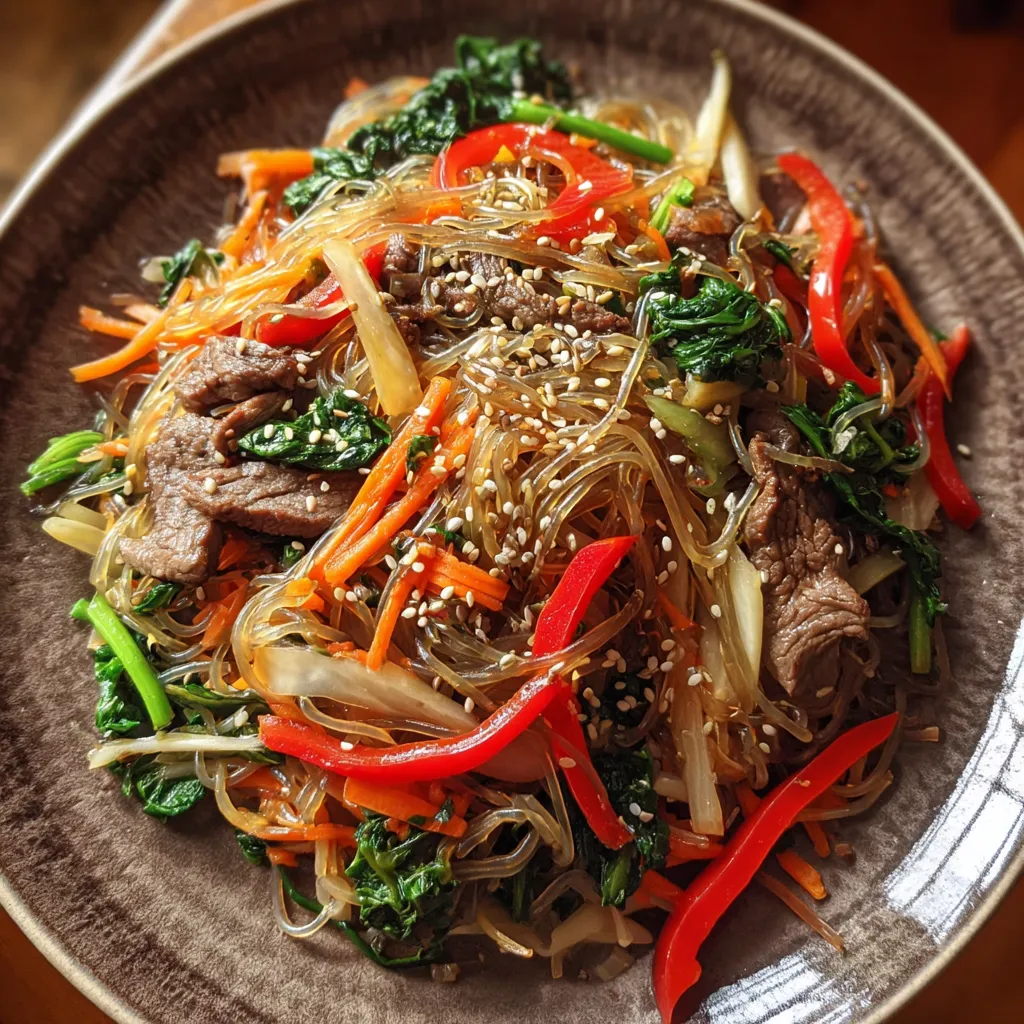
Authentic Korean Japchae Noodles are a vibrant celebration of textures and flavors. Soft sweet potato starch noodles glisten with a sesame oil sheen, wrapping around crisp peppers, tender beef strips, earthy shiitake mushrooms, and wilted spinach. A hint of sweetness from sugar balances savory soy sauce, while toasted sesame seeds add a final nutty crunch. Whether you’re hosting a dinner or craving a comforting stir-fry, this intermediate-level dish promises a chewy, satisfying bite that’s as beautiful as it is delicious.
Key Ingredients
Before we dive into cooking, let’s gather the colorful, savory components that make these noodles shine:
- 200 g sweet potato starch noodles (dangmyeon): Chewy base that soaks up all the savory sauce and sesame aroma.
- 150 g beef sirloin, thinly sliced: Tender protein that brings savory depth and meaty richness.
- 1 medium carrot, julienned: Adds bright color and a hint of natural sweetness.
- 1 medium onion, thinly sliced: Provides subtle sharpness and softens during stir-frying.
- 1 red bell pepper, thinly sliced: Infuses vibrant hues and a sweet, crisp bite.
- 1 green bell pepper, thinly sliced: Offers fresh color contrast and mild flavor.
- 100 g spinach: Earthy green leaves that wilt into a silky texture.
- 4 dried shiitake mushrooms, rehydrated and sliced: Delivers deep umami and chewy bite.
- 2 scallions, cut into 5 cm lengths: Sprinkled in for fresh oniony pops.
- 3 cloves garlic, minced: Aromatic foundation that builds savory flavor.
- 2 tbsp soy sauce: Salty, savory seasoning for noodles and marinade.
- 1 tbsp sugar: Balances salt with a touch of sweetness.
- 1 tbsp sesame oil: Brings nutty aroma and glossy finish.
- 1 tbsp vegetable oil: High-heat cooking oil for stir-frying.
- 1 tbsp toasted sesame seeds: Final crunchy garnish with nutty scent.
- salt to taste: Adjusts seasoning to your preference.
- ground black pepper to taste: Adds gentle, warming spice.
How To Make Authentic Korean Japchae Noodles
Let’s transform these ingredients into a glossy, flavorful stir-fry. You’ll soften noodles, blanch greens, stir-fry vegetables one by one, and bring everything together in a quick, high-heat toss so each ribbon and strip is perfectly coated and vibrant.
1. Soak sweet potato starch noodles in warm water for 30 minutes until soft, then drain and set aside.
2. Blanch spinach in boiling water for 30 seconds, drain, rinse under cold water, squeeze out excess moisture and set aside.
3. In a small bowl combine beef with 1 tbsp soy sauce, 1 tsp sugar, minced garlic and a pinch of ground black pepper, then marinate for 10 minutes.
4. Heat vegetable oil in a large pan over medium-high heat, stir-fry carrot until slightly tender, then remove and repeat separately with onion, red bell pepper and green bell pepper, setting each aside.
5. Stir-fry marinated beef in the same pan until cooked through, then remove and set aside.
6. Add drained noodles to the pan with 1 tbsp soy sauce, 1 tbsp sugar and sesame oil, then stir-fry for 2-3 minutes until well coated.
7. Return all vegetables, beef, spinach and scallions to the pan, toss gently and cook for another 2 minutes to combine flavors.
8. Season with salt and ground black pepper to taste, then transfer to a serving dish.
9. Sprinkle toasted sesame seeds over the top before serving.
Serving Suggestions
This japchae is stunning on its own, but a few thoughtful touches elevate the experience. Serve it on a large platter for sharing, or plate individual portions with complementary sides to bring out its colors and textures.
- Room-temperature presentation: Let noodles cool slightly so the flavors settle and the glossy finish stands out.
- Fresh garnishes: Scatter extra scallion strips and sesame seeds for a bright, crunchy accent.
- Korean banchan: Pair with kimchi, pickled radishes, or spicy cucumbers for tangy contrasts.
- Steamed rice: Offer fluffy white rice on the side to balance the savory-sweet profile.
Tips For Perfect Authentic Korean Japchae Noodles
To nail this dish every time, keep these friendly pointers in mind. They’ll help you achieve that signature chewy texture and harmonious blend of flavors:
- Authentic japchae uses sweet potato starch noodles for a distinctive chewiness.
- For a vegetarian version, omit beef and increase the amount of mushrooms or add tofu.
- Allow japchae to rest for 10 minutes after cooking to let flavors meld.
- Japchae is best served at room temperature or slightly warm for traditional flavor.
How To Store It
If you have leftovers or want to prep ahead, proper storage keeps your japchae fresh and flavorful. Follow these methods to maintain its texture and taste:
- Refrigerate in an airtight container for up to 3 days, sealing in moisture and preventing odor absorption.
- Separate components (noodles, veggies, beef) into individual containers to avoid sogginess.
- Reheat gently over low heat with a splash of water or oil to restore gloss without drying out.
- Serve at room temperature after storage to recapture the ideal chew and sheen.
Frequently Asked Questions
Here are answers to common questions when making japchae—clear, concise, and friendly:
- How long does it take to prepare and cook authentic Korean Japchae noodles?
From start to finish, plan for about 1 hour and 5 minutes. This includes 30 minutes to soak the sweet potato starch noodles, 10 minutes to marinate the beef, roughly 15 minutes to stir-fry the vegetables, beef, and noodles, plus a 10-minute resting period for flavors to meld.
- What steps ensure the sweet potato starch noodles have the ideal chewy texture?
First, soak the dangmyeon in warm water for 30 minutes until they become soft and pliable. After draining, stir-fry them with soy sauce, sugar, and sesame oil over medium-high heat for 2–3 minutes, tossing constantly so they absorb the seasoning evenly without sticking together. The quick high-heat stir-fry seals in that signature chewiness.
- Why is it important to stir-fry each vegetable separately?
Stir-frying carrot, onion, red bell pepper, and green bell pepper separately ensures each vegetable cooks to its own ideal tenderness without overcooking or undercooking the others. Removing each one as soon as it’s slightly tender locks in its color, texture, and sweetness before combining them later with the noodles and beef.
- Can I prepare components ahead of time and reassemble Japchae later?
Yes. You can soak the noodles and marinate the beef several hours in advance, and fully stir-fry the vegetables and beef up to a day ahead. Store each component in separate airtight containers in the refrigerator. When ready to serve, briefly reheat the noodles in the pan with sauce, then toss in the pre-cooked vegetables, beef, and spinach for 2 minutes before resting and serving.
- How can I make a vegetarian version without losing authenticity?
Omit the beef sirloin and increase both the shiitake mushrooms and spinach for extra umami and texture. You can also add firm tofu cut into strips or triangles, lightly pan-fried until golden, and toss it in at the same stage you’d return the beef. Use the same soy sauce, sugar, garlic, and sesame oil seasoning to maintain the traditional flavor profile.
- What’s the purpose of letting Japchae rest for 10 minutes after cooking?
Allowing Japchae to rest off heat for about 10 minutes gives the flavors time to meld and lets the noodles absorb any remaining sauce, deepening the overall taste. It also lets excess moisture evaporate so the final texture is neither soggy nor overly dry.
- What is the best way to serve Japchae for an authentic experience?
Serve Japchae at room temperature or slightly warm on a large platter. Scatter the toasted sesame seeds right before serving for a nutty aroma and sprinkle a few fresh scallion strips on top for color and a mild onion flavor. This presentation echoes traditional Korean style and highlights the dish’s glossy, vibrant ingredients.
What Makes This Special
Authentic Korean Japchae Noodles work because they balance chewy textures, vibrant colors, and layers of sweet, savory, and nutty flavors in every forkful. This dish shines at dinner parties or weeknight meals, thanks to its stunning presentation and interactive stir-fry process. Remember—you can print and save this recipe to recreate the magic anytime. If you try it or have questions about technique, ingredients, or tweaks, drop a comment below and share your foodie adventures!

Authentic Korean Japchae Noodles
Description
Sweet potato noodles shine glossy under a shimmer of sesame oil, mingling with crisp peppers, tender beef strips, and earthy mushrooms. Each bite delivers a harmony of chewy texture, savory notes, and a subtle touch of sweetness.
Ingredients
Instructions
-
Soak sweet potato starch noodles in warm water for 30 minutes until soft, then drain and set aside.
-
Blanch spinach in boiling water for 30 seconds, drain, rinse under cold water, squeeze out excess moisture and set aside.
-
In a small bowl combine beef with 1 tbsp soy sauce, 1 tsp sugar, minced garlic and a pinch of ground black pepper, then marinate for 10 minutes.
-
Heat vegetable oil in a large pan over medium-high heat, stir-fry carrot until slightly tender, then remove and repeat separately with onion, red bell pepper and green bell pepper, setting each aside.
-
Stir-fry marinated beef in the same pan until cooked through, then remove and set aside.
-
Add drained noodles to the pan with 1 tbsp soy sauce, 1 tbsp sugar and sesame oil, then stir-fry for 2-3 minutes until well coated.
-
Return all vegetables, beef, spinach and scallions to the pan, toss gently and cook for another 2 minutes to combine flavors.
-
Season with salt and ground black pepper to taste, then transfer to a serving dish.
-
Sprinkle toasted sesame seeds over the top before serving.
Nutrition Facts
Serving Size 4
- Amount Per Serving
- Calories 96kcal
Note
- Authentic japchae uses sweet potato starch noodles for a distinctive chewiness.
- For a vegetarian version, omit beef and increase the amount of mushrooms or add tofu.
- Allow japchae to rest for 10 minutes after cooking to let flavors meld.
- Japchae is best served at room temperature or slightly warm for traditional flavor.

