

Pork Tenderloin with Creamy Dijon Sauce is the kind of weeknight dinner that feels gourmet but comes together in a snap. Seared to a golden crust and finished in the oven, this succulent pork tenderloin is bathed in a luscious cream sauce spiked with garlic, Dijon mustard, and fresh thyme. Whether you’re craving comfort food or aiming to impress guests, this recipe delivers juicy meat and a silky sauce you’ll spoon up to the last drop—your next favorite family staple awaits!
Key Ingredients
Before diving into the kitchen, gather these star ingredients that make the magic happen:
- 1.5 pounds pork tenderloin: The lean, tender cut that becomes juicy and flavorful after a quick sear and oven roast.
- 1 tablespoon olive oil: Provides a high-heat conduit for a beautiful, golden-brown crust on the pork.
- 1 teaspoon salt: Balances and enhances the natural flavors of the meat.
- 1/2 teaspoon black pepper: Adds a subtle kick and earthy depth to each bite.
- 1 tablespoon butter: Enriches the sauce with a silky mouthfeel and hints of richness.
- 2 cloves garlic, minced: Imparts aromatic warmth and savory punch to the cream sauce.
- 1/2 cup chicken broth: Forms the flavorful base of the sauce, deglazing the skillet for extra depth.
- 1/2 cup heavy cream: Creates a luxuriously smooth and rich texture for the Dijon sauce.
- 2 tablespoons Dijon mustard: Delivers tangy brightness and a gentle zing that cuts through the cream.
- 1 teaspoon chopped fresh thyme: Offers fragrant herbal notes that elevate the sauce’s complexity.
How To Make Pork Tenderloin with Creamy Dijon Sauce
Get ready for a cooking session that’s as satisfying as the result. You’ll first sear the pork to lock in juices, then roast it gently for perfect doneness. While it rests and relaxes under foil, you’ll whip up a velvety Dijon cream sauce right in the same skillet—zero extra dishes required. Follow each step carefully to achieve that irresistible crust, tender interior, and sauce that clings beautifully to every slice.
1. Preheat oven to 400°F, allowing it to come to full heat for an even roast.
2. Season pork tenderloin evenly with salt and black pepper, ensuring every surface is coated for maximum flavor.
3. Heat olive oil in an ovenproof skillet over medium-high heat and sear pork on all sides until golden brown, about 2 minutes per side, creating a flavorful crust.
4. Transfer the skillet to the preheated oven and roast pork for 12 to 15 minutes, or until an instant-read thermometer inserted into the center reads 145°F for perfectly juicy meat.
5. Remove pork from the skillet and let it rest on a cutting board, tented with foil, for 5 minutes so the juices can redistribute.
6. While pork rests, melt butter in the same skillet over medium heat and sauté minced garlic until fragrant, about 1 minute, stirring constantly to prevent burning.
7. Stir in chicken broth, heavy cream, Dijon mustard, and chopped fresh thyme, then simmer until the sauce thickens slightly, about 3 to 4 minutes, whisking to blend smoothly.
8. Slice the pork tenderloin, arrange on plates, and spoon the creamy Dijon sauce over the top before serving for a picture-perfect presentation.
Serving Suggestions
Once your pork tenderloin is sliced and sauced, these accompaniments will turn it into a full-fledged feast:
- Serve alongside garlic mashed potatoes to soak up every drop of that silky Dijon sauce.
- Pair with roasted seasonal vegetables, like carrots and Brussels sprouts, for a pop of color and crunch.
- Add a crusty baguette or dinner rolls so guests can mop up every bit of sauce.
- Complement with a light green salad dressed in lemon vinaigrette to balance the creaminess.
Tips For Perfect Pork Tenderloin with Creamy Dijon Sauce
Nailing this recipe comes down to a few simple but crucial steps:
- Resting the pork allows juices to redistribute for a juicier result every single time.
- Use a meat thermometer to ensure the internal temperature reaches 145°F without overcooking.
- Sauce can be thickened further with a cornstarch slurry if desired—just whisk 1 teaspoon cornstarch with 1 tablespoon cold water.
- Leftovers store well in an airtight container in the refrigerator for up to 3 days, perfect for quick lunches.
How To Store It
Keeping this dish fresh and flavorful is easy when you follow these storage tips:
- Refrigerate leftovers in an airtight container for up to 3 days; cool to room temperature before sealing.
- Separate sauce and meat if you anticipate reheating only one component to preserve texture.
- Reheat gently in a covered skillet over low heat, adding a splash of chicken broth or cream to revive the sauce’s creaminess.
- Freeze portions in freezer-safe containers for up to 2 months, thawing overnight in the fridge before reheating.
Frequently Asked Questions
Here are answers to common questions so you can cook with confidence:
- Q: How long does it take to prepare and cook this pork tenderloin recipe?
A: The total time is about 30 to 35 minutes. You’ll need roughly 5 minutes to preheat the oven and season the pork, about 8 minutes to sear it on all sides, 12 to 15 minutes to roast in a 400°F oven, and an additional 5 minutes for resting. Making the creamy Dijon sauce takes about 5 minutes while the pork rests.
- Q: What’s the best way to ensure the pork tenderloin is cooked to perfection?
A: Use an instant-read meat thermometer inserted into the thickest part of the tenderloin; it should register 145°F. If you don’t have a thermometer, make a small cut into the center—properly cooked pork will be a faint blush of pink and the juices will run clear rather than bloody.
- Q: Why is it important to let the pork rest before slicing, and how should I do it?
A: Resting the pork for at least 5 minutes under loose foil allows the juices to redistribute throughout the meat, resulting in a juicier, more tender bite. After roasting, transfer the pork to a cutting board, tent it loosely with foil, and avoid slicing until the resting time is complete.
- Q: My sauce isn’t thickening enough—how can I adjust it?
A: If the sauce is too thin after simmering for 3 to 4 minutes, whisk together a small cornstarch slurry (about 1 teaspoon cornstarch mixed with 1 tablespoon cold water) and stir it into the sauce. Cook for an additional 1 to 2 minutes until it reaches your desired consistency.
- Q: Can I use dried thyme if I don’t have fresh thyme on hand?
A: Yes, you can substitute dried thyme. Use about one-third of the amount called for because dried herbs are more concentrated—approximately 1/3 teaspoon dried thyme in place of 1 teaspoon fresh. Add it with the chicken broth so it has time to rehydrate and release its flavor.
- Q: How should I store leftovers and reheat them without drying out the pork?
A: Store any sliced pork and sauce together in an airtight container in the refrigerator for up to 3 days. To reheat, gently warm in a covered skillet over low heat or in the microwave on medium power, adding a splash of chicken broth or cream to maintain moisture. Heat only until just warmed through to prevent overcooking.
- Q: What type of skillet should I use for searing and roasting the pork in a single pan?
A: An ovenproof skillet, such as a cast iron or heavy-duty stainless steel skillet, works best. Cast iron retains heat evenly for a good sear and transitions seamlessly from stovetop to oven, while stainless steel won’t react with acidic ingredients in the sauce. Ensure your skillet’s handle is oven-safe before transferring it to 400°F.
What Makes This Special
This Pork Tenderloin with Creamy Dijon Sauce shines because it combines simple techniques—searing, roasting, and pan sauce magic—to turn everyday ingredients into a memorable meal. That golden-brown crust gives way to tender, juicy meat, while the tangy, herb-kissed cream sauce brings it all together with flair. Trust me, this is one recipe you’ll want to print, save, and revisit whenever you need a reliable crowd-pleaser. Let me know how it goes or drop any questions below—I’m here to help your dinner game shine!
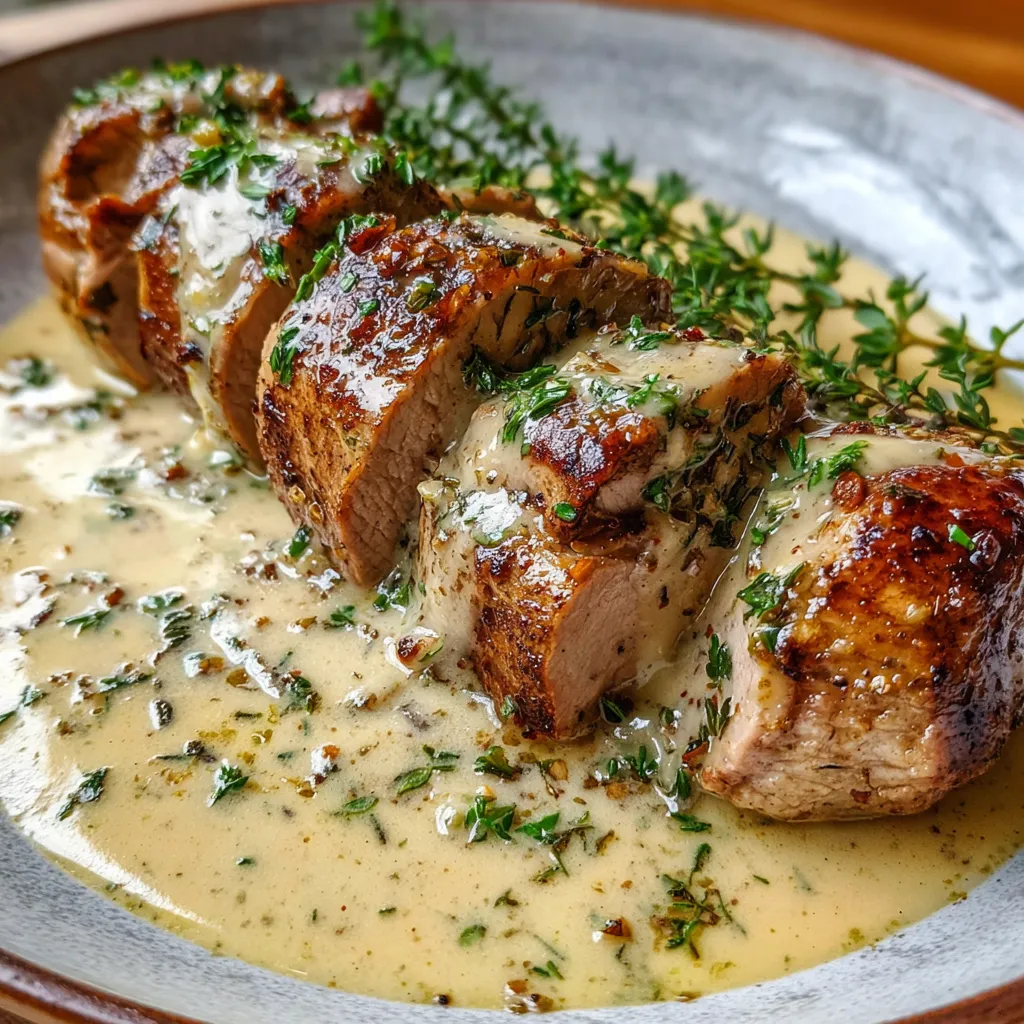

Pork Tenderloin with Creamy Dijon Sauce
Description
A succulent pork tenderloin is crusted to a golden brown, roasted to juicy perfection, then bathed in a luscious cream sauce spiked with Dijon mustard, garlic, and fresh thyme.
Ingredients
Instructions
-
Preheat oven to 400°F.
-
Season pork tenderloin evenly with salt and black pepper.
-
Heat olive oil in an ovenproof skillet over medium-high heat and sear pork on all sides until golden brown, about 2 minutes per side.
-
Transfer the skillet to the preheated oven and roast pork for 12 to 15 minutes, or until an instant-read thermometer inserted into the center reads 145°F.
-
Remove pork from the skillet and let it rest on a cutting board, tented with foil, for 5 minutes.
-
While pork rests, melt butter in the same skillet over medium heat and sauté minced garlic until fragrant, about 1 minute.
-
Stir in chicken broth, heavy cream, Dijon mustard, and chopped fresh thyme, then simmer until the sauce thickens slightly, about 3 to 4 minutes.
-
Slice the pork tenderloin, arrange on plates, and spoon the creamy Dijon sauce over the top before serving.
Nutrition Facts
Serving Size 4
- Amount Per Serving
- Calories 103kcal
Note
- Resting the pork allows juices to redistribute for a juicier result
- Use a meat thermometer to ensure the internal temperature reaches 145°F
- Sauce can be thickened further with a cornstarch slurry if desired
- Leftovers store well in an airtight container in the refrigerator for up to 3 days

