

Tender salmon fillets seared to perfection mingle with juicy cherry tomatoes, fragrant garlic, and sweet onion in a zesty lemon-wine sauce that clings to every al dente strand of spaghetti. This cream-free twist on seafood pasta is light yet satisfying, perfect for a midweek dinner or a special weekend treat. Give this Salmon Pasta Without Cream a whirl and enjoy restaurant-style flavors right at home.
Key Ingredients
Before diving into the cooking, let’s gather the essentials that make this dish shine:
- 200 g spaghetti: Al dente strands that soak up the bright lemon-wine sauce.
- 200 g salmon fillet: Tender protein that flakes beautifully when cooked just right.
- 2 tbsp olive oil: Smooth cooking medium for sautéing garlic and onion.
- 2 cloves garlic: Aromatic base that adds savory depth.
- 1 small onion: Provides sweet richness under the tomatoes.
- 100 g cherry tomatoes: Burst of juicy sweetness to balance the salmon.
- 50 ml white wine: Deglazes the pan and brings acidity.
- 1 tbsp lemon juice: Brightens the sauce with citrus zing.
- 3 tbsp reserved pasta water: Starchy liquid that binds the sauce.
- 2 tbsp grated Parmesan cheese: Savory finish with a hint of nuttiness.
- salt to taste: Enhances all the flavors.
- pepper to taste: Adds a gentle kick.
- 1 tbsp chopped fresh parsley: Fresh color and herbal note.
How To Make Salmon Pasta Without Cream
This Salmon Pasta Without Cream comes together in just a few steps, combining perfectly cooked pasta, seared salmon, and a light lemon-wine sauce. You’ll sauté aromatics, cook your salmon to tender flakiness, then bring it all together with reserved pasta water and a sprinkle of Parmesan. In under 30 minutes, you’ll have a vibrant, creamy-free pasta that feels indulgent without the heaviness of traditional cream-based recipes.
1. Bring a large pot of salted water to a rolling boil. Add the spaghetti and cook according to package instructions until al dente, testing by biting a strand for a slight firmness.
2. Meanwhile, heat the olive oil in a large skillet over medium heat. Add the garlic and onion, sautéing until fragrant and translucent, about 2–3 minutes.
3. Add the cherry tomatoes to the skillet and cook for 2 minutes, stirring occasionally, until they begin to soften and release their juices.
4. Gently place the salmon fillet in the skillet, skin-side down if using skin-on, and cook for 3–4 minutes per side until opaque and flakes easily with a fork.
5. Pour in the white wine to deglaze the pan, using a wooden spoon to scrape up any browned bits. Let the wine reduce by half, intensifying its flavor.
6. Stir in the lemon juice and reserved pasta water, whisking gently to create a light, silky sauce that coats the back of a spoon.
7. Drain the spaghetti, then immediately transfer it to the skillet. Toss everything together over low heat so each strand is coated in the sauce.
8. Sprinkle the grated Parmesan cheese over the pasta, stirring until it melts and enriches the sauce. Season with salt and pepper to taste.
9. Garnish with chopped fresh parsley and serve immediately for best texture and flavor.
Serving Suggestions
This light, flavorful pasta shines when served simply alongside complementary sides. Whether you’re cooking for family or entertaining guests, these ideas will elevate the presentation and dining experience.
- Serve with a crisp green salad, dressed in lemon vinaigrette to echo the pasta’s citrus notes.
- Offer crusty bread or garlic toast for soaking up any extra sauce on the plate.
- Pair with a chilled glass of Sauvignon Blanc or Pinot Grigio to match the white wine in the sauce.
- Add a finishing drizzle of extra virgin olive oil and a dusting of Parmesan for a gourmet touch.
Tips For Perfect Salmon Pasta Without Cream
Got a feeling this pasta might become your new go-to? Here are a few friendly pointers to make sure every bite is spot on:
- Reserve some pasta water before draining to help bind the sauce.
- White wine adds depth but can be replaced with vegetable broth if preferred.
- Avoid overcooking the salmon to maintain a tender texture.
- Fresh parsley brightens the dish and adds a pop of color.
How To Store It
If you have leftovers or want to prep ahead, storing this pasta properly will keep it tasting fresh and vibrant. Here’s how to make sure that bright lemon-wine flavor isn’t lost:
- Refrigerate in an airtight container: Cool the pasta to room temperature, then store up to 2 days.
- Add a splash of water when reheating: Warm gently on the stove or microwave to restore sauce silkiness.
- Freeze for longer storage: Divide into portions in freezer-safe bags, remove excess air, and freeze up to 1 month.
- Avoid overcrowding: If reheating multiple servings, warm in batches to prevent uneven heating.
Frequently Asked Questions
Here are some quick answers to common questions about mastering this dish:
- Q: How can I tell when the spaghetti is cooked al dente?
A: Al dente means the pasta should be tender with a slight firmness at its core. Start tasting a strand about two minutes before the package’s recommended time. If you feel a gentle resistance when you bite, it’s al dente. Drain immediately to prevent further cooking, since it will continue to soften when tossed with the sauce.
- Q: What is the purpose of reserving pasta water, and how much should I reserve?
A: Reserved pasta water contains starch released from the spaghetti as it cooks, which helps bind and thicken the sauce. Three tablespoons is usually sufficient to achieve a silky consistency without diluting flavor. Add it gradually until the sauce coats the pasta evenly.
- Q: Can I substitute the white wine with another ingredient?
A: Yes. If you prefer not to use wine, replace it with an equal amount of vegetable broth for a similar depth of flavor. A splash of apple cider vinegar or extra lemon juice (½ tablespoon) can add brightness, but use sparingly to avoid overpowering the salmon.
- Q: How do I prevent the salmon from overcooking?
A: Choose a fillet about 2 cm thick for even cooking. Sear for 3–4 minutes per side over medium heat; the edges should turn opaque first. Use a fork to gently flake the thickest part—when it flakes easily yet remains slightly translucent inside, it’s perfectly done. Remove from heat immediately to carryover cook no more.
- Q: Can I use frozen salmon fillet for this recipe?
A: Yes, but thaw it completely in the refrigerator for several hours or overnight. Pat it dry with paper towels to remove excess moisture, ensuring a better sear. Allow an extra minute or two per side during cooking since a cold fillet takes slightly longer to heat through.
- Q: How can I adjust this recipe to serve more people?
A: Scale each ingredient proportionally. For example, to serve four instead of two, double the spaghetti to 400 g, salmon to 400 g, and so on. Keep the ratios of olive oil, garlic, onion, cherry tomatoes, white wine, lemon juice, pasta water, and Parmesan cheese consistent to preserve the flavor balance. Ensure your skillet is large enough to accommodate the increased volume.
What Makes This Special
Salmon Pasta Without Cream stands out because it delivers creamy, dreamy texture without a drop of heavy cream—instead, we coax silkiness from simple ingredients like pasta water, Parmesan, and a splash of lemon-wine. It’s light enough for warmer nights but rich enough to feel indulgent, making it a crowd-pleaser year-round. Feel free to print this article and tuck it into your recipe binder. If you have any thoughts, questions, or cooking tales to share, drop a comment below—I’d love to hear how your kitchen adventure turned out!
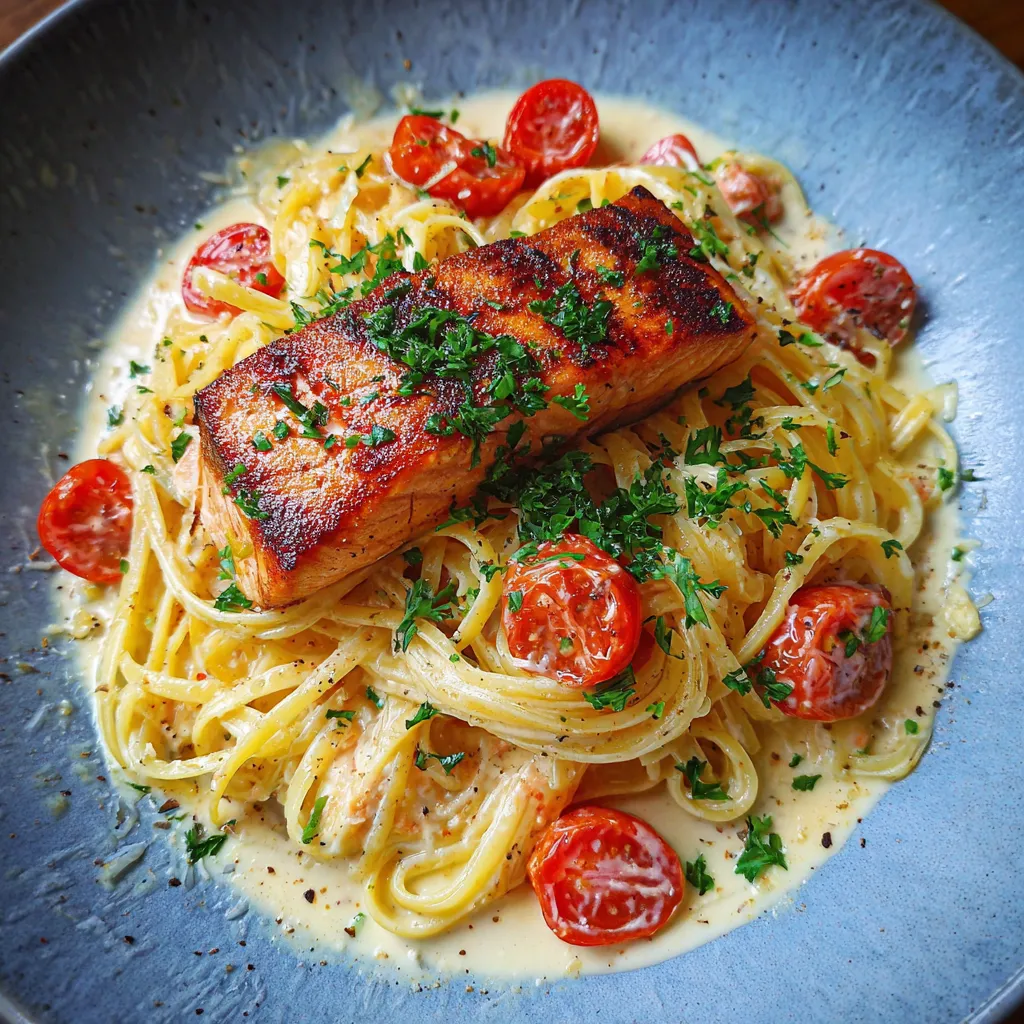

Salmon Pasta Without Cream
Description
Tender salmon fillets seared to perfection join juicy cherry tomatoes, garlic, and onion in a white wine and lemon sauce that clings to every strand of al dente spaghetti. Parmesan adds a savory finish.
Ingredients
Instructions
-
Bring a large pot of salted water to a boil and cook spaghetti according to package instructions until al dente.
-
Meanwhile heat the olive oil in a large skillet over medium heat and sauté the garlic and onion until fragrant and translucent.
-
Add the cherry tomatoes to the skillet and cook for 2 minutes until they begin to soften.
-
Place the salmon fillet in the skillet and cook for 3–4 minutes per side until opaque and flakes easily.
-
Pour in the white wine to deglaze the pan, scraping up any browned bits, and let it reduce by half.
-
Stir in the lemon juice and reserved pasta water to create a light sauce.
-
Drain the spaghetti and add it directly to the skillet, tossing to coat in the sauce.
-
Sprinkle the grated Parmesan cheese over the pasta and season with salt and pepper to taste.
-
Garnish with chopped fresh parsley and serve immediately.
Nutrition Facts
Serving Size 3
- Amount Per Serving
- Calories 167kcal
Note
- Reserve some pasta water before draining to help bind the sauce.
- White wine adds depth but can be replaced with vegetable broth if preferred.
- Avoid overcooking the salmon to maintain a tender texture.
- Fresh parsley brightens the dish and adds a pop of color.

