Nutrition Facts
Serving Size 16
- Amount Per Serving
- Calories 3kcal

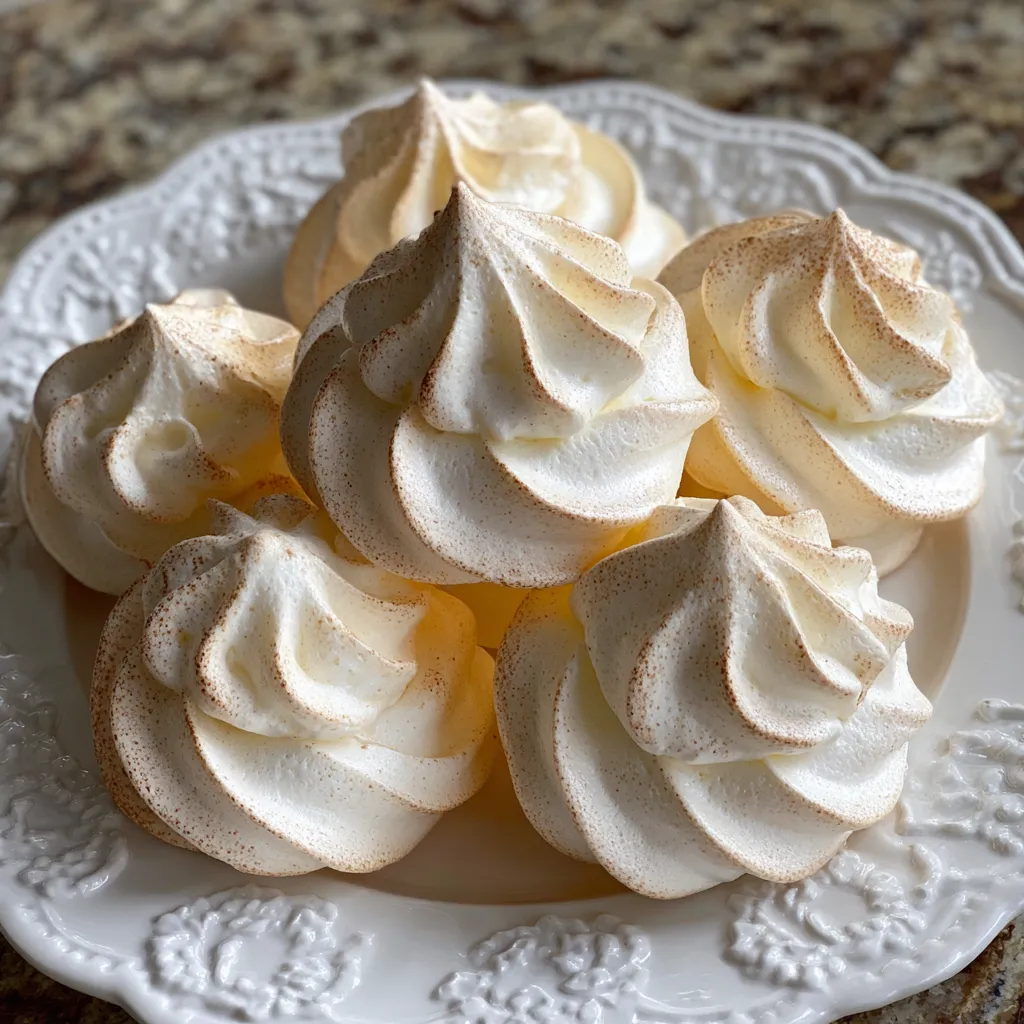
Crispy French Vanilla Meringue Cookies deliver airy rosettes of vanilla-scented meringue that melt with every crisp bite. With just egg whites, sugar, and a gentle bake, these light-as-air treats crackle on the surface and dissolve on the tongue, delivering pure vanilla sweetness. Perfect for a delicate dessert or an elegant tea-time snack, you’ll love how simple ingredients transform into cloud-like cookies that stay crisp for hours. Ready your piping bag and let’s make something magical!
Start with quality pantry staples to guarantee those signature peaks and crisp edges.
These steps will guide you through whipping, piping, and slow-bake drying for those perfectly crisp cookies. Take your time at each stage—clean tools, low temperature, and gentle folding ensure your meringues turn out light and crackly.
1. Preheat oven to 200°F and line baking sheets with parchment paper. Make sure the oven is fully warmed before baking to maintain consistent heat, and smooth out any wrinkles in the parchment.
2. In a clean bowl, whisk egg whites with cream of tartar and salt until frothy. Use an electric mixer on medium speed to break up the whites and incorporate air evenly.
3. Gradually add sugar a tablespoon at a time while beating until stiff, glossy peaks form. Add sugar slowly to allow it to dissolve fully—rub a bit between your fingers to check for grit.
4. Gently fold in vanilla extract until evenly combined. Use a silicone spatula and scoop from the bottom up to preserve air in the meringue.
5. Transfer meringue to a piping bag fitted with a star tip and pipe small rosettes onto prepared sheets. Hold the bag vertically and apply even pressure, spacing rosettes about an inch apart.
6. Bake for 1 hour then turn off oven and crack the door, letting cookies dry for an additional hour. This low-and-slow method locks in shape without browning.
7. Remove meringues from oven and cool completely before serving. Let them rest on the baking sheet to avoid moisture from melting them.
Elevate these crisp vanilla clouds with complementary flavors and textures:
Mastering meringue is all about patience, precision, and clean equipment. Follow these friendly pointers to ensure each cookie emerges flawlessly crisp and flavorful:
Proper storage keeps your meringues crisp and ready whenever a sweet craving strikes:
Store your cookies at room temperature in a cool, dry place. Ideal humidity is low so they don’t soften:
Let’s tackle some common meringue mysteries so you feel confident piping those perfect rosettes:
The total process takes about 2½ hours. Preparation—including separating eggs, cleaning equipment, whipping the whites, and piping—takes roughly 30 minutes. Baking at 200°F requires 1 hour, followed by an additional hour of gentle drying in the turned-off oven with the door cracked open.
Cream of tartar acts as an acidulant that stabilizes the egg white foam. It helps the proteins unfold and form a stronger network, ensuring you achieve stiff, glossy peaks that hold their shape during piping and baking. Without it, the foam can collapse or weep moisture.
Even a trace of yolk or grease interferes with foam formation, because fats inhibit the proteins from stretching and trapping air. To guarantee proper whipping, use a perfectly clean, dry bowl and beaters, and separate the whites carefully, ensuring no shell fragments or yolk remnants remain.
It’s not recommended. Baking at 200°F slowly dries the meringues, locking in the shape and preventing browning or cracking. Higher temperatures may cause the outsides to brown or blister while leaving the centers chewy, defeating the signature crisp texture.
If the peaks are soft or droopy, continue beating until the peaks stand straight, adding sugar more slowly. Ensure the sugar is fully dissolved by rubbing a small amount between your fingers—it should feel smooth, not gritty. If your baked cookies are still tacky or sticky, return them to the oven for another 15–30 minutes with the door propped open to allow extra moisture to escape.
Once fully cooled, store in an airtight container in a cool, dry place at room temperature. Adding a silica gel packet can help absorb residual moisture. Avoid refrigeration, as humidity will make the cookies soft or sticky.
You can gently fold in a few drops of gel-based food coloring when the meringue reaches stiff peaks—mix sparingly to avoid deflating. For flavor variations, swap the vanilla extract for almond, lemon, or peppermint extract (start with ½ teaspoon and adjust to taste). You can also fold in finely chopped freeze-dried fruit powder for natural color and flavor.
There’s something delightfully whimsical about piping tiny vanilla clouds that crackle and vanish on the tongue—Crispy French Vanilla Meringue Cookies bring pure magic to your dessert table. This recipe works because of its simple ingredients, patient low-temperature bake, and the little details (like cream of tartar and slow sugar addition) that deliver perfect peaks every time. Go ahead and print this out, bookmark it for later, and let me know how yours turn out—comments, questions, or proud cookie pics are all welcome!
These light-as-air cookies crackle on the surface and dissolve on the tongue, delivering pure vanilla sweetness. With just egg whites, sugar, and a gentle bake, you'll create cloud-like treats that stay crisp hours later.
Serving Size 16

Hey there! I’m Noah Blake, and welcome to RecipesDive.com — a blog for anyone who’s ready to dive headfirst into real cooking without the intimidation.