

This Caramelized Onion Pasta with Chilli Oil brings together sweet golden onions, fragrant garlic, and a cheeky kick of chili oil to transform humble pantry staples into a weeknight hero. Each silken strand of spaghetti or fettuccine is coated in that rich, umami-packed sauce, crowned with Parmesan and parsley for brightness. If your dinner rotation needs a flavor-packed shake-up, let this recipe show you how simple moments in the kitchen become extraordinary meals.
Key Ingredients
Before you heat the skillet, gather these simple yet powerful ingredients that form the backbone of our sweet-and-spicy pasta.
- 400 grams of pasta (spaghetti or fettuccine): Provides the silky strands that carry the caramelized onion sauce beautifully.
- 2 large onions, thinly sliced: Caramelize into sweet, golden ribbons that form the base of the sauce.
- 4 tablespoons of olive oil: Helps cook onions slowly and creates a glossy, flavorful coating for the pasta.
- 1 teaspoon of sugar: Speeds up the Maillard reaction, boosting the onions’ natural sweetness and color.
- Salt, to taste: Enhances and balances all the flavors as the onions caramelize and the sauce comes together.
- Freshly cracked black pepper, to taste: Adds a pungent warmth and complexity to the final dish.
- 2 cloves of garlic, minced: Contributes aromatic depth and a savory backbone to the chili-infused sauce.
- 1 teaspoon of red chili flakes (adjust based on heat preference): Infuses a gentle heat and vibrant color throughout the pasta.
- ¼ cup of grated Parmesan cheese (optional): Offers a nutty, umami-rich finish that ties all elements together.
- Fresh parsley, chopped for garnish (optional): Lends a bright, herbaceous note and visual contrast at the end.
How To Make Caramelized Onion Pasta with Chilli Oil
Now that your ingredients are prepped, let’s transform them into a mouthwatering dish. This recipe takes you from boiling the pasta to slowly coaxing out sweet flavors from the onions, building layers of taste with garlic and chili flakes, then uniting everything in your skillet until each strand is luxuriously coated. Follow these steps, and you’ll soon be twirling perfection on your fork.
1. Begin by boiling a large pot of salted water over high heat. Once it reaches a rolling boil, add the pasta and cook according to package instructions until al dente. Before draining, reserve about 1 cup of pasta water to adjust the sauce’s consistency, then drain and set pasta aside.
2. While the pasta cooks, heat 2 tablespoons of olive oil in a large skillet over medium heat. Add the sliced onions and stir to coat evenly in oil, ensuring each piece makes contact with the pan for even cooking.
3. After about 5 minutes, sprinkle in the sugar and a pinch of salt—this jumpstarts the caramelization process. Continue to cook the onions, stirring occasionally, for 20 to 30 minutes or until they turn a deep golden brown and have reduced substantially. Adjust the heat as needed to prevent burning.
4. When the onions are nearly caramelized, add the minced garlic and red chili flakes. Sauté for 2 to 3 minutes until the garlic is fragrant and lightly golden, taking care not to let it burn.
5. Add the drained pasta back into the skillet with the onion-garlic mixture. Pour in the remaining 2 tablespoons of olive oil and toss vigorously so every strand is coated in that sweet and spicy sauce.
6. If the pasta seems dry, gradually add reserved pasta water in small splashes until you reach your desired saucy consistency. Season with additional salt and freshly cracked black pepper to taste.
7. Divide the pasta among plates, then top with grated Parmesan cheese and chopped parsley, if using. Finish with an extra drizzle of chili oil for a final pop of heat and color. Serve immediately.
Serving Suggestions
Serving this Caramelized Onion Pasta with Chilli Oil is almost as fun as making it, and a few simple touches can elevate each plate into a memorable dining experience. Whether you’re hosting friends for dinner or just treating yourself to a cozy night in, these serving ideas will help you present your pasta in style and maximize every flavor note. Grab your favorite dinnerware, set the mood, and let your guests marvel at how something so effortless can taste so spectacular.
- Crisp Green Salad: Balance the richness with a simple mix of peppery arugula, cherry tomatoes, and a light lemon vinaigrette to refresh the palate between bites.
- Toasted Garlic Bread: Rub slices of crusty baguette with a cut clove of garlic, drizzle with olive oil, and toast until golden for a crunchy companion.
- Wine Pairing: Serve with a glass of light-bodied red wine like Pinot Noir or a crisp dry white such as Sauvignon Blanc to complement the sweet-spicy sauce.
- Extra Fresh Herbs: Sprinkle additional fresh parsley or a few torn basil leaves on top to add a burst of color and herbaceous brightness.
Tips For Perfect Caramelized Onion Pasta with Chilli Oil
Mastering the art of caramelized onions and balancing heat with sweetness is what makes this pasta dish a standout in your weeknight rotation. It might seem like a straightforward recipe, but a few insider pointers will turn good into outstanding. From timing your stovetop patience to making quick swaps for milder flavors, these tips will help you navigate the process with confidence and put your own spin on every forkful.
- Caramelizing onions takes some time, but the flavor is worth the patience.
- You can substitute onions with shallots for a slightly milder taste.
- For a vegetarian option, the recipe is already suitable; just ensure the cheese is vegetarian-friendly.
- This dish is versatile: add vegetables like spinach or zucchinis for extra nutrition.
- Leftovers can be stored in the fridge and reheated; add a splash of water to loosen it up.
How To Store It
Cooking up a big batch of this pasta means you’ll likely have leftovers ready to enjoy later in the week. To keep that sweet-onion flavor and spicy chili notes fresh, a little attention to storage technique goes a long way. Proper cooling, airtight containers, and gentle reheating will help you treat tomorrow’s meal just as well as tonight’s.
- Cool Completely: Let the pasta reach room temperature before storing to prevent condensation and soggy texture.
- Airtight Container: Transfer leftovers into a sealed container and refrigerate for up to 3 days to preserve flavor and texture.
- Gentle Reheat: Warm in a skillet over medium-low heat with a splash of water or olive oil to revive the sauce without drying out.
- Separate Garnishes: Store grated Parmesan and chopped parsley separately, adding them fresh just before serving to maintain their brightness.
Frequently Asked Questions
Here are some quick answers to questions you might have when tackling this caramelized onion pasta—no fluff, just straight talk.
- How do I know when the onions are fully caramelized and ready for the next step?
The onions are fully caramelized when they turn a deep golden-brown color, have reduced significantly in volume, and taste sweet with no raw bite. This usually takes 20 to 30 minutes over medium heat. Stir every few minutes, adjust the heat if they’re browning too fast, and look for even coloring without any black spots.
- What can I use instead of spaghetti or fettuccine?
You can substitute any long or short pasta you prefer—penne, rigatoni, or linguine all work well. Just follow the package instructions for al dente cooking, reserve about one cup of pasta water, then drain before tossing with the onion mixture.
- My pasta sauce feels too oily—how can I fix that?
If the sauce seems oily, add reserved pasta water in small splashes until you reach a creamy consistency. The starchy water helps emulsify the oil and onion juices. You can also reduce the final drizzle of olive oil or chili oil and finish with a sprinkle of Parmesan, which adds body without extra oil.
- How can I adjust the heat level to suit milder or spicier tastes?
For milder heat, reduce the red chili flakes to ½ teaspoon or omit them entirely and finish with a light drizzle of chili oil at the table. For extra heat, increase the flakes to 1½ teaspoons, add a pinch of cayenne, or use a hotter chili oil. Taste as you go to ensure it suits your preference.
- Why is sugar added when caramelizing the onions?
The sugar helps draw out moisture and speeds up the Maillard reaction, giving the onions a richer, sweeter flavor and deeper color. Without a touch of sugar, the natural sugars in onions can take longer to fully caramelize, especially if your onions aren’t very sweet.
- Can I cook the onions and store them ahead of time?
Yes. You can caramelize the onions a day in advance, cool them to room temperature, then refrigerate in an airtight container. When ready to serve, gently reheat in a skillet with a splash of olive oil, then add garlic and chili flakes before tossing with freshly cooked pasta.
- How should I store and reheat leftovers?
Store leftovers in an airtight container in the refrigerator for up to 3 days. To reheat, warm them gently in a skillet over medium-low heat with a splash of water or olive oil. Stir frequently until heated through to prevent sticking or drying out.
- Are there any easy add-ins for extra flavor or nutrition?
Yes. Stir in baby spinach or sliced zucchini during the last 2 to 3 minutes of onion caramelization so they wilt slightly. You can also toss in toasted pine nuts for crunch or fold through cooked mushrooms for an earthy note. Finish with fresh parsley and a squeeze of lemon juice for brightness.
What Makes This Special
Between the slow-sweet onion caramelization and that cheeky chili oil zing, this pasta recipe strikes a perfect balance of cozy comfort and lively heat that you won’t find in a jarred sauce. It works because the simple ingredients lean on each other—olive oil softens the onions, sugar unlocks their hidden sweetness, and chili flakes invigorate every forkful. It’s adaptable, fun to make, and the kind of dish you’ll want to print out and stash in your recipe binder for dinner wins on demand. If you give it a spin, drop a comment below with your favorite tweaks or any questions that pop up—I’m here to help make every bite delicious.
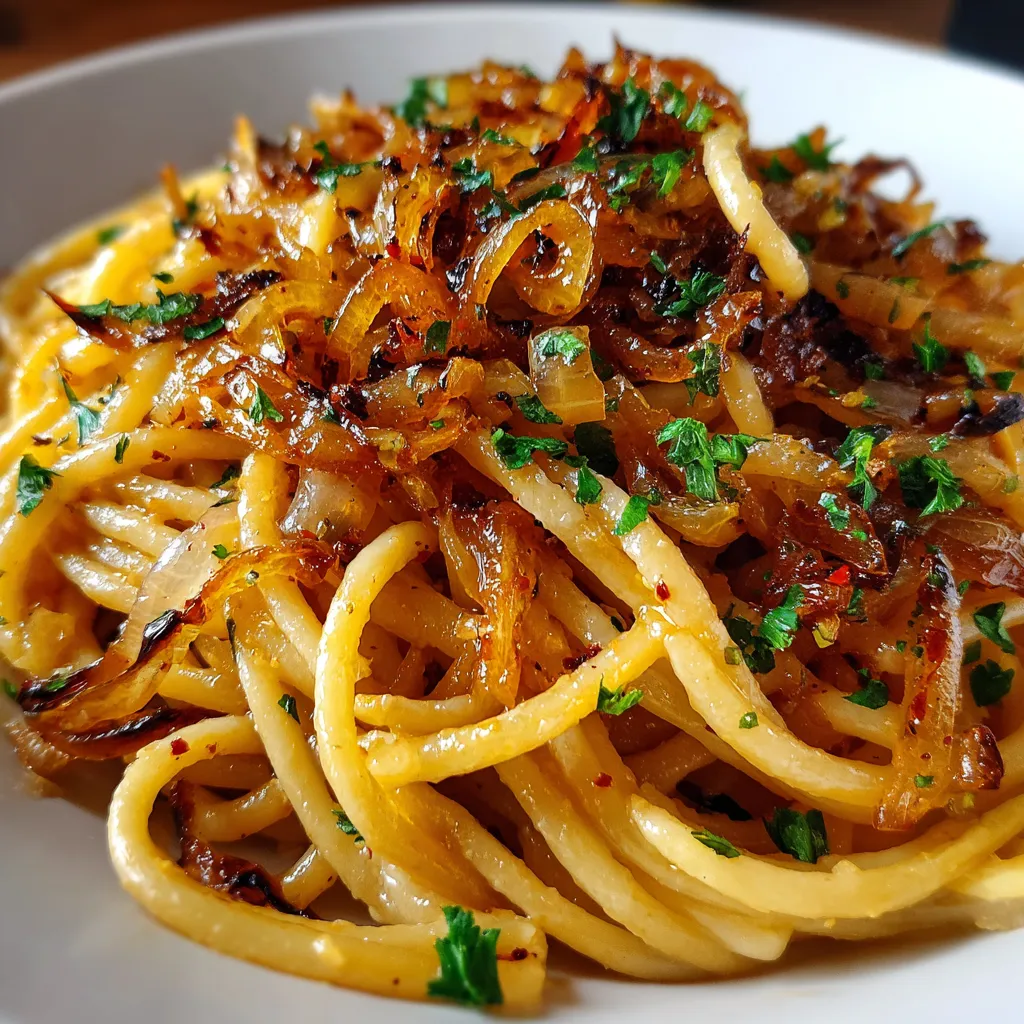

Caramelized Onion Pasta with Chilli Oil
Description
Caramelized onions transform into a rich, sweet sauce that coats each strand of pasta, kissed by fragrant garlic and a kick of chili oil, then topped with Parmesan and parsley for a satisfying, layered flavor.
Ingredients
Instructions
-
Begin by boiling a large pot of salted water over high heat. Once boiling, add the pasta and cook according to the package instructions until al dente. Reserve about 1 cup of pasta water, then drain the pasta and set aside.
-
While the pasta is cooking, heat 2 tablespoons of olive oil in a large skillet over medium heat. Add the sliced onions to the skillet and stir to coat them in the oil.
-
After about 5 minutes, sprinkle in the sugar and a pinch of salt. This will help to caramelize the onions. Continue to cook the onions, stirring occasionally, for about 20-30 minutes, or until they are golden brown and have reduced in volume. Adjust the heat if necessary to prevent burning.
-
When the onions are nearly done caramelizing, add the minced garlic and red chili flakes to the skillet. Sauté for another 2-3 minutes until the garlic is fragrant but not burnt.
-
Add the drained pasta to the skillet with the caramelized onions and garlic. Pour in the remaining 2 tablespoons of olive oil and toss everything together, ensuring the pasta is well coated with the onion mixture.
-
If the pasta seems dry, gradually add the reserved pasta water a little at a time until the desired consistency is reached. Season with additional salt and freshly cracked black pepper to taste.
-
Plate the pasta and sprinkle with grated Parmesan cheese and chopped parsley, if using. Drizzle with extra chili oil for added flavor and garnish.
Nutrition Facts
Serving Size 4
- Amount Per Serving
- Calories 130kcal
Note
- Caramelizing onions takes some time, but the flavor is worth the patience.
- You can substitute onions with shallots for a slightly milder taste.
- For a vegetarian option, the recipe is already suitable; just ensure the cheese is vegetarian-friendly.
- This dish is versatile—add vegetables like spinach or zucchinis for extra nutrition.
- Leftovers can be stored in the fridge and reheated; add a splash of water to loosen it up.

