

Creamy Salmon Spinach Pasta is a cozy escape for weeknight dinners and laid-back weekends alike, twirling tender pasta ribbons in a silky cream sauce studded with flaky salmon and fresh spinach. Rich, velvety cream cloaks al dente fettuccine, mingling nutty Parmesan, zesty lemon, and delicate salmon flakes for a symphony of flavors that feels indulgent yet approachable—grab your fork and get ready to dive into this effortlessly elegant dish.
Key Ingredients
Let’s gather the essentials to bring this Creamy Salmon Spinach Pasta to life:
- 8 ounces fettuccine or pasta of choice: Provides the perfect base for soaking up every bit of the silky cream sauce.
- 2 tablespoons olive oil: Adds richness and creates the ideal surface for sautéing garlic.
- 2 cloves garlic, minced: Builds an aromatic foundation that infuses the sauce with savory depth.
- 8 ounces canned or fresh salmon, drained and flaked: Supplies tender protein flecks and briny flavor.
- 4 cups fresh spinach, roughly chopped: Offers a pop of color and an earthy snap as it wilts into the sauce.
- 1 cup heavy cream: Delivers that luxurious, velvety texture we all crave.
- 1 cup grated Parmesan cheese: Contributes nutty umami richness and helps thicken the sauce.
- 1 tablespoon lemon juice: Brightens and balances the creaminess with a refreshing zing.
- Salt and pepper to taste: Essential for rounding out and enhancing every flavor.
- Fresh parsley, chopped, for garnish: Adds a final burst of fresh herbal color.
How To Make Creamy Salmon Spinach Pasta
This simple, one-pan approach means you’ll spend less time cleaning up and more time enjoying a comforting meal. You’ll start by cooking your pasta perfectly al dente, then build layers of flavor in the same skillet—garlic, salmon, and spinach—before bringing it all together in a creamy, Parmesan-laced sauce. Follow these detailed steps to nail each technique:
1. Begin by cooking the pasta according to the package instructions until al dente. Drain the pasta and set aside, reserving about ½ cup of pasta water to adjust sauce consistency later.
2. In a large skillet over medium heat, warm the olive oil. Add the minced garlic and sauté for about 1 minute, stirring constantly to avoid burning and to release its fragrance.
3. Add the flaked salmon to the skillet and cook for 2–3 minutes, gently stirring until the salmon is heated through and starts to release its savory juices.
4. Stir in the chopped spinach and cook until wilted—about 2–3 minutes—so it folds easily into the sauce and retains its vibrant green color.
5. Pour in the heavy cream and bring the mixture to a gentle simmer. Let it cook for 2–3 minutes, stirring occasionally, until the sauce begins to thicken slightly.
6. Add the grated Parmesan cheese and stir continuously until it melts fully into the sauce. If the sauce becomes too thick, gradually whisk in the reserved pasta water until you reach your desired consistency.
7. Stir in the lemon juice and season with salt and pepper to taste, balancing the creaminess with a bright citrus kick.
8. Add the cooked pasta to the skillet and toss until well coated in the creamy sauce. Continue cooking for an additional 2 minutes to heat everything through and allow the flavors to meld.
9. Serve immediately, garnished with freshly chopped parsley for a final touch of herbal freshness.
Serving Suggestions
To make your Creamy Salmon Spinach Pasta experience even more memorable, consider these serving ideas that elevate every bite:
- Serve with toasted garlic bread to soak up every last drop of the luscious sauce.
- Add a sprinkle of red pepper flakes on top for a gentle, warming kick.
- Pair with a simple citrusy arugula salad dressed in lemon vinaigrette to complement the creaminess.
- Enjoy alongside a chilled glass of crisp white wine—think Sauvignon Blanc or Pinot Grigio—for a balanced meal.
Tips For Perfect Creamy Salmon Spinach Pasta
Mastering this dish is all about balancing flavors and textures. A few insider tweaks can take it from great to extraordinary, so keep these friendly tips in mind next time you whip up your skillet:
- For added depth of flavor, consider adding a pinch of red pepper flakes while sautéing the garlic.
- This dish can be adapted with different types of seafood, such as shrimp or crab, for variety.
- Feel free to swap out the spinach for other greens, like kale or arugula, for a different texture and taste.
- Leftovers can be stored in an airtight container in the refrigerator for up to 2 days; reheat gently to avoid overcooking the salmon.
- For a lighter version, substitute heavy cream with Greek yogurt or a lower-fat cream option, just be sure to temper it to prevent curdling.
How To Store It
Whether you’re meal-prepping or saving leftovers, proper storage ensures your pasta stays flavorful and creamy. Here’s how to keep it at its best:
- Refrigerate in an airtight container for up to two days to lock in moisture and flavor.
- Store pasta and sauce separately if you can—this prevents the noodles from becoming overly soft.
- Reheat gently in a skillet over low heat, adding a splash of pasta water or milk to revive the sauce’s creaminess.
- Freeze portions (pasta and sauce apart) in freezer-safe containers for up to one month; thaw overnight in the fridge before warming.
Frequently Asked Questions
Here are answers to the most common questions about Creamy Salmon Spinach Pasta:
- Q: How long does it take to prepare and cook the Creamy Salmon Spinach Pasta?
A: The entire process takes roughly 30 minutes from start to finish. This includes about 10 minutes to cook the pasta and prepare ingredients, 8 minutes to sauté garlic, salmon, and wilt the spinach, and another 10 minutes to simmer the cream, melt the Parmesan, toss everything together, and finish seasoning.
- Q: Can I use fresh salmon instead of canned salmon, and how should I prepare it?
A: Fresh salmon can be used in place of canned salmon. Pat the fillet dry, season lightly with salt and pepper, and either pan-sear for about 3–4 minutes per side over medium heat or bake at 400°F for 10–12 minutes until just cooked through. Flake the cooked salmon into bite-sized pieces before adding it to the skillet.
- Q: What’s the best way to prevent the sauce from becoming too thin or too thick?
A: If the sauce thickens too much after adding the cream and Parmesan, gradually stir in the reserved pasta water a tablespoon at a time until it reaches your desired consistency. If it’s too thin, let it simmer on low for an extra minute or two to reduce and concentrate. Maintaining a gentle simmer helps you control thickness without curdling the cream.
- Q: How can I adapt this recipe for a lighter option?
A: To lighten up the dish, substitute the heavy cream with an equal amount of plain Greek yogurt or a lower-fat cooking cream. Be sure to temper the yogurt by whisking in a small ladle of hot sauce first, then stir it into the skillet off the heat to prevent curdling. You can also use half Parmesan and half part-skim mozzarella to reduce fat content.
- Q: What are some suitable ingredient substitutions if I don’t have spinach or Parmesan?
A: If you’re out of spinach, kale or arugula both work well—just cook kale a minute or two longer to soften. For the cheese, Pecorino Romano offers a sharper bite, while Asiago melts smoothly and adds a milder flavor. Adjust seasoning as needed since different cheeses vary in saltiness.
- Q: How should I store and reheat leftovers to maintain the best flavor and texture?
A: Store any leftovers in an airtight container in the refrigerator for up to two days. Reheat gently in a skillet over low heat, adding a splash of milk or pasta water to revive the creaminess. Stir frequently to warm evenly and avoid overcooking the salmon.
- Q: Can I make this recipe ahead of time for meal prep or entertaining?
A: Yes. Cook the pasta and sauce separately, then combine just before serving. Store the sauce and pasta in separate containers in the refrigerator for up to a day. To reheat, warm the sauce gently, stir in the pasta, and heat through for a fresh-tasting dish.
What Makes This Special
This Creamy Salmon Spinach Pasta hits all the sweet spots: it’s a luscious, fuss-free one-pan wonder that brings together flaky seafood, vibrant greens, and a dreamy Parmesan cream sauce. Its beauty lies in its simplicity—every ingredient shines, every step is straightforward, and you’re guaranteed that cozy, comforting hug in a bowl. Go ahead and print this recipe to keep on your fridge, give it a whirl, and let me know how yours turns out or if you have any questions!
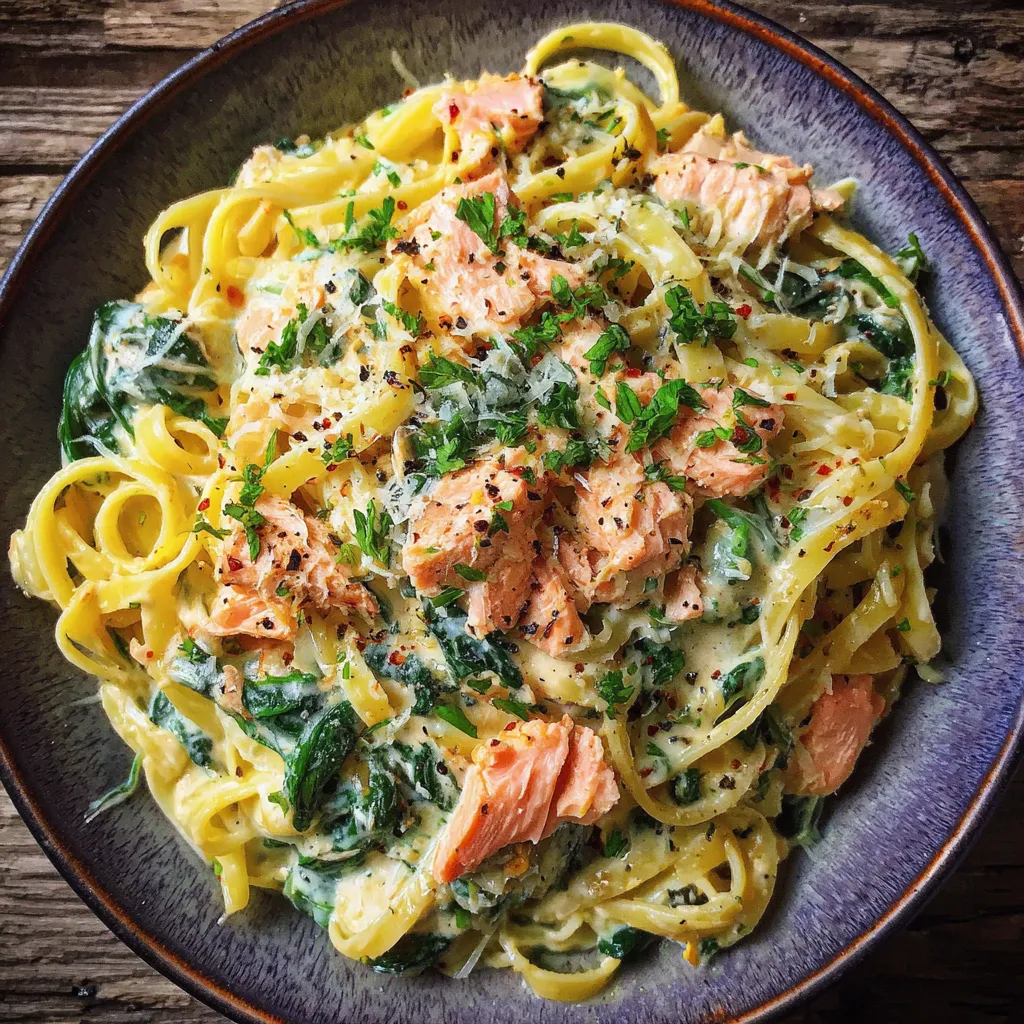

Creamy Salmon Spinach Pasta
Description
Rich, velvety cream cloaks al dente pasta, mingling nutty Parmesan, zesty lemon, and tender salmon flakes. Bright spinach wilts into the sauce, adding fresh color and a subtle earthy snap to every satisfying bite.
Ingredients
Instructions
-
Begin by cooking the pasta according to the package instructions until al dente. Drain the pasta and set aside, reserving about 1/2 cup of pasta water.
-
In a large skillet, heat the olive oil over medium heat. Add the minced garlic and sauté for about 1 minute, being careful not to burn it.
-
Add the flaked salmon to the skillet and cook for another 2-3 minutes until heated through.
-
Stir in the chopped spinach and cook until wilted, approximately 2-3 minutes.
-
Pour in the heavy cream and bring the mixture to a gentle simmer. Let it cook for 2-3 minutes until it begins to thicken.
-
Add the grated Parmesan cheese and stir until melted and fully incorporated into the sauce. If the sauce is too thick, gradually add in the reserved pasta water until you reach your desired consistency.
-
Stir in the lemon juice and season with salt and pepper to taste.
-
Add the cooked pasta to the skillet and toss until well coated in the creamy sauce. Cook for an additional 2 minutes to heat everything through.
-
Serve immediately, garnished with freshly chopped parsley.
Nutrition Facts
Serving Size 4
- Amount Per Serving
- Calories 150kcal
Note
- For added depth of flavor, consider adding a pinch of red pepper flakes while sautéing the garlic.
- This dish can be adapted with different types of seafood, such as shrimp or crab.
- Feel free to swap out the spinach for other greens, like kale or arugula, for a different twist.
- Leftovers can be stored in an airtight container in the refrigerator for up to 2 days; reheat gently to avoid overcooking the salmon.
- For a lighter version, substitute heavy cream with Greek yogurt or a lower-fat cream option.

