

Who knew a vegan pasta could feel so indulgent? Creamy Vegan Pesto Pasta with Roasted Tomatoes brings together silky basil-coconut pesto that clings to al dente whole-grain noodles, studded with tart-sweet bursts of blistered cherry tomatoes. It’s a plant-based dream dinner that impresses both weeknight crowds and weekend guests alike, thanks to vibrant flavors and simple ingredients. Ready to dive into this swirl of creamy goodness?
Key Ingredients
Before you get started, let’s round up the fresh produce, pantry staples, and creamy elements that make this recipe sing:
- 12 ounces of whole grain or gluten-free pasta: The hearty base that holds each creamy, basil-infused coating perfectly.
- 2 cups cherry tomatoes, halved: Sweet, juicy bursts that caramelize and add a tangy contrast.
- 1 tablespoon olive oil: Helps roast the tomatoes to golden perfection and enhances flavor.
- Salt and pepper to taste: Essential seasonings that elevate every ingredient.
- 2 cups fresh basil leaves: The aromatic star of the pesto, delivering bright, herbal notes.
- 1/2 cup pine nuts (you can substitute with walnuts or sunflower seeds): Offers a rich, nutty flavor and creamy texture in the sauce.
- 3 cloves garlic, minced: Infuses a pungent kick and depth of flavor.
- 1/4 cup nutritional yeast: Adds cheesy, savory undertones while keeping the recipe vegan.
- 1/4 cup lemon juice: Brings a citrusy tang that balances the richness.
- 1/4 teaspoon black pepper: Provides gentle warmth and spice throughout.
- 1 cup canned coconut milk (full fat for creaminess): Creates a luscious, dairy-free cream that binds the pesto.
- 1/4 teaspoon red pepper flakes (optional): For a hint of heat that awakens the palate.
- Fresh basil leaves for garnish: A final pop of color and freshness on top.
How To Make Creamy Vegan Pesto Pasta with Roasted Tomatoes
Making this Creamy Vegan Pesto Pasta with Roasted Tomatoes feels like orchestrating a symphony of textures and flavors—you'll roast cherry tomatoes until they’re caramelized, cook pasta al dente, and blend the vibrant pesto into a silky coconut milk sauce. With just a handful of steps, you’ll transform simple ingredients into a dish that’s both comforting and show-stopping. Follow these instructions to get those blistered tomatoes, perfectly al dente noodles, and a rich, herbaceous sauce that clings to every strand.
1. Preheat your oven to 400°F (200°C) and line a baking sheet with parchment paper or lightly grease it to prevent sticking.
2. In a mixing bowl, toss the halved cherry tomatoes with olive oil, salt, and pepper. Spread them in a single layer on the prepared baking sheet and roast for 20–25 minutes, until they’re blistered, caramelized, and slightly shriveled, stirring halfway through.
3. While the tomatoes are roasting, bring a large pot of salted water to a vigorous boil. Add the pasta and cook according to package directions until al dente. Reserve 1 cup of the pasta cooking water, then drain and set the pasta aside.
4. In a food processor or high-speed blender, combine fresh basil, pine nuts, minced garlic, nutritional yeast, lemon juice, black pepper, and red pepper flakes if using. Pulse until everything is finely chopped and well distributed.
5. With the processor running on low, slowly pour in the coconut milk until the pesto turns into a smooth, creamy sauce. If it feels too thick, add a splash of the reserved pasta water until you reach your preferred consistency.
6. Transfer the cooked pasta into a large mixing bowl and pour the creamy pesto sauce over it. Gently toss to coat each noodle evenly, adding more pasta water if needed for a silky finish.
7. Carefully fold the roasted tomatoes into the pasta, keeping some whole for visual appeal. Garnish with extra fresh basil leaves and a sprinkle of pine nuts before serving immediately.
Serving Suggestions
While this Creamy Vegan Pesto Pasta with Roasted Tomatoes stands beautifully on its own, a few thoughtful accompaniments can elevate your meal even further. A crisp salad adds crunch, crusty bread sops up every drop of sauce, and a bright citrus element cuts through the richness. Whether you’re hosting friends or enjoying a quiet dinner, these serving ideas make your plate look and taste like restaurant-quality fare.
- Garlic Bread: Warm, golden slices roll in buttery olive oil and garlic for a crunchy contrast that soaks up creamy sauce.
- Mixed Green Salad: Toss peppery arugula, crisp romaine, and sliced cucumbers with a lemon vinaigrette for refreshing balance.
- Lemon Wedges: A squeeze of fresh lemon brightens the dish and cuts through the richness of coconut milk.
- Chilled White Wine: Pair with a crisp Sauvignon Blanc or Pinot Grigio to complement the herbal and tangy notes.
Tips For Perfect Creamy Vegan Pesto Pasta with Roasted Tomatoes
Diving into this Creamy Vegan Pesto Pasta with Roasted Tomatoes, you’ve got so much room for creativity and personalized tweaks. Don’t stress if you want to sneak in extra veggies or pump up the protein—this recipe welcomes alterations like an old friend. From bright spinach leaves to hearty beans, it all works wonders with a silky coconut pesto. Keep your leftovers fresh by following a few simple storage tricks, and mix in a side or two to turn this into a full-course feast. Let’s explore some handy notes to ensure every forkful is pure bliss.
- Add Vegetables: Feel free to stir in baby spinach or zucchini ribbons during the final toss to boost color, texture, and nutrients.
- Boost Protein: Fold in cooked chickpeas or white beans when combining the pasta and sauce for an extra dose of plant-based protein.
- Chill with Care: Store leftovers in an airtight container in the fridge for up to 3 days; remember the sauce may become thicker when cold, so loosen with pasta water or coconut milk before reheating.
- Perfect Pairings: Serve alongside a simple side salad or slices of garlic bread to create a more filling, balanced meal.
- Nut Variations: Swap pine nuts for walnuts, almonds, or sunflower seeds to experiment with new flavors and textures in your pesto.
How To Store It
After enjoying your Creamy Vegan Pesto Pasta with Roasted Tomatoes, proper storage keeps the flavors vibrant and the sauce smoothly creamy for days. Whether you plan to enjoy leftovers at lunch or save portions for a quick weeknight grab, easy storage methods make all the difference. Follow these tips to maintain texture and taste, so each reheated bowl tastes just as fresh as the first serving.
- Refrigerate in Airtight Container: Transfer cooled pasta into a sealed container and store in the fridge for up to 3 days. Before serving, stir in a splash of reserved pasta water or coconut milk to restore creaminess.
- Freeze Sauce Separately: Portion the pesto sauce into freezer-safe jars, leaving space for expansion. Thaw in the refrigerator overnight and whisk in pasta water if needed.
- Avoid Overcrowding: When storing multiple servings, use individual containers or small portions to ensure even reheating and prevent soggy pasta.
- Gentle Reheating: Warm leftovers on the stovetop over low heat, stirring frequently and adding liquid as needed, to preserve the sauce’s silky texture.
Frequently Asked Questions
Got questions about making this vegan pesto pasta? Here are some answers to common queries:
- Q: How long does it take to prepare and cook the Creamy Vegan Pesto Pasta with Roasted Tomatoes?
From start to finish, plan on about 40 minutes. Roasting the cherry tomatoes takes 20–25 minutes while you boil and cook the pasta (about 8–12 minutes depending on the type). Preparing and blending the pesto takes roughly 5–7 minutes, and tossing everything together adds a couple more minutes.
- Q: Can I substitute the pine nuts in the pesto, and how will that affect the flavor?
Yes, you can swap pine nuts for walnuts or sunflower seeds. Walnuts will add a richer, earthier taste and a slightly softer texture, while sunflower seeds offer a mild, nut-free alternative with a subtle sweetness. Adjust quantities slightly (about ½ cup) and toast them lightly in a dry skillet before blending for extra depth.
- Q: How should I store leftovers and reheat the pasta without compromising texture?
Store leftovers in an airtight container in the refrigerator for up to 3 days. The sauce will thicken when chilled; to reheat, gently warm the pasta in a saucepan or microwave and stir in a splash of the reserved pasta water or a tablespoon of coconut milk per serving to restore creaminess and prevent dryness.
- Q: Is it possible to make the pesto in advance, and how do I keep it fresh?
You can prepare the pesto up to 2 days ahead. Transfer it to an airtight jar, smoothing the surface and drizzling a thin layer of olive oil on top to prevent oxidation. Store it in the refrigerator and stir well before using. If it thickens too much, blend in a bit of coconut milk or water to achieve the desired consistency.
- Q: How can I modify this recipe to be completely nut-free?
Replace pine nuts with ½ cup of hulled sunflower seeds or hemp seeds. These seeds blend into a creamy texture similar to nuts and keep the recipe nut-free. You may want to increase the nutritional yeast by a tablespoon for added richness and sprinkle in extra lemon juice to brighten the flavor.
- Q: What additions can I make for extra protein or vegetables without altering the core recipe?
To boost protein, fold in a cup of cooked chickpeas or white beans when combining the pasta with the sauce. For more veggies, quickly sauté spinach, zucchini ribbons, or sliced bell peppers in a bit of olive oil until just tender, then toss them in with the pasta. These additions integrate seamlessly without overpowering the creamy pesto.
- Q: My sauce came out too thick or too thin—how do I adjust its consistency?
If the sauce is too thick, gradually add reserved pasta water or extra coconut milk, one tablespoon at a time, until you reach a silky consistency. If it’s too thin, pulse the sauce a few more times in the blender to thicken or add an extra tablespoon of nutritional yeast or nuts/seeds to help it bind and firm up.
What Makes This Special
This Creamy Vegan Pesto Pasta with Roasted Tomatoes stands out because it proves that plant-based meals can be both decadent and wholesome. The secret is in the coconut milk–enriched pesto that clings to every al dente noodle, paired with sweetly blistered cherry tomatoes for a pop of flavor. It’s a fun twist on classic pesto that’s dairy-free, nutrient-packed, and endlessly customizable. Print this recipe, stash it in your kitchen binder, and let me know how your version turns out—drop a comment if you added an extra veggie boost or swapped in your favorite nut!
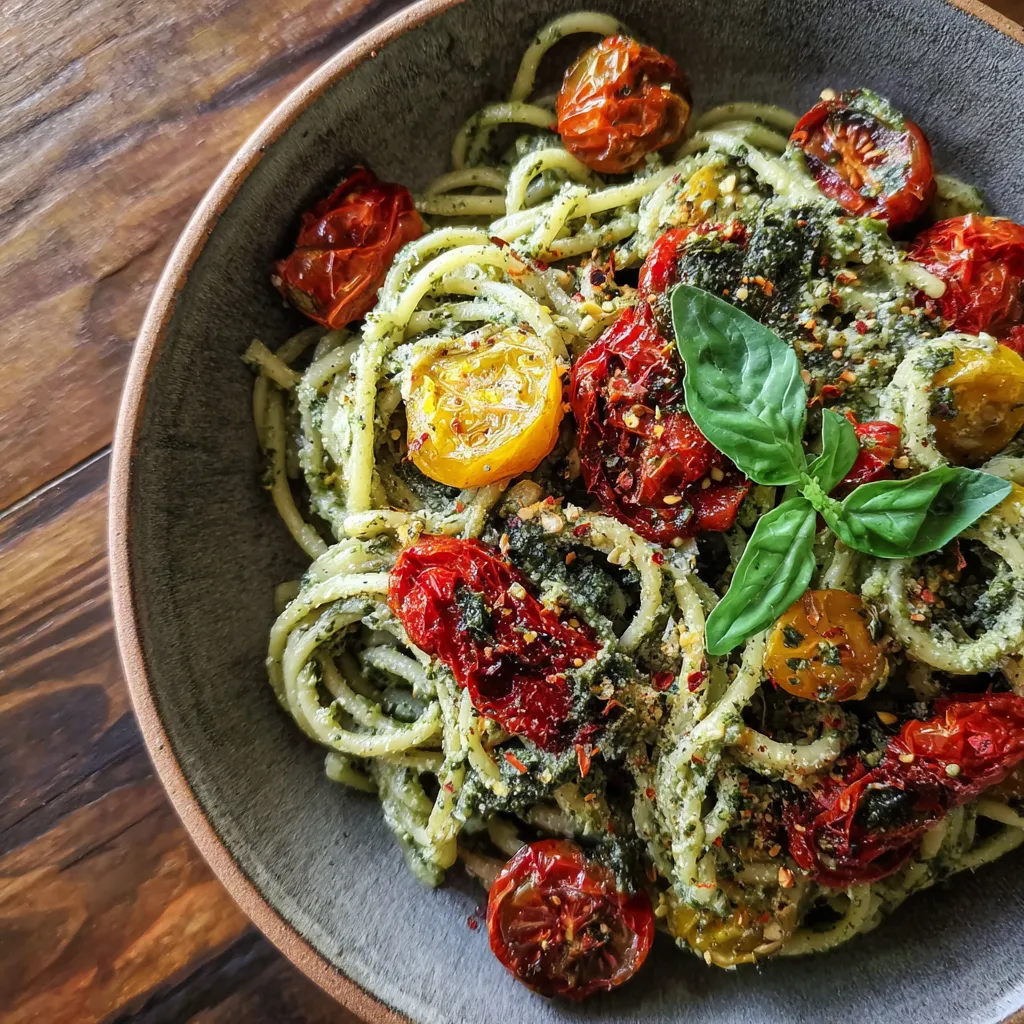

Creamy Vegan Pesto Pasta with Roasted Tomatoes
Description
This vegan pasta features silky basil-coconut pesto clinging to al dente noodles, studded with blistered cherry tomatoes that burst with sweet, tangy juices.
Ingredients
Instructions
-
Preheat your oven to 400°F (200°C).
-
In a mixing bowl, toss the halved cherry tomatoes with olive oil, salt, and pepper. Spread them out on a baking sheet and roast in the oven for 20-25 minutes, until they are blistered and caramelized.
-
While the tomatoes are roasting, bring a large pot of salted water to a boil. Add the pasta and cook according to package instructions until al dente. Drain and set aside, reserving 1 cup of pasta water.
-
In a food processor or high-speed blender, combine the fresh basil leaves, pine nuts, minced garlic, nutritional yeast, lemon juice, black pepper, and red pepper flakes (if using). Pulse until finely chopped.
-
With the processor running, slowly add the coconut milk until the mixture is creamy and well-combined. If the sauce is too thick, add a bit of the reserved pasta water until you reach your desired consistency.
-
In a large bowl, combine the cooked pasta and the creamy pesto sauce. Toss until the pasta is fully coated.
-
Gently fold in the roasted tomatoes. Serve immediately, garnished with additional fresh basil leaves and a sprinkle of pine nuts, if desired.
Nutrition Facts
Serving Size 4
- Amount Per Serving
- Calories 150kcal
Note
- This dish is easily customizable; feel free to add vegetables like spinach or zucchini for an extra nutrient boost.
- For added protein, consider mixing in chickpeas or white beans.
- Store leftovers in an airtight container in the refrigerator for up to 3 days, but be aware that the sauce may thicken upon refrigeration.
- This creamy vegan pesto pasta pairs well with a side salad or garlic bread for a complete meal.
- Experiment with different nuts in the pesto for varied flavors and textures.

