

This Easter Egg Cheesecake is a creamy, festive centerpiece perfect for spring celebrations! A velvety cream cheese filling swirled with bright lemon zest and pastel candy shards rests atop a buttery graham crust, then finishes with playful pastel chocolate eggs on top. Whether you’re hosting brunch or craving a sweet springtime treat, this dessert blends tangy lemon, rich cheesecake, and crunchy candy in every slice—guaranteed to wow your guests and brighten any table.
Key Ingredients
To whip up this Easter Egg Cheesecake, you’ll need a handful of spring-inspired staples for both the crust and the luscious filling.
- 200 g graham crackers: Crisp foundation that forms the buttery graham crust.
- 50 g granulated sugar: Sweetens the crust mixture and balances the buttery flavor.
- 100 g unsalted butter, melted: Binds the crushed crackers into a sturdy, golden base.
- 600 g cream cheese, room temperature: The star of the filling, providing a velvety, tangy texture.
- 150 g granulated sugar: Sweetens the cream cheese mixture for that perfect cheesecake balance.
- 3 large eggs: Helps set and give structure to the creamy filling.
- 1 tsp vanilla extract: Adds warm, aromatic flavor to the cheesecake filling.
- 200 ml sour cream: Brings a touch of tanginess and creates a smooth, creamy consistency.
- 1 lemon: Zest adds a bright, citrusy pop to each bite.
- 100 g pastel mini eggs, crushed: Tiny candy shards that add color and crunch throughout the filling.
- 12 pastel chocolate eggs: Decorative toppers for a playful spring finish.
How To Make Easter Egg Cheesecake
Get ready to bring this pastel dream to life with a foolproof method that ensures a crack-free, creamy center and a perfectly set crust. From prepping the pan and toasting your graham base to folding in zesty lemon and candy shards, every step is laid out for springtime success.
1. Preheat oven to 160°C and grease a 9-inch springform pan.
Generously coat the bottom and sides with butter or nonstick spray, then line the base with parchment paper for easy removal.
2. Crush graham crackers and mix with 50 g granulated sugar and melted butter.
Use a food processor or seal the crackers in a zip-top bag and crush with a rolling pin until fine crumbs form, then stir in sugar and melted butter until evenly combined.
3. Press the crumb mixture into the bottom of the pan and bake for 10 minutes, then let cool.
Firmly pack the crumbs with the bottom of a glass, bake until lightly golden, and transfer to a wire rack to cool completely.
4. In a large bowl, beat cream cheese and 150 g granulated sugar until smooth.
Using a stand mixer or hand mixer, whip at medium speed until there are no lumps and the mixture is silky.
5. Add eggs one at a time, mixing well after each addition.
Crack each egg in separately, beating just until incorporated to avoid overmixing and incorporating too much air.
6. Stir in vanilla extract and sour cream until just combined.
Fold in these ingredients gently with a rubber spatula, keeping the batter smooth and airy.
7. Zest the lemon and fold the zest into the filling, then gently mix in crushed pastel mini eggs.
Use the microplane to zest just the yellow part of the peel, then carefully fold in candy shards for pops of color.
8. Pour the filling over the cooled crust and smooth the top.
Tap the pan lightly on the counter to release any air bubbles and create an even surface.
9. Bake for 50 to 60 minutes until the edges are set and the center still jiggles slightly.
The cheesecake will firm up as it cools but should retain a slight wobble in the middle when done.
10. Cool the cheesecake to room temperature, then refrigerate for at least 4 hours or overnight.
Let it rest on the counter, then transfer to the fridge to fully set before decorating.
11. Before serving, arrange whole pastel chocolate eggs on top for decoration.
Gently press each egg into the chilled surface to create a festive springtime crown.
Serving Suggestions
Once your Easter Egg Cheesecake is perfectly chilled and decorated, it’s time to slice into the fun. This festive treat shines on its own, but a few thoughtful touches will elevate each serving and delight your guests.
- Serve each slice with a drizzle of lemon glaze, combining powdered sugar and fresh lemon juice to echo the zest in the filling.
- Pair individual wedges with fresh berries—strawberries or blueberries add bright color and a juicy contrast.
- Offer a side of whipped cream, lightly sweetened and whipped to soft peaks for an extra creamy bite.
- Present on decorated dessert plates with pastel napkins for a coordinated spring-themed table setting.
Tips For Perfect Easter Egg Cheesecake
Mastering a cheesecake takes patience and the right tricks—here’s how to keep yours smooth, crack-free, and full of candy-studded charm.
- Use room temperature ingredients to ensure a smooth, lump-free filling.
- A water bath helps prevent the cheesecake from cracking.
- Chill the cheesecake completely before adding the decorations.
- Store any leftovers covered in the refrigerator for up to 3 days.
How To Store It
Proper storage is key to preserving that silky texture and colorful crunch. Whether you’re keeping a whole cake or individual slices, follow these tips to maintain peak perfection.
- Refrigerate: Cover the entire cheesecake with plastic wrap or place it in an airtight container to prevent it from drying out.
- Wrap slices: For single servings, wrap each piece tightly in plastic wrap and store in the fridge for up to 3 days.
- Freeze portions: Place individual slices on a baking sheet, freeze until firm, then wrap in foil and store in freezer-safe bags for up to 2 months.
- Thaw gently: Move frozen slices to the refrigerator 12 hours before serving to thaw slowly and maintain texture.
Frequently Asked Questions
Here are some quick answers to the most common cheesecake conundrums:
- How do I ensure a smooth, lump-free filling?
A: Use room-temperature cream cheese, eggs, and sour cream so they blend together seamlessly. Beat the cream cheese and sugar until completely smooth before adding eggs one at a time, scraping down the bowl after each addition. Gently fold in vanilla, sour cream, and lemon zest with a rubber spatula and avoid overmixing once the eggs are fully incorporated.
- What’s the benefit of using a water bath and how do I set it up?
A: A water bath (bain-marie) provides gentle, even heat and keeps the pan’s sides moist, reducing the risk of cracks. Wrap the bottom of your springform pan tightly in two layers of heavy-duty foil to prevent leaks. Place the wrapped pan in a larger roasting pan, then pour hot water into the outer pan until it reaches halfway up the springform sides. Carefully slide both pans into the oven.
- Why might my cheesecake develop cracks and how can I prevent them?
A: Cracks usually form when the filling is overbaked, the oven temperature is too high, or the batter is overmixed, incorporating too much air. Bake at the recommended 160°C, pull the cheesecake out when the edges are set but the center still jiggles slightly, and allow it to cool gradually in the turned-off oven with the door ajar for about an hour.
- How should I prepare the crust so it doesn’t become soggy?
A: After pressing the graham-cracker and sugar mixture evenly into the bottom of your greased springform pan, bake it for 10 minutes at 160°C. This “blind baking” step sets the crust, giving it a firm base that resists moisture from the filling. Allow it to cool completely before pouring in the filling.
- How do I avoid the pastel mini eggs sinking in the filling?
A: Lightly coat the crushed mini eggs in a teaspoon of flour or cornstarch before folding them into the batter. This gives them extra traction, keeping them suspended in the filling rather than sinking to the bottom during baking.
- How long should I chill the cheesecake before decorating, and can I make this ahead?
A: After cooling to room temperature, refrigerate the cheesecake for at least 4 hours—preferably overnight—to fully set. You can prepare it up to two days in advance; just keep it covered in plastic wrap or an airtight container. Add the pastel chocolate egg decorations just before serving to maintain their crisp texture.
- What’s the best way to remove the cheesecake from the pan without damage?
A: Run a thin, warm knife around the inside edge of the springform before unlatching and removing the ring. Wipe the knife clean between passes to avoid dragging crumbs or filling onto the sides. Then slide the cheesecake carefully onto a serving platter.
- How should I store leftovers, and can I freeze slices?
A: Store any leftover cheesecake covered in the refrigerator for up to 3 days to maintain freshness. For longer storage, slice and wrap individual portions tightly in plastic wrap and then foil, or place them in freezer-safe containers. Frozen cheesecake slices will keep for up to 2 months; thaw them overnight in the refrigerator before serving.
What Makes This Special
This Easter Egg Cheesecake stands out with its pastel mini egg surprise tucked right into a zesty lemon-infused filling, all perched on a buttery graham base. It’s festive, fun, and just challenging enough to impress both family and friends. Slice into this springtime delight, print the recipe for easy reference, and don’t forget to drop a comment or ask a question if you give it a whirl or need a hand perfecting your pastel masterpiece!
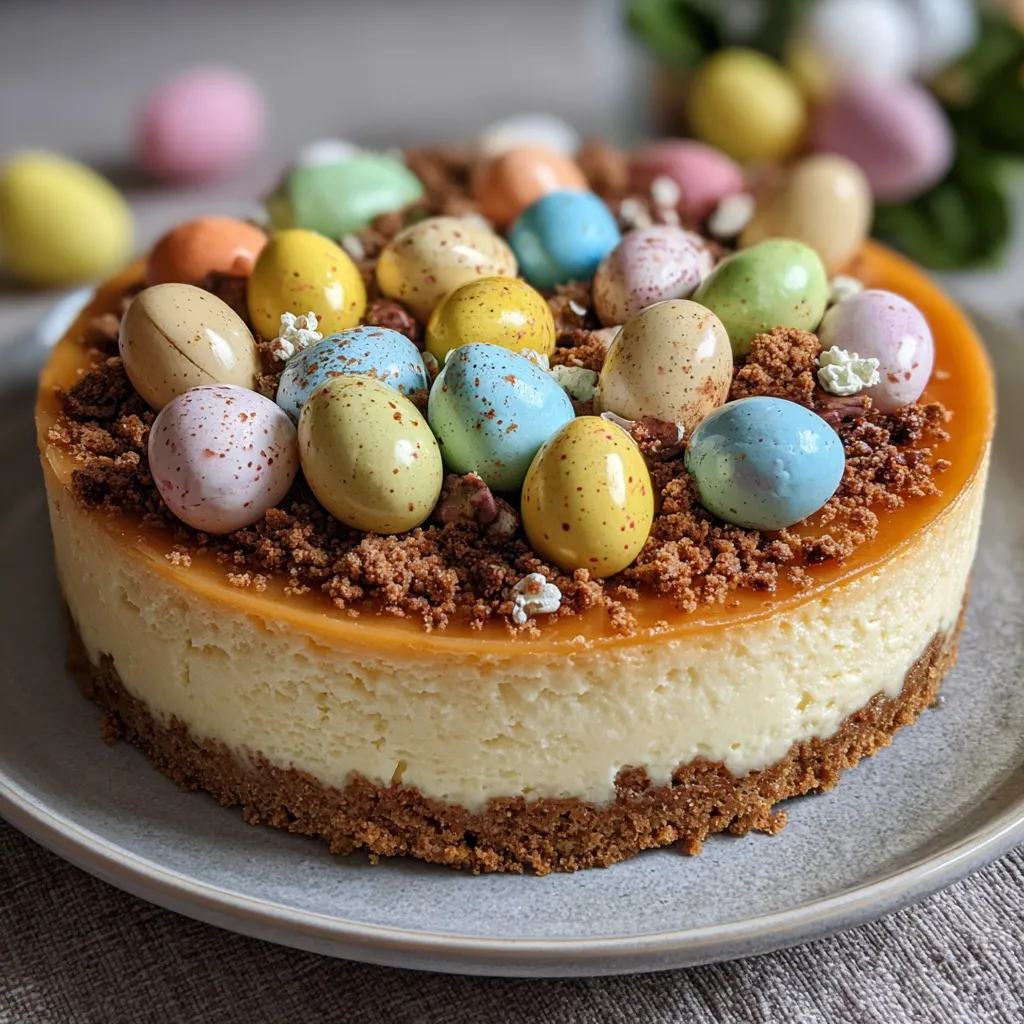

Easter Egg Cheesecake
Description
Velvety cream cheese filling swirled with lemon zest and pastel candy shards, nestled on a buttery graham crust—finished with chocolate eggs for a playful, springtime treat.
Ingredients
Instructions
-
Preheat oven to 160°C and grease a 9-inch springform pan.
-
Crush graham crackers and mix with 50 g granulated sugar and melted butter.
-
Press the crumb mixture into the bottom of the pan and bake for 10 minutes, then let cool.
-
In a large bowl, beat cream cheese and 150 g granulated sugar until smooth.
-
Add eggs one at a time, mixing well after each addition.
-
Stir in vanilla extract and sour cream until just combined.
-
Zest the lemon and fold the zest into the filling, then gently mix in crushed pastel mini eggs.
-
Pour the filling over the cooled crust and smooth the top.
-
Bake for 50 to 60 minutes until the edges are set and the center still jiggles slightly.
-
Cool the cheesecake to room temperature, then refrigerate for at least 4 hours or overnight.
-
Before serving, arrange whole pastel chocolate eggs on top for decoration.
Nutrition Facts
Serving Size 12
- Amount Per Serving
- Calories 42kcal
Note
- Use room temperature ingredients to ensure a smooth, lump-free filling.
- A water bath helps prevent the cheesecake from cracking.
- Chill the cheesecake completely before adding the decorations.
- Store any leftovers covered in the refrigerator for up to 3 days.

