

This homemade apple cider pork roast brings together tender, slow-roasted pork infused with sweet apple cider, aromatic herbs, and just the right hint of cinnamon. It’s the kind of comforting dish that turns your kitchen into a cozy haven, perfect for gatherings or a special weeknight treat. Once you taste those caramelized onions and apples alongside juicy, herb-crusted pork, you’ll be hooked!
Key Ingredients
Before we dive into cooking, let’s gather everything you need to create this flavorful masterpiece.
- 3 to 4-pound pork roast (shoulder or loin): The star of the show, offering tender juiciness when slow-roasted.
- 2 cups apple cider: Adds natural sweetness and moisture for a succulent roast.
- 1 medium onion, sliced: Creates an aromatic bed that soaks up pan juices and caramelizes beautifully.
- 3 cloves garlic, minced: Infuses savory notes and deep flavor into the roast.
- 2 tablespoons brown sugar: Balances savory spices with a touch of caramel sweetness.
- 1 tablespoon fresh rosemary, chopped (or 1 teaspoon dried): Brings piney, earthy fragrance to the pork.
- 1 tablespoon fresh thyme, chopped (or 1 teaspoon dried): Adds lemony, herbaceous depth.
- 1 teaspoon ground cinnamon: Enhances warmth and complements the apple cider.
- 1 teaspoon salt: Essential for seasoning and bringing out all flavors.
- 1/2 teaspoon black pepper: Offers a gentle heat and spice contrast.
- 2 tablespoons olive oil: Helps the spice rub adhere and promotes browning.
- 1 cup apple slices (optional, for serving): Provides fresh sweetness and crunch alongside the pork.
- Fresh herbs for garnish (optional): A finishing touch for color and extra aroma.
How To Make Homemade Apple Cider Pork Roast
Let’s walk through this recipe step by step. You’ll be combining a fragrant dry rub, cooking the pork low and slow in apple cider, then finishing it with beautiful caramelization. Follow these detailed steps for a perfectly cooked roast that’s bursting with flavor and just begging to be sliced and served.
1. Preheat your oven to 325°F (160°C) to ensure even, slow cooking.
2. In a small bowl, combine the brown sugar, rosemary, thyme, cinnamon, salt, and black pepper to form a fragrant dry rub.
3. Drizzle the olive oil over the pork roast and rub it all over, making sure the meat is evenly coated.
4. Generously apply the dry rub mixture onto every surface of the pork, massaging the spices into the meat for maximum flavor infusion.
5. Spread the sliced onions and minced garlic in the bottom of a roasting pan to create a flavorful bed for the pork.
6. Place the seasoned roast on top of the onion and garlic layer, letting the aromatics cradle the meat.
7. Carefully pour the apple cider around the roast, taking care not to wash away the spice rub.
8. Cover the pan with aluminum foil, sealing tightly to lock in moisture and keep the pork tender.
9. Roast in the preheated oven for 2 to 3 hours, or until a meat thermometer reads 145°F (63°C) in the thickest part of the meat.
10. About 30 minutes before it’s done, remove the foil to allow the surface to brown and caramelize.
11. Once the roast reaches the target temperature, take it out and let it rest under foil for 10–15 minutes to redistribute the juices.
12. If you like, sauté the apple slices in butter until they’re slightly caramelized, then serve alongside the pork.
13. Slice the roast, arrange it on a platter with the onions and garlic, drizzle with pan juices, and garnish with fresh herbs.
Serving Suggestions
This pork roast shines with a variety of accompaniments that complement its sweet-savory profile. Whether you’re hosting a dinner party or enjoying a quiet family meal, these serving ideas will elevate your platter.
- Roasted Root Vegetables: Toss carrots, parsnips, and sweet potatoes with olive oil, salt, and pepper, then roast until tender and golden for a rustic side.
- Creamy Garlic Mashed Potatoes: Whip Yukon gold potatoes with butter, cream, and roasted garlic to soak up those lovely pan juices.
- Warm Apple Slaw: Combine shredded cabbage and apple slices with a cider vinaigrette for a crisp, tangy counterpoint.
- Crisp Green Salad: Mix baby greens, toasted walnuts, and crumbled goat cheese with a simple balsamic dressing for a refreshing finish.
Tips For Perfect Homemade Apple Cider Pork Roast
A few friendly pointers can take your roast from great to unforgettable. Pay attention to these small details—they’ll make slicing into that juicy pork even more rewarding.
This recipe pairs well with roasted vegetables or mashed potatoes.
Leftovers can be stored in an airtight container for up to 3 days and are great for sandwiches.
Feel free to experiment with different herbs or addition of spices for a personalized flavor.
For a sweeter roasted flavor, try adding a splash of maple syrup to the apple cider.
Cooking times may vary based on the size of the roast; always check with a meat thermometer.
How To Store It
If you’re lucky enough to have leftovers, proper storage keeps your roast tasting fresh and delicious for days. Follow these tips to maintain moisture and flavor.
- Refrigerate: Once cooled, transfer sliced or whole roast into an airtight container and chill for up to 3 days.
- Freeze: Wrap portions tightly in plastic wrap and place in a freezer bag; it will keep for up to 2 months.
- Reheat: Arrange slices in a baking dish, add a splash of apple cider, cover with foil, and warm in a 325°F (160°C) oven until heated through.
- Separate Juices: Store pan juices in a small container and add back when reheating to keep the pork moist.
Frequently Asked Questions
Here are quick answers to common questions about this recipe:
- How long does it take to prepare and cook this recipe?
It takes about 15 minutes to prepare (measuring spices, slicing onion, rubbing the roast) and 2 to 3 hours to roast in a 325°F (160°C) oven, plus 10–15 minutes of resting time, for a total of roughly 2½ to 3¼ hours from start to finish.
- Can I use pork loin instead of pork shoulder?
Yes. Pork shoulder has more marbling and yields a slightly more tender, fall-apart texture, while pork loin is leaner and may roast more quickly. If using loin, check the internal temperature closer to 2 hours and adjust cooking time to avoid overcooking.
- How do I know when the roast is done?
Insert a meat thermometer into the thickest part of the roast; it’s safe at 145°F (63°C). Because carry-over cooking occurs during resting, you can remove the roast from the oven as soon as it hits 140°F (60°C) and let it rest under foil for 10–15 minutes to reach the ideal temperature.
- How can I thicken the pan juices into a gravy?
After removing the roast, pour the pan juices into a small saucepan and skim off excess fat. Bring to a simmer, then whisk in a slurry of 1 teaspoon cornstarch mixed with 1 tablespoon cold water. Cook for a minute or two until the sauce thickens, stirring constantly, then season to taste with salt and pepper.
- Can I make this recipe ahead of time and reheat leftovers?
Yes. Store leftovers in an airtight container in the refrigerator for up to 3 days. To reheat, place sliced roast and pan juices in a baking dish, cover with foil, add a splash of apple cider or water, and warm in a 325°F (160°C) oven for 15–20 minutes or until heated through.
- What variations or substitutions can I try?
Swap or add herbs like sage or marjoram in place of rosemary and thyme. For a sweeter profile, stir in a tablespoon of maple syrup to the apple cider. You can also use pear cider or a dry white wine instead of apple cider. Adjust brown sugar if you prefer more or less sweetness.
- How do I achieve a perfectly browned and caramelized roast?
Remove the foil during the last 30 minutes of roasting to allow the surface to dry and sugars in the rub and apple cider to caramelize. For extra color, switch the oven to broil for 2–3 minutes, keeping a close eye to prevent burning. Let the roast rest before slicing so juices redistribute without running off.
What Makes This Special
This apple cider pork roast stands out thanks to its balance of sweet, savory, and earthy flavors—from the warm cinnamon and fresh herbs to the luscious pan juices reduced by slow roasting. It’s also wonderfully versatile: serve it with mashed potatoes, roasted veggies, or crisp salads, and don’t be shy about saving leftovers for sandwiches. Feel free to print this article and tuck it into your favorite recipe binder. If you give it a try, let me know how it turned out or ask any questions—you know I love hearing your kitchen adventures!
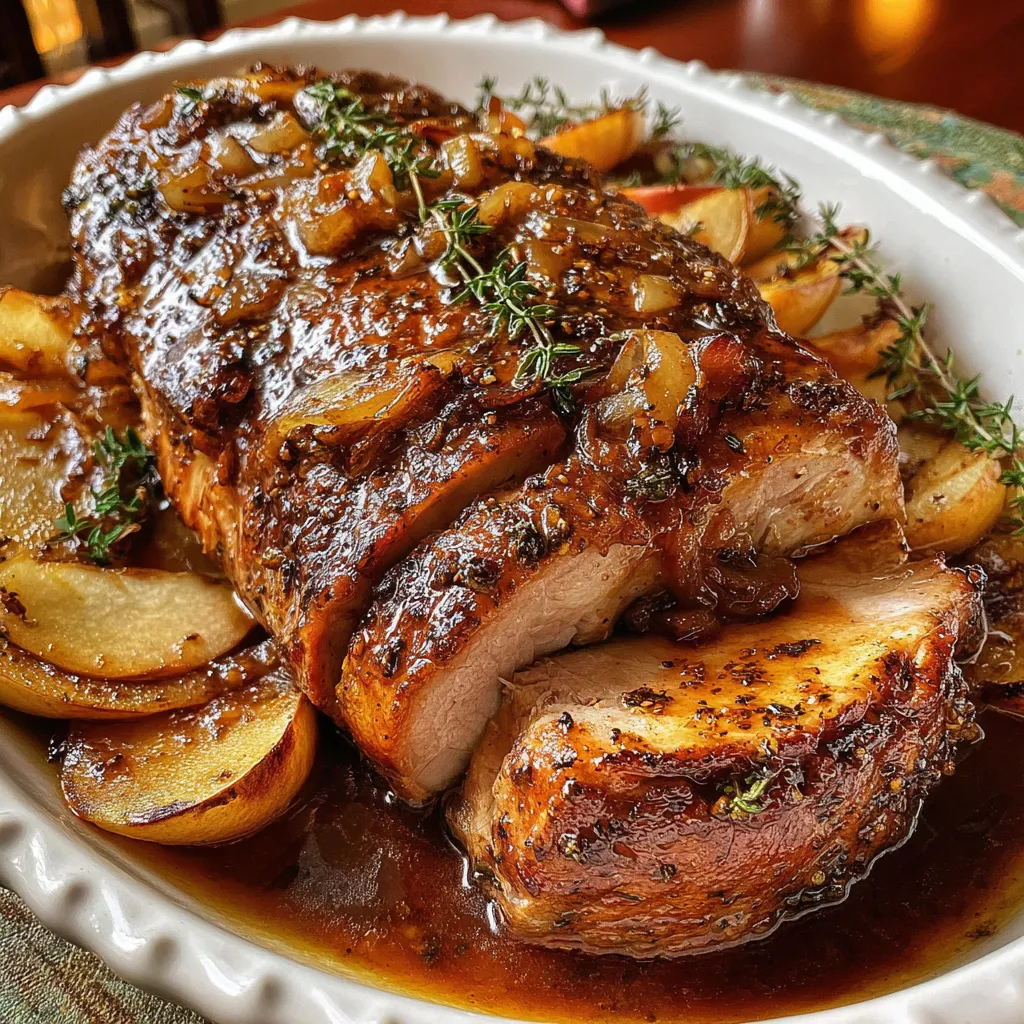

Homemade Apple Cider Pork Roast
Description
Tender pork slow-roasted in apple cider, garlic, and fresh herbs, then finished with caramelized onions and apple slices offers a symphony of sweet, savory, and earthy flavors.
Ingredients
Instructions
-
Begin by preheating your oven to 325°F (160°C).
-
In a small bowl, combine the brown sugar, rosemary, thyme, cinnamon, salt, and black pepper to make a dry rub.
-
Rub the olive oil all over the pork roast, making sure to coat it evenly.
-
Generously apply the spice rub mixture over the entire surface of the pork roast. Make sure to massage the spices into the meat for maximum flavor.
-
In a roasting pan, spread the sliced onions and minced garlic on the bottom. This will create a bed for the pork to rest on.
-
Place the seasoned pork roast on top of the onions and garlic in the roasting pan.
-
Pour the apple cider around the roast in the pan, making sure not to wash away the spices.
-
Cover the roasting pan with aluminum foil, sealing tightly to keep the moisture in.
-
Place the roasting pan in the preheated oven and roast for approximately 2 to 3 hours, or until the internal temperature of the pork reaches 145°F (63°C).
-
About 30 minutes before the roast is done, remove the foil to allow the pork to brown and caramelize slightly.
-
Once the roast is cooked, remove it from the oven and let it rest for at least 10-15 minutes before slicing.
-
If desired, sauté apple slices in a pan with a little butter until slightly caramelized and serve them alongside the roast.
-
Slice the roast, serve it on a platter with the onions, garlic, and drizzled apple cider from the roasting pan, and garnish with fresh herbs if desired.
Nutrition Facts
Serving Size 6
- Amount Per Serving
- Calories 92kcal
Note
- This recipe pairs well with roasted vegetables or mashed potatoes.
- Leftovers can be stored in an airtight container for up to 3 days and are great for sandwiches.
- Feel free to experiment with different herbs or addition of spices for a personalized flavor.
- For a sweeter roasted flavor, try adding a splash of maple syrup to the apple cider.
- Cooking times may vary based on the size of the roast; always check with a meat thermometer.

