

There’s something incredibly satisfying about tossing tender chicken, crisp vegetables, and perfectly cooked noodles together in one skillet, and that’s exactly what Homemade Chicken Chow Mein delivers. This dish, with its delightful subtitle “Savor the Crunch: Quick and Easy Homemade Chicken Chow Mein!”, is practically made for weeknight cooking. Whether you’re craving a speedy lunch or a fuss-free dinner, this beginner-friendly recipe has got your back. With just 15 minutes of prep and another 15 minutes on the stove, you’ll have a balanced, flavorful meal on the table before you know it. Best of all, each serving clocks in at around 480 calories—just enough to keep you satisfied without weighing you down.
As someone who’s spent countless evenings experimenting with stir-fry recipes in my own kitchen, I can tell you that this homemade chow mein strikes the perfect harmony between savory, sweet, and umami notes. The combination of soy sauce, oyster sauce, and a drizzle of sesame oil gives the sauce a rich depth that clings beautifully to every strand of noodle. Crisp cabbage and snap peas provide that satisfying crunch we all love, while red bell pepper adds a pop of vibrant color. And if you’ve ever hesitated to try your hand at Asian cuisine at home, this recipe proves that you don’t need to be a pro to make something restaurant-quality. It’s a quick dinner win for anyone on a busy schedule.
KEY INGREDIENTS IN HOMEMADE CHICKEN CHOW MEIN
Before we dive into the stir-fry fun, let’s take a closer look at the essential ingredients that turn simple pantry staples into a mouthwatering Chicken Chow Mein.
- Chow Mein Noodles
Thin and springy, these noodles soak up the sauce while keeping a delightful chew. They form the foundation of our dish, giving each bite its signature texture.
- Chicken Breasts
Boneless and skinless, quickly thin-sliced and marinated, they cook evenly and remain tender. This lean protein ensures the chow mein is both hearty and healthy.
- Soy Sauce
A core source of savory umami, it seasons the chicken and sauce. It ties all the flavors together, balancing saltiness with depth.
- Vegetable Oil
Neutral in flavor and with a high smoke point, it’s perfect for stir-frying at high heat, helping us achieve that slight char on both chicken and veggies.
- Green Cabbage
Thinly sliced, it holds its crispness under high heat and adds a subtle sweetness and satisfying crunch to the mix.
- Red Bell Pepper
Brightly colored and naturally sweet, it contrasts beautifully with the savory sauce and adds vitamin-rich freshness.
- Snap Peas
With a satisfying snap in every bite, these peas bring color and vibrant texture, complementing the softer noodles.
- Garlic
Minced to release its pungent aroma instantly, it infuses the dish with classic stir-fry flavor.
- Ginger
Grated or finely chopped, it lends a warm, zesty lift that pairs perfectly with garlic.
- Oyster Sauce
Thick and glossy, it enhances the sauce with a mild sweetness and extra layer of umami richness.
- Sesame Oil
Just a teaspoon drizzled at the end gives a toasty, nutty aroma that elevates the entire dish.
- Green Onions
Sliced and stirred in at the finish, they inject a pop of fresh, oniony brightness.
- Salt and Pepper
Simple seasonings to taste, ensuring each mouthful is perfectly balanced.
- Sesame Seeds
Optional but highly recommended as a garnish, they add a delicate crunch and visual appeal.
HOW TO MAKE HOMEMADE CHICKEN CHOW MEIN
Let’s dive into the cooking process and walk through each step of this easy chow mein recipe. With a little prep and high heat, you’ll be tossing together a colorful, flavorful meal in no time.
1. Cook the chow mein noodles according to the package instructions. Bring a large pot of water to a rolling boil, add the noodles, and stir gently until al dente. Drain thoroughly and set aside, tossing with a dash of oil to prevent sticking.
2. In a medium bowl, combine the sliced chicken breast with 1 tablespoon of soy sauce. Toss well to ensure every piece is evenly coated, then let it sit while you prep the vegetables.
3. Heat 1 tablespoon of vegetable oil in a large skillet or wok over medium-high heat. Add the chicken in a single layer and cook without moving for the first minute to allow browning. Continue cooking, stirring occasionally, until the chicken is cooked through and golden, about 5–7 minutes. Transfer the chicken to a plate and set aside.
4. In the same skillet, add the remaining tablespoon of vegetable oil. Stir-fry the green cabbage, red bell pepper, and snap peas for 3–4 minutes, or until they reach a tender-crisp texture.
5. Add the minced garlic and grated ginger to the skillet and stir for another 30 seconds, just until fragrant. Be careful not to let the garlic burn.
6. Return the cooked chicken to the skillet. Add the drained noodles, 1/4 cup of soy sauce, oyster sauce, and sesame oil. Use tongs or two spatulas to toss everything together, ensuring each strand of noodle is glossy and coated with sauce. Continue heating until everything is warmed through.
7. Taste and season with salt and pepper as needed. Finally, stir in the sliced green onions for a burst of freshness.
8. Transfer the chow mein to a serving plate and garnish with sesame seeds if desired. Serve immediately while it’s hot and vibrant.
SERVING SUGGESTIONS FOR HOMEMADE CHICKEN CHOW MEIN
When it comes to enjoying this Homemade Chicken Chow Mein, presentation and pairing can turn a simple weeknight dinner into a memorable meal. With its blend of textures and flavors, this dish stands on its own, but a few thoughtful serving touches can elevate the experience even further. Whether you’re hosting friends or just treating yourself, consider these tips to bring out the best in this easy chow mein recipe.
- Serve on warm plates for maximum enjoyment, arranging the noodles in a slight mound to showcase the colorful vegetables and chicken. A warm plate keeps the chow mein at ideal eating temperature longer.
- Place a small bowl of chili garlic sauce or sriracha on the side. The kick of heat balances the savory, slightly sweet sauce and allows everyone to customize their level of spice.
- Offer a simple side of pickled cucumbers or quick kimchi. The tangy, acidic bite cuts through the richness of the stir-fry and provides a refreshing contrast.
- Garnish each serving with fresh cilantro sprigs or extra chopped green onions for a pop of green alongside the sesame seed crunch. This finishing touch enhances both flavor and visual appeal.
HOW TO STORE HOMEMADE CHICKEN CHOW MEIN
Keeping your homemade chow mein tasting fresh and vibrant is all about proper storage. Whether you’re saving leftovers for tomorrow’s lunch or prepping meals in advance, follow these guidelines to maintain the dish’s texture and flavor.
- Refrigerate Promptly
After the chow mein cools to room temperature (no more than two hours at room temp), transfer it to an airtight container. Store in the fridge for up to three days. The sealed environment prevents moisture loss and keeps vegetables crisp.
- Freeze for Longer Storage
For meal prep, portion the chow mein into freezer-safe bags, squeeze out excess air, and seal. Freeze flat for up to one month. Thaw overnight in the refrigerator before reheating.
- Reheat Gently
To preserve the vegetable crunch, reheat on the stovetop in a lightly oiled skillet over medium heat. Stir-fry until warmed through, adding a splash of water or extra soy sauce if needed to revive moisture. Avoid the microwave if possible, as it can make noodles gummy.
- Keep Sauce Separate
If you anticipate leftovers, store the noodles and protein-vegetable mixture separately from the sauce. Combine and reheat just before serving to maintain the ideal texture and flavor profile.
CONCLUSION
Congratulations—you’ve just mastered a quick and delicious Homemade Chicken Chow Mein that’s sure to become a staple in your recipe lineup. From the vibrant crunch of cabbage and snap peas to the tender, soy-marinated chicken and springy chow mein noodles, every component comes together in under 30 minutes for a fuss-free lunch or dinner. This beginner-friendly recipe requires just a handful of ingredients you might already have in your pantry, and it delivers that satisfying harmony of sweet, savory, and umami notes. Feel free to experiment by swapping chicken for tofu or adding extra veggies like mushrooms and broccoli—stir-fry recipes are all about adaptability and personal taste.
Be sure to print and save this article so you can revisit it whenever you’re craving a quick dinner or planning a casual gathering. Below, you’ll find a handy FAQ section to address common questions and tips, ensuring your next batch turns out just as perfectly as your first. I’d love to hear how your Homemade Chicken Chow Mein turned out—leave a comment with your questions, feedback, or creative twists you tried. Your insights might inspire fellow home cooks to take this easy chow mein recipe to even greater heights!
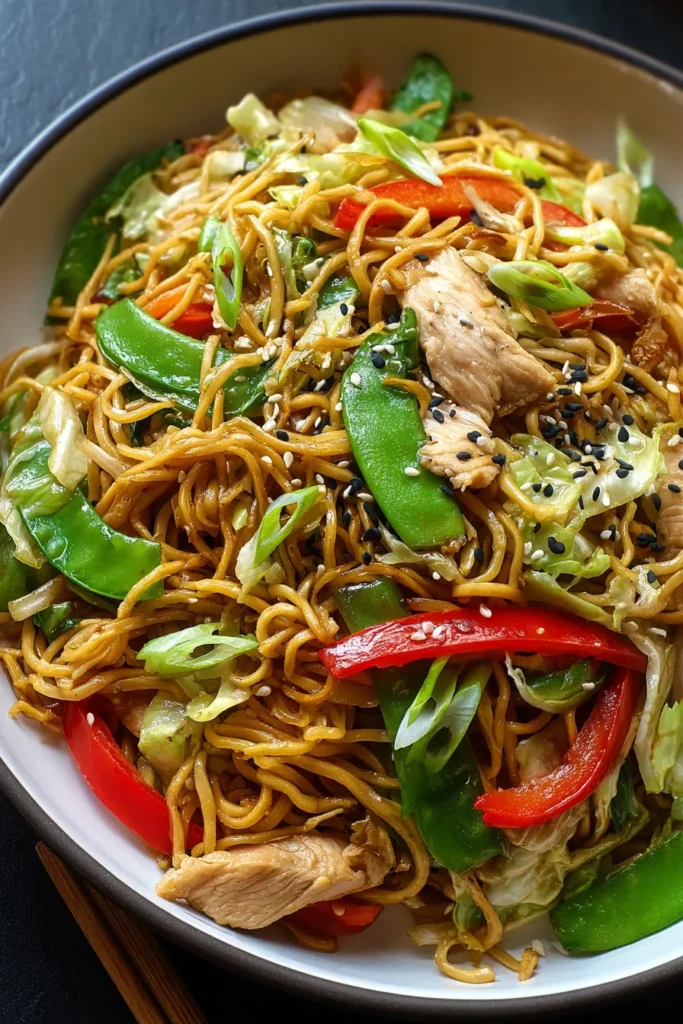

Homemade Chicken Chow Mein
Description
Experience the burst of flavors in this Homemade Chicken Chow Mein, featuring tender chicken, crisp veggies, and savory sauces all tossed with chow mein noodles for a delicious meal.
Ingredients
Instructions
-
Cook the chow mein noodles according to the package instructions. Drain and set aside.
-
In a medium bowl, toss the sliced chicken breast with 1 tablespoon of soy sauce.
-
Heat 1 tablespoon of vegetable oil in a large skillet or wok over medium-high heat. Add the chicken and cook until browned and cooked through, about 5-7 minutes. Remove the chicken from the skillet and set aside.
-
In the same skillet, add the remaining tablespoon of vegetable oil. Stir-fry the cabbage, bell pepper, and snap peas for about 3-4 minutes, or until they are tender-crisp.
-
Add the garlic and ginger to the skillet and stir for another 30 seconds until fragrant.
-
Return the cooked chicken to the skillet. Add the drained noodles, 1/4 cup of soy sauce, oyster sauce, and sesame oil. Toss everything together until well combined and heated through.
-
Season with salt and pepper to taste. Stir in the sliced green onions.
-
Transfer the chow mein to a serving plate. Garnish with sesame seeds if desired.
Nutrition Facts
Serving Size 4
- Amount Per Serving
- Calories 113kcal
Note
- For a vegetarian version, substitute chicken with tofu or additional vegetables like mushrooms or broccoli.
- The key to a great chow mein is high heat and quick cooking to maintain the vegetables' crispness.
- Leftover chow mein can be stored in an airtight container in the refrigerator for up to 3 days.
- Experiment with different vegetables to customize this dish to your preference.

