

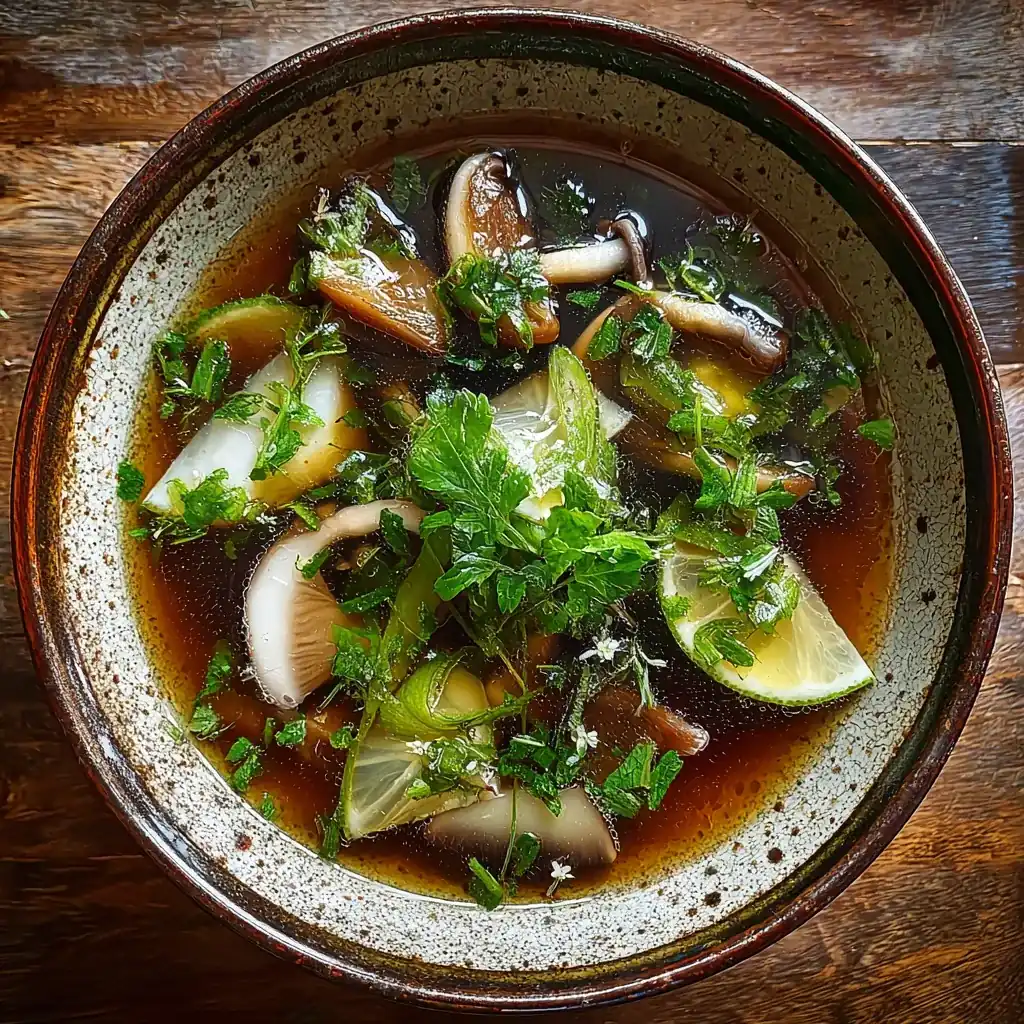
If you’re craving a light yet flavorful bowl that transports you straight to a cozy Japanese kitchen, this Japanese Clear Soup is your new go-to. Crystal-clear broth meets earthy shiitake, tender kamaboko, and a zingy strip of yuzu peel, all brightened by fresh mitsuba. Perfect as a simple lunch or an elegant starter, it’s beginner-friendly yet sophisticated enough to impress anyone. Dive in and let each soothing sip whisk you away to serene moments of culinary bliss.
Key Ingredients
Before we dive into cooking, let’s meet the stars of this soup—each one plays a key role in creating those signature clean, umami-rich flavors.
- 4 cups dashi stock: The light, savory base that defines the broth’s delicate character.
- 2 dried shiitake mushrooms: Provide deep, earthy umami and a subtle chew once soaked and sliced.
- 4 slices kamaboko: Soft fish cake rounds adding tender protein and a hint of sweetness.
- 1 tablespoon soy sauce: Brings balanced saltiness and enhances the broth’s savory depth.
- 1/4 teaspoon salt: Fine-tunes the seasoning for a perfectly rounded taste.
- 1/2 cup mitsuba sprigs: Fresh Japanese parsley that lends herbal brightness.
- 1 strip yuzu peel: Delivers a burst of citrus aroma that lifts every spoonful.
How To Make Japanese Clear Soup
Crafting this soup is all about layering flavors gently to keep the broth pristine. You’ll start by softening the shiitake mushrooms to unlock their umami, then build the soup with simmered dashi and seasonings. Finally, a brief simmer ties everything together before the delicate garnishes go in. Here’s the step-by-step process:
1. Place shiitake mushrooms in a bowl and cover with warm water. Let them soak until fully softened, about 30 minutes.
2. Heat dashi stock in a saucepan over medium heat until it just begins to simmer, taking care not to boil vigorously.
3. Remove mushrooms from soaking liquid and slice thinly. Add the sliced mushrooms, kamaboko, and any reserved soaking liquid back into the pot.
4. Season with soy sauce and salt, then taste and adjust to achieve that perfect balance of savory depth.
5. Simmer gently for 2 minutes, letting the flavors meld without disturbing the broth’s clarity.
6. Divide the soup into bowls and garnish with mitsuba sprigs and a strip of yuzu peel for a refreshing, aromatic finish.
Serving Suggestions
A simple presentation keeps this clear soup elegant and inviting. Serve it piping hot to showcase the broth’s clarity and subtle aromas, and consider pairing it with complementary sides for a fuller meal experience.
- Serve in pre-warmed bowls to maintain the soup’s gentle warmth and crystal clarity.
- Pair with a small bowl of steamed white rice for a balanced, comforting lunch.
- Offer a side of tsukemono (Japanese pickles) to introduce a tangy, crunchy contrast.
- Complement the soup with a plate of light tempura for those delightful crispy-and-crisp bites alongside each spoonful.
Tips For Perfect Japanese Clear Soup
Mastering this delicate soup is all about gentle technique and quality ingredients. Keep these friendly tips in mind to ensure every bowl shines with clarity and flavor.
- Use kombu and katsuobushi to make fresh dashi for the richest, most authentic umami.
- Substitute kamaboko with silken tofu cubes if you prefer a plant-based or softer protein.
- Adjust soy sauce and salt to taste, adding a little at a time until the seasoning feels just right.
- Serve immediately to preserve clarity and aroma, as the broth will deepen in color if it sits too long.
How To Store It
If you have leftover soup or want to prep in advance, proper storage will keep those delicate flavors intact. Here are a few simple methods to retain freshness and clarity.
- Store the soup in an airtight container in the refrigerator for up to 2 days—reheat gently over low heat to avoid clouding.
- Keep garnishes like mitsuba and yuzu peel separate until serving to maintain their bright color and aroma.
- Freeze the clear broth (without garnishes) in a freezer-safe container for up to one month; thaw overnight in the fridge and reheat slowly.
- If using instant dashi, prepare the stock fresh each time and store only the garnished soup, as pre-mixed seasoning can alter clarity over time.
Frequently Asked Questions
Got questions? Here are answers to the most common queries from passionate home cooks:
- How do I prepare the dried shiitake mushrooms before adding them to the soup?
Place the dried shiitake mushrooms in a bowl and cover with warm water. Let them soak until fully softened, about 30 minutes. Remove the mushrooms, slice them thinly, and reserve the soaking liquid to add back into the soup for extra umami.
- Can I use fresh shiitake mushrooms instead of dried ones?
You can use fresh shiitake, but they won’t contribute as much concentrated umami as dried mushrooms. If using fresh, slice them thinly and briefly blanch or sauté before adding to the dashi. You may wish to boost the soup’s flavor with a little extra soy sauce.
- What’s the best way to make dashi stock for this clear soup?
For traditional flavor, soak a piece of kombu in cold water for 30 minutes, then heat until just before boiling. Remove the kombu, add katsuobushi flakes, let steep for a few minutes off the heat, and strain. Alternatively, instant dashi granules dissolved in water also work in a pinch.
- Why should I add the reserved mushroom soaking liquid to the stock?
The soaking liquid contains concentrated mushroom flavors and nutrients. Adding it to the dashi enhances the soup’s umami depth without clouding the broth, preserving its clarity.
- What are good substitutes for kamaboko if I can’t find it?
Silken tofu cubes are an excellent substitute that maintain the delicate texture of the soup. You can also try other mild fish cakes or thinly sliced chicken breast poached gently in the broth.
- How do I adjust the seasoning if the soup is too salty or too bland?
Taste the soup after adding soy sauce and salt. If it’s too salty, dilute with a little extra warm dashi or water. If it’s too bland, add soy sauce a teaspoon at a time or a pinch more salt until you reach the desired balance.
- Is it possible to make a vegan version of this clear soup?
Yes. Use kombu-only dashi (omit katsuobushi) for a vegan stock, replace kamaboko with tofu or vegetables, and ensure your soy sauce contains no fish additives. Garnish with mitsuba and yuzu peel as usual for a bright finish.
What Makes This Special
This Japanese Clear Soup dazzles because its simplicity showcases each ingredient’s true essence—from the dashi’s delicate umami to the zesty yuzu finish. It’s a beginner-friendly recipe that feels elegant yet totally approachable, proving that minimalism in cooking can yield maximum satisfaction. Grab your bowl, print this guide, and save it for those moments when you crave a warm, comforting sip of Japan. Let me know how it turns out or drop any questions below—I’m here to help every step of the way!

Japanese Clear Soup
Description
This light, aromatic broth teems with tender shiitake slices and soft kamaboko, brightened by a twist of yuzu and sprinkled with fresh mitsuba. Each spoonful brings a harmonious balance of earthiness and citrus.
Ingredients
Instructions
-
Place shiitake mushrooms in a bowl and cover with warm water. Let soak until softened, about 30 minutes.
-
Heat dashi stock in a saucepan over medium heat until it begins to simmer.
-
Remove mushrooms from soaking liquid and slice thinly. Add mushrooms, kamaboko, and any reserved soaking liquid to the stock.
-
Season with soy sauce and salt, tasting and adjusting as needed.
-
Simmer gently for 2 minutes, then remove from heat.
-
Divide soup into bowls and garnish with mitsuba sprigs and yuzu peel.
Nutrition Facts
Serving Size 4
- Amount Per Serving
- Calories 10kcal
Note
- Use kombu and katsuobushi to make fresh dashi for best flavor.
- Substitute kamaboko with silken tofu cubes if preferred.
- Adjust soy sauce and salt to taste.
- Serve immediately to preserve clarity and aroma.

