

Lemon Herb Pasta with Spring Vegetables brings together bright lemon, tender asparagus, and sweet snap peas to deliver a light, vibrant pasta perfect for warmer days. This recipe turns linguine into a garden-fresh feast, tossing crisp veggies and fragrant herbs in a zesty olive oil dressing. Whether you’re craving a quick weeknight dinner or an impressive meatless option, you’ll love how easy and refreshing this dish comes together.
Key Ingredients
Gathering fresh, seasonal ingredients is key to making Lemon Herb Pasta with Spring Vegetables shine. Here’s what you’ll need:
- 8 ounces linguine pasta: Provides the sturdy base for soaking up citrusy olive oil and herbs.
- 2 tablespoons olive oil: Delivers a silky, flavorful coating for the pasta and vegetables.
- 2 cloves garlic, minced: Infuses the oil with a garlicky kick and aromatic depth.
- 1 cup asparagus, cut into 1-inch pieces: Adds crisp, grassy bites that celebrate spring.
- 1 cup sugar snap peas, trimmed: Brings sweet crunch and vibrant color.
- 1 cup zucchini, sliced: Offers tender, mild flavor to balance sharper notes.
- 1 lemon, zested and juiced: Delivers bright citrus zest and tangy juice to enliven the sauce.
- 1/4 cup fresh parsley, chopped: Sprinkles fresh, herbaceous brightness throughout.
- 2 tablespoons fresh basil, chopped: Lends sweet, peppery undertones that complement lemon.
- 1/4 cup grated Parmesan cheese: Adds a salty, nutty finish for richness.
- Salt and pepper to taste: Seasons and brings out all the flavors.
- Red pepper flakes (optional): Introduces a gentle heat spike for extra excitement.
How To Make Lemon Herb Pasta with Spring Vegetables
This recipe is all about quick, vibrant cooking that highlights the natural flavors of your ingredients. You’ll start by perfectly cooking the linguine, then gently sauté garlic and spring vegetables until crisp-tender, and finally combine everything with lemon zest, herbs, and Parmesan for a bright, flavorful sauce. With just one skillet and a pot for pasta, cleanup stays minimal while the dish stays maximum in color and taste.
1. Bring a large pot of generously salted water to a rolling boil, then add the linguine. Cook until al dente, about 8–10 minutes, so the pasta has a slight bite and won’t become mushy.
2. Before draining, use a heatproof cup to reserve 1/2 cup of the starchy pasta cooking water. Then drain the pasta in a colander and set it aside, leaving behind excess moisture.
3. Place a large skillet over medium heat and pour in the olive oil. Add the minced garlic and sauté for about 1 minute, stirring constantly, until it becomes fragrant and lightly golden.
4. Add the asparagus, sugar snap peas, and zucchini to the skillet. Stir occasionally and cook for 4–5 minutes, until the vegetables are crisp-tender and still bright in color.
5. Sprinkle in the lemon zest and pour in the lemon juice, then add the chopped parsley and basil. Cook for another minute, allowing the citrus oils and herbs to release their aroma.
6. Return the cooked pasta to the skillet, pour in the reserved pasta water, and toss everything together. The starchy water helps the sauce cling to each strand of linguine.
7. Remove the skillet from heat, stir in the grated Parmesan, and season with salt, pepper, and red pepper flakes if using. This step ensures a creamy, well-seasoned finish.
8. Divide the pasta among plates, making sure to scoop up plenty of vegetables. Serve immediately for the best texture and flavor.
Serving Suggestions
This Lemon Herb Pasta with Spring Vegetables shines on its own, but pairing it thoughtfully can elevate your meal into a memorable dining experience. Whether you’re hosting a casual lunch or a dinner party, these serving ideas will complement the zesty, garden-fresh flavors and ensure your guests leave impressed.
- Pair with a crisp green salad dressed in lemon vinaigrette to echo the pasta’s citrus notes and add a refreshing leafy crunch.
- Serve alongside garlic bread brushed with herbed butter for extra indulgence and texture contrast that soaks up every drop of the flavorful sauce.
- Offer a glass of light white wine, such as Pinot Grigio or Sauvignon Blanc, whose bright acidity complements the lemon and herbs in the pasta.
- Top individual portions with a fresh herb garnish, like extra parsley or basil leaves, for a pop of color and an aromatic finish right before serving.
Tips For Perfect Lemon Herb Pasta with Spring Vegetables
Mastering Lemon Herb Pasta with Spring Vegetables is all about highlighting freshness and balancing flavors. Tiny tweaks can make a big difference: grabbing herbs straight from the garden turns a good dish into a great one, while a splash of reserved pasta water brings your sauce to silky perfection. Don’t be afraid to experiment with your favorite seasonal produce, and if you crave a bit more heat, crank up those red pepper flakes. Here are a few friend-to-friend tips to keep in mind as you cook:
- Use fresh herbs for the brightest flavor: freshly chopped parsley and basil release essential oils that store-bought dried herbs simply can’t match.
- Adjust sauce consistency with reserved pasta water as needed: add it little by little until the sauce perfectly coats your linguine without becoming watery.
- Feel free to substitute or add seasonal vegetables: cherry tomatoes, bell peppers, or baby spinach make great additions—just add them at the right cooking stage for even doneness.
- For a spicy twist, increase red pepper flakes to match your heat preference, adding them in the final seasoning step for a bold kick.
How To Store It
Once you’ve devoured a generous helping of Lemon Herb Pasta with Spring Vegetables, it’s handy to know how to keep the leftovers fresh and flavorful. Proper storage ensures that the pasta retains its zingy lemon-herb character and the vegetables stay crisp-tender. Follow these methods to preserve texture and taste, so reheating later feels just as satisfying as the first bite.
- Refrigerate in an airtight container: allow the pasta to cool slightly, then transfer to a sealed container and chill for up to 3 days.
- Add a splash of olive oil before sealing: this prevents the noodles and vegetables from sticking together and locks in moisture.
- Store sauce and pasta separately if possible: keeping the lemon-herb topping apart from the linguine maintains better texture and allows you to dress it freshly upon reheating.
- When ready to enjoy, reheat gently in a skillet over low heat with a drizzle of water or olive oil to revive the sauce and ensure even warming without turning vegetables limp.
Frequently Asked Questions
Got some common questions about making this pasta? I’ve got you covered:
- How can I tell when the linguine is cooked al dente?
Al dente pasta should be tender on the outside but still have a slight bite in the center. Start testing at 8 minutes by removing a strand, rinsing briefly with cold water, and tasting. If it feels firm yet easy to chew, it’s done. Drain immediately to prevent overcooking.
- What’s the best way to adjust the sauce consistency?
Use the reserved ½ cup of pasta cooking water sparingly to loosen the sauce. Add a few tablespoons at a time while tossing the pasta in the skillet. The starchy water helps bind the olive oil, lemon juice, and herbs, creating a silky coating without diluting flavor.
- Can I substitute or add other vegetables?
Absolutely. Swap or add seasonal produce like cherry tomatoes, bell peppers, peas, or baby spinach. Add hearty vegetables like broccoli earlier in step 4 and tender items like spinach or tomatoes in the final minute to ensure even cooking without turning them mushy.
- How can I make this recipe dairy-free or vegan?
Replace the Parmesan with a vegan cheese alternative or nutritional yeast for a cheesy, nutty flavor. Ensure the vegan cheese melts well by stirring it in off the heat, and adjust salt and lemon juice to balance the taste since you’re omitting Parmesan’s salty richness.
- What’s the best way to store and reheat leftovers?
Store leftovers in an airtight container in the refrigerator for up to 3 days. To reheat, warm gently in a skillet over low heat with a splash of water or olive oil to revive the sauce. Avoid the microwave if possible, as it can make vegetables limp.
- How do I prevent the garlic from burning?
Keep the heat at medium and stir the garlic constantly during the 1-minute sauté. As soon as it becomes fragrant and slightly golden, add the vegetables to the skillet. Burnt garlic turns bitter, so timing and attentive stirring are key.
- Can I prepare any components in advance for faster assembly?
Yes. You can trim and slice the asparagus, snap peas, and zucchini, and mince the garlic up to a day ahead; store in separate airtight containers in the fridge. Zest and juice the lemon just before cooking to preserve brightness. Cook and cool the pasta, toss lightly in oil to prevent sticking, then refrigerate. Reheat pasta briefly in boiling water before combining.
What Makes This Special
From the zing of fresh lemon to the crunch of crisp asparagus and snap peas, Lemon Herb Pasta with Spring Vegetables is like sunshine on a plate. This recipe works so well because it balances bright citrus, fragrant herbs, and tender pasta in one easy skillet—perfect for beginner cooks aiming to impress. Feel free to print and tuck this article into your recipe binder for a go-to spring dinner that’s as colorful as it is delicious. If you give it a try or have any questions, drop a comment below—I’d love to hear your twists, tips, or tales of pasta perfection!
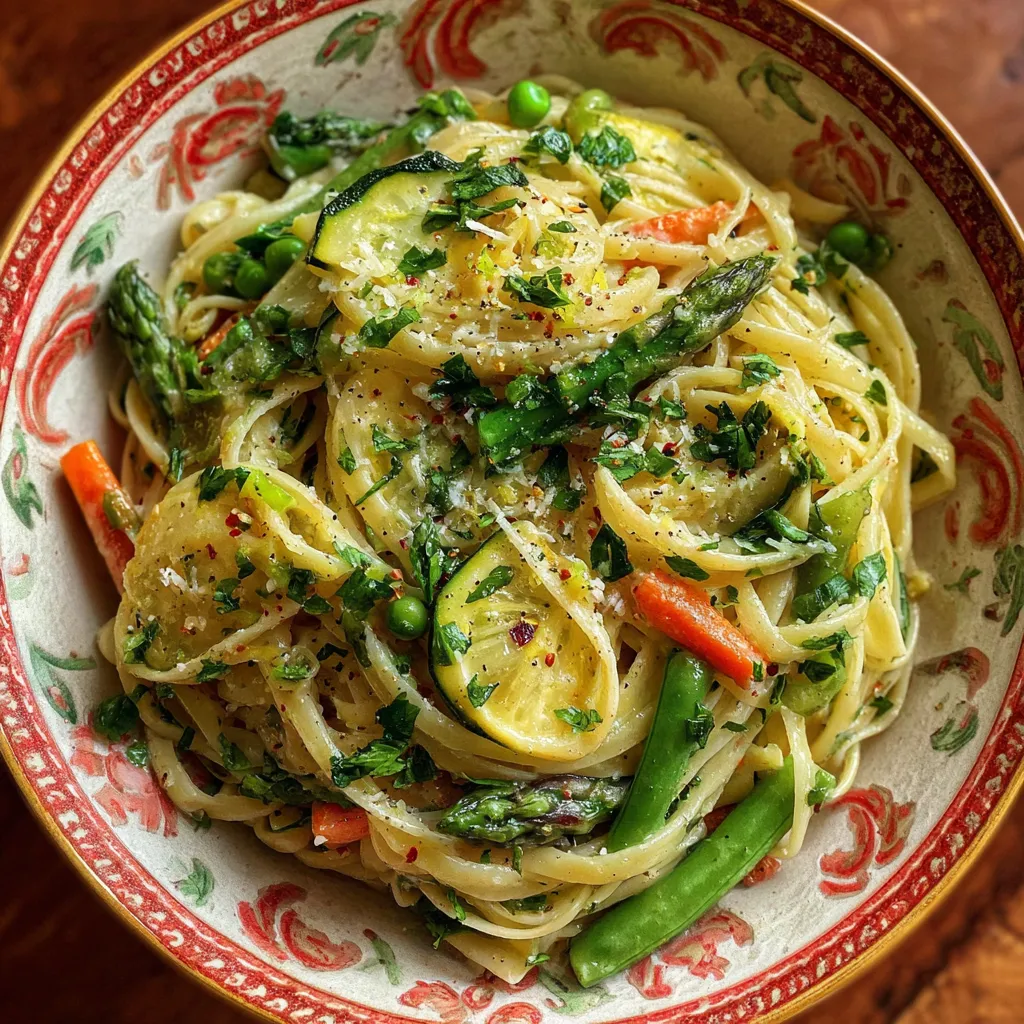

Lemon Herb Pasta with Spring Vegetables
Description
This pasta bursts with fresh lemon zest, crisp asparagus, and sweet sugar snap peas, all tossed in a fragrant herb-infused olive oil. Each bite is light, zesty, and alive with spring's best flavors and vivid colors.
Ingredients
Instructions
-
Bring a large pot of salted water to a boil and cook linguine until al dente, about 8–10 minutes.
-
Reserve 1/2 cup of pasta cooking water, then drain the pasta and set aside.
-
In a large skillet over medium heat, warm olive oil and sauté minced garlic until fragrant, about 1 minute.
-
Add asparagus, sugar snap peas, and zucchini to the skillet and cook, stirring occasionally, until vegetables are crisp-tender, about 4–5 minutes.
-
Stir in lemon zest, lemon juice, chopped parsley, and chopped basil, cooking for another minute.
-
Add cooked pasta to the skillet along with reserved pasta water and toss to combine, allowing the sauce to coat the noodles.
-
Remove from heat, stir in grated Parmesan, and season with salt, pepper, and red pepper flakes if using.
-
Divide among plates and serve immediately.
Nutrition Facts
Serving Size 3
- Amount Per Serving
- Calories 140kcal
Note
- Use fresh herbs for the brightest flavor.
- Adjust sauce consistency with reserved pasta water as needed.
- Feel free to substitute or add seasonal vegetables.
- For a spicy twist, increase red pepper flakes.

