

Nothing beats the chewy, glossy bite of Savory Korean Stir-Fried Japchae, where sweet potato noodles swirl with tender beef strips and crisp veggies in a garlicky soy-sesame dance. Bright ribbons soak up a savory, nutty sauce, mingling with carrots, shiitakes, and spinach for a mouthwatering stir-fry that's perfect for dinner. This intermediate recipe walks you through each step, from soaking noodles to searing beef, so you can bring warm, restaurant-worthy flavors home. Grab your wok and chopsticks—deliciousness awaits!
Key Ingredients
Before we dive into cooking, let’s get familiar with the essential ingredients that make this Japchae shine:
- 200 g sweet potato noodles: Chewy noodles that soak up the soy-sesame sauce, creating that signature glossy finish.
- 100 g beef sirloin: Tender strips that provide rich, savory protein and umami depth.
- 1 medium carrot: Adds a sweet crunch and vibrant color when thinly julienned.
- ½ medium onion: Brings a mild sweetness and aromatic foundation when sliced.
- 3 shiitake mushrooms: Earthy flavor and meaty texture to complement the beef.
- 1 small red bell pepper: Sweet, crisp bites that brighten every forkful.
- 2 cups fresh spinach: Tender, leafy greens that wilt into the noodles for extra nutrition.
- 2 cloves garlic: Fragrant punch that infuses the oil and veggies.
- 3 tablespoons soy sauce: Salty backbone and deep color for the stir-fry.
- 1 tablespoon sugar: Balances saltiness with a gentle sweetness.
- 1 tablespoon sesame oil: Nutty aroma and flavor to finish the dish.
- 1 tablespoon vegetable oil: Neutral high-heat oil for stir-frying.
- 1 teaspoon black pepper: Subtle heat and spice in the beef marinade.
- 1 tablespoon toasted sesame seeds: Crunchy garnish that enhances the sesame profile.
How To Make Savory Korean Stir-Fried Japchae
This recipe comes together in a few straightforward stages, guiding you through softening the noodles, marinating and stir-frying beef, sautéing vegetables, and combining everything into glossy, flavorful Japchae. Follow these detailed steps to achieve that perfect balance of textures and umami-packed seasoning.
1. Soak sweet potato noodles in warm water for 20 minutes, then drain and set aside. Let the noodles soften until pliable, then drain thoroughly to prevent clumping and keep them ready for stir-frying.
2. Slice beef sirloin into thin strips and marinate with 1 tablespoon soy sauce and black pepper for 10 minutes. Massage the marinade into the beef for even flavor distribution.
3. Julienne the carrot, thinly slice the onion, bell pepper, and shiitake mushrooms; mince the garlic. Preparing all veggies into uniform pieces ensures they cook evenly.
4. Heat vegetable oil in a large skillet over medium-high heat. Add marinated beef and stir-fry until browned, about 2–3 minutes. Remove and set aside. Browning the beef first locks in juices and builds savory flavor.
5. In the same skillet, add garlic, carrot, onion, mushrooms, and bell pepper. Stir-fry for 4–5 minutes until vegetables are tender-crisp. Maintain high heat to preserve crunch and color.
6. Add drained noodles, cooked beef, spinach, remaining soy sauce, sugar, and sesame oil to the skillet. Toss to combine and cook for another 3–4 minutes until spinach wilts and noodles are glossy. Use tongs or chopsticks to keep everything moving.
7. Sprinkle toasted sesame seeds over the top and give a final toss. Adjust seasoning with extra soy sauce or sesame oil if needed. This final step adds nutty crunch and a fragrant finish.
8. Transfer to a serving plate and enjoy warm. Serve immediately to savor the ideal chew and glossy sauce.
Serving Suggestions
Now that your Savory Korean Stir-Fried Japchae is ready, let’s talk about serving it in style. These ideas will elevate your meal and pair beautifully with the flavors you’ve built in this dish.
- Serve on a bed of fresh lettuce leaves for a light, hand-held wrap experience that balances the noodles’ richness.
- Garnish with sliced scallions and a final drizzle of sesame oil to intensify the aroma and add a pop of color.
- Pair with a side of spicy kimchi to contrast the sweet-soy flavors and bring a refreshing crunch.
- Offer steamed rice or pickled radishes for a complete Korean-style spread that complements the savory stir-fry.
Tips For Perfect Savory Korean Stir-Fried Japchae
Ready to nail that perfect Japchae? Keep these insider tips in mind to elevate each stir-fry session and ensure your noodles turn out irresistibly glossy and chewy. Whether you skip the beef for a veggie twist or tweak the seasoning, these friendly pointers will help you customize the dish to your taste buds.
- For a vegetarian version, omit beef and increase mushrooms or add tofu.
- Use low-sodium soy sauce to control saltiness.
- Japchae tastes best when noodles are slightly undercooked before stir-frying.
- Leftovers store well in an airtight container for up to 2 days.
How To Store It
Once you’ve savored every bite of your steaming-hot Japchae, proper storage keeps the textures and flavors intact for your next meal. Follow these simple methods to lock in freshness:
- Airtight container: Transfer cooled Japchae into an airtight container and refrigerate for up to 2 days, preserving moisture and preventing drying out.
- Paper towel layer: Place a sheet of paper towel over the noodles before sealing to absorb excess condensation and keep them from becoming soggy.
- Separate elements: If possible, store extra veggies or proteins in separate containers to maintain their ideal texture when you reheat.
- Label and date: Mark your storage container with the date to track freshness and enjoy your leftovers while they’re at their best.
Frequently Asked Questions
Here are some common queries about Savory Korean Stir-Fried Japchae:
- Q: How long does it take to prepare and cook this Savory Korean Stir-Fried Japchae?
A: Soaking the sweet potato noodles takes about 20 minutes, marinating the beef takes 10 minutes, and the actual stir-frying process—cooking the beef, vegetables, and combining everything—takes roughly 12 to 15 minutes. Altogether you’re looking at around 45 minutes from start to finish.
- Q: Can I prepare any components in advance to save time on the day I serve this dish?
A: Yes. You can soak the noodles and drain them, marinate the beef in its soy sauce and black pepper mixture, and even slice all the vegetables up to a day ahead. Store each element separately in airtight containers in the refrigerator, then simply stir-fry straight from chilled components when you’re ready.
- Q: What substitutions or modifications work if I want a vegetarian or gluten-free version?
A: For a vegetarian version, omit the beef and increase firm tofu strips or shiitake mushrooms. Marinate tofu briefly in soy sauce and sesame oil. To make it gluten-free, use tamari or a certified gluten-free soy sauce in place of regular soy sauce and ensure your noodles are labeled gluten-free.
- Q: How do I keep the sweet potato noodles from clumping or becoming mushy?
A: Soak them just until pliable—about 20 minutes—and drain thoroughly. After draining, toss them lightly with a little sesame oil to prevent sticking. Stir-fry over medium-high heat without crowding the pan and keep the noodles moving so they stay separate and glossy.
- Q: How can I adjust the seasoning, sweetness, or spice level to suit my taste?
A: Taste the noodles after you’ve added the soy sauce, sugar, and sesame oil. Add more soy sauce for saltiness, a pinch more sugar for sweetness, or a few pinches of gochugaru (Korean red pepper flakes) for heat. You can also drizzle extra sesame oil at the end for a deeper nutty aroma.
- Q: What’s the best way to store and reheat leftovers so they stay flavorful?
A: Transfer any leftovers to an airtight container and refrigerate for up to 2 days. To reheat, warm a small amount of vegetable oil in a skillet over medium heat, add your japchae, and toss with a splash of water or soy sauce until heated through and the noodles regain their glossy coating.
- Q: Why is it recommended to have the sweet potato noodles slightly undercooked before stir-frying?
A: Sweet potato noodles continue to cook in the skillet as you stir-fry with the beef, vegetables, and seasonings. Starting with slightly undercooked noodles prevents them from becoming overly soft or mushy, ensuring they finish with the ideal chewy, springy texture.
What Makes This Special
This Savory Korean Stir-Fried Japchae works its magic by balancing chewy noodles, tender beef, and crisp vegetables in a simple yet deeply flavorful sauce. The sweet potato noodles hold up perfectly in the wok, absorbing every drop of that garlicky soy-sesame blend while staying springy and glossy. It’s special because the textures and colors make every bite feel vibrant, and it’s endlessly customizable—print this article, save it for later, and let the good times roll. If you try it out or have any questions, I’d love to hear your feedback and kitchen adventures!
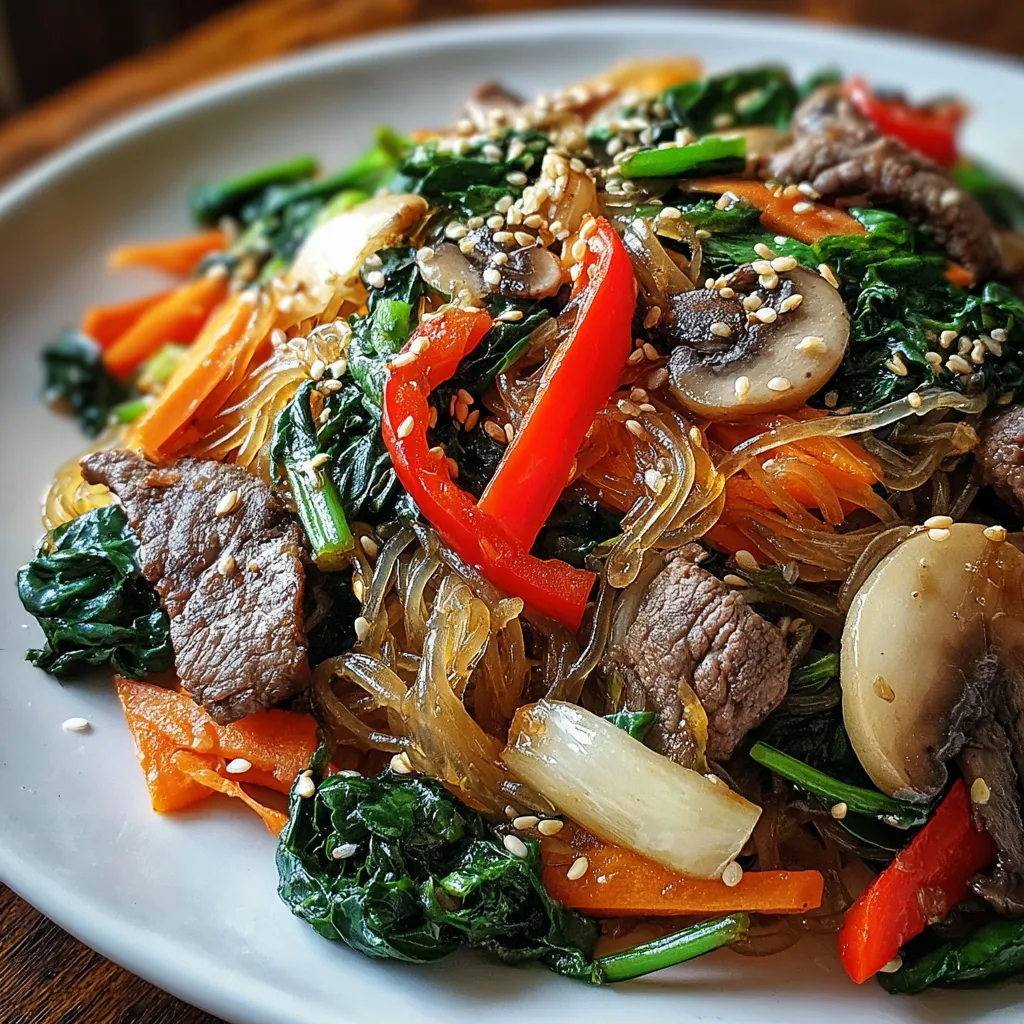

Savory Korean Stir-Fried Japchae
Description
Bright ribbons of sweet potato noodles soak up a savory soy-sesame sauce, mingling with tender beef, crunchy vegetables, and nutty sesame seeds for a warm, mouthwatering stir-fry.
Ingredients
Instructions
-
Soak sweet potato noodles in warm water for 20 minutes, then drain and set aside.
-
Slice beef sirloin into thin strips and marinate with 1 tablespoon soy sauce and black pepper for 10 minutes.
-
Julienne the carrot, thinly slice the onion, bell pepper, and shiitake mushrooms; mince the garlic.
-
Heat vegetable oil in a large skillet over medium-high heat. Add marinated beef and stir-fry until browned, about 2–3 minutes. Remove and set aside.
-
In the same skillet, add garlic, carrot, onion, mushrooms, and bell pepper. Stir-fry for 4–5 minutes until vegetables are tender-crisp.
-
Add drained noodles, cooked beef, spinach, remaining soy sauce, sugar, and sesame oil to the skillet. Toss to combine and cook for another 3–4 minutes until spinach wilts and noodles are glossy.
-
Sprinkle toasted sesame seeds over the top and give a final toss. Adjust seasoning with extra soy sauce or sesame oil if needed.
-
Transfer to a serving plate and enjoy warm.
Nutrition Facts
Serving Size 2
- Amount Per Serving
- Calories 275kcal
Note
- For a vegetarian version, omit beef and increase mushrooms or add tofu.
- Use low-sodium soy sauce to control saltiness.
- Japchae tastes best when noodles are slightly undercooked before stir-frying.
- Leftovers store well in an airtight container for up to 2 days.

