

Shrimp Pasta with Tomato and Zucchini brings together tangy tomato sauce with tender zucchini and juicy shrimp, all tossed with al dente pasta and a splash of white wine for a bright, flavorful weeknight feast. Voices of sizzling shrimp and garlic fill the kitchen as fresh tomatoes and zucchini simmer, creating a light, fragrant sauce that coats every strand of pasta in this intermediate-level dinner recipe. Ready to dive in and discover how a few simple ingredients can deliver big taste? Let’s get cooking!
Key Ingredients
Gathering the right ingredients is the first step toward this vibrant Shrimp Pasta with Tomato and Zucchini. Each one plays a key role in building layers of flavor and texture:
- 300 grams pasta: Al dente base that carries the sauce and provides the perfect hearty texture.
- 250 grams shrimp peeled and deveined: Juicy seafood that cooks quickly and adds protein and briny sweetness.
- 2 tablespoons olive oil: Medium for sautéing aromatics and coating the pasta in flavorful fat.
- 1 tablespoon butter: Adds richness and helps the shrimp and veggies develop a beautiful golden color.
- 1 small onion diced: Sweet foundation that softens in the skillet to build depth.
- 2 cloves garlic minced: Infuses the dish with aromatic punch and savory warmth.
- 2 medium zucchini sliced: Tender-crisp vegetable that soaks up flavors without getting mushy.
- 2 medium tomatoes diced: Fresh, juicy tang that creates the backbone of the sauce.
- 50 milliliters white wine: Deglazes the pan, lifts flavors, and brightens the sauce.
- 1 teaspoon red pepper flakes: Provides a gentle kick of heat to balance the sweetness.
- salt to taste: Enhances all the natural flavors and brings balance.
- black pepper to taste: Adds subtle spiciness and complexity.
- a handful fresh basil leaves chopped: Bursts of herbal freshness to finish the dish.
- 2 tablespoons grated Parmesan cheese: Savory topping that melts into the sauce for a creamy finish.
How To Make Shrimp Pasta with Tomato and Zucchini
Diving into the cooking process for Shrimp Pasta with Tomato and Zucchini is easier than it looks. From boiling pasta to sautéing shrimp and veggies, each step builds flavor and texture quickly. In about half an hour, you’ll transform simple pantry staples into a restaurant-quality meal that’s perfect for weeknight dinners or impressing guests. Let’s walk through the detailed instructions so you can master this dish with confidence.
1. Bring a large pot of salted water to a boil over high heat. Add the pasta and cook until al dente, about 8–10 minutes. Before draining, reserve 1 cup of the pasta water to adjust your sauce later, then drain the pasta thoroughly.
2. While the pasta cooks, heat the olive oil and butter in a large skillet over medium heat. Let the butter melt and foam, creating a nutty base for your aromatics.
3. Add the diced onion and sauté until translucent, stirring occasionally for about 3 minutes. Stir in the minced garlic and red pepper flakes, cooking for 1 minute more until fragrant.
4. Increase the heat to medium-high, add the shrimp to the skillet, and cook each side until the shrimp turn pink and opaque, about 2–3 minutes per side.
5. Reduce heat to medium, stir in the sliced zucchini, and cook just until tender-crisp, about 3–4 minutes, ensuring it holds its shape.
6. Pour in the diced tomatoes and white wine, bring the mixture to a simmer, and cook for 2–3 minutes to meld all the flavors together.
7. Add the drained pasta directly into the skillet, tossing to combine. Gradually pour in the reserved pasta water a little at a time until the sauce reaches your desired consistency.
8. Season with salt and black pepper to taste, then stir in the chopped basil and grated Parmesan cheese. Serve immediately for the best flavor and texture.
Serving Suggestions
Shrimp Pasta with Tomato and Zucchini shines on its own, but adding thoughtful sides and garnishes takes it to the next level. From bright citrus notes to crunchy textures, these serving ideas will complement the dish and make dinner feel extra special. Try these simple tips to elevate your meal and impress anyone at your table.
- Garnish with extra basil: Scatter fresh basil leaves on top just before serving to boost the herbal aroma and add a pop of color.
- Serve with crusty bread: A warm, crusty baguette or focaccia allows you to soak up every last drop of the flavorful sauce.
- Add a squeeze of lemon: A fresh lemon wedge on the side brightens the dish with a burst of citrusy acidity.
- Pair with a crisp salad: A simple green salad dressed in vinaigrette balances the richness and adds a refreshing crunch.
Tips For Perfect Shrimp Pasta with Tomato and Zucchini
A few insider tweaks can take this recipe from great to unforgettable. Think about swapping shapes, dialing up—or down—the heat, and playing with presentation for a meal that feels both effortless and elevated. Keep these friendly tips in mind next time you toss together your skillet for a flawless finish every time.
- Use your favorite pasta shape: Swap in linguine, penne, or fusilli for a fun twist on texture without altering cooking times.
- Adjust the heat: Tweak the red pepper flakes to suit your spice tolerance—start mild and add more as you cook.
- Leave the shrimp tails on: Keep tails intact during cooking for extra flavor; they become easy to remove while eating and make a richer broth in the pan.
- Opt for freshly grated Parmesan: Fresh cheese melts more smoothly and intensifies the savory finish compared to pre-grated varieties.
How To Store It
Storing Shrimp Pasta with Tomato and Zucchini properly ensures you can enjoy this flavorful meal later without losing any of its bright tastes and textures. Follow these tips to keep your leftovers tasting just as good as freshly made.
- Refrigerate leftovers in an airtight container: Cool the pasta completely, then store in the fridge for up to 2 days to maintain freshness.
- Store sauce and pasta separately: If possible, keep components in different containers to avoid sogginess; combine and reheat when ready to serve.
- Reheat gently on the stove: Warm in a skillet over low heat, adding a splash of reserved pasta water or broth to restore creaminess.
- Freeze for longer storage: Place cooled sauce in a freezer-safe container for up to one month; thaw overnight in the fridge and reheat slowly.
Frequently Asked Questions
Got questions about Shrimp Pasta with Tomato and Zucchini? Let’s clear up some common curiosities so you can cook with confidence:
- How long does it take to prepare and cook this Shrimp Pasta with Tomato and Zucchini?
A: From start to finish, you’re looking at about 25–30 minutes. Preparing ingredients (chopping onion, garlic, zucchini, and tomatoes) takes roughly 10 minutes, boiling the pasta 8–10 minutes, and cooking the sauce with shrimp another 8–10 minutes.
- Can I use frozen shrimp instead of fresh, and how should I handle them?
A: Yes, you can use frozen shrimp. Thaw them overnight in the refrigerator or place them in a sealed bag and immerse in cold water for about 15–20 minutes. Pat them dry with paper towels before sautéing to ensure they sear properly and don’t release excess moisture.
- What type of white wine works best in this recipe, and can I omit it?
A: A dry white wine such as Sauvignon Blanc or Pinot Grigio is ideal because its acidity brightens the sauce without overpowering the delicate shrimp flavor. If you prefer not to use wine, substitute with an equal amount of low-sodium chicken or vegetable broth and add a splash of lemon juice to maintain acidity.
- My zucchini sometimes turns mushy—how can I prevent that in this dish?
A: To keep zucchini tender-crisp, slice it about ¼ inch thick and add it after the shrimp have cooked. Sauté for only 3–4 minutes over medium heat. Avoid overcrowding the pan so excess moisture can evaporate quickly, and remove the zucchini as soon as it’s just tender to prevent overcooking.
- How do I adjust the spiciness if I don’t want it too hot?
A: The recipe calls for 1 teaspoon of red pepper flakes, which yields a moderate kick. To reduce the heat, start with ¼ teaspoon or skip the flakes entirely and serve them on the side. If you prefer more heat, gradually increase up to 1½ teaspoons, tasting as you go.
- Can I make this recipe ahead of time, and how should I store leftovers?
A: The sauce and pasta can be prepared and stored separately in airtight containers for up to 2 days in the refrigerator. Reheat gently in a skillet over low heat, adding a splash of reserved pasta water or broth to revive the sauce and prevent it from drying out.
- Are there vegetarian or gluten-free adaptations for this recipe?
A: For a vegetarian version, omit the shrimp and boost protein with sautéed chickpeas or white beans. To make it gluten-free, use your preferred gluten-free pasta and ensure the broth or wine you use is certified gluten-free. Cooking times remain largely the same, just monitor pasta doneness according to the package instructions.
What Makes This Special
This Shrimp Pasta with Tomato and Zucchini is a masterclass in simplicity and flavor—each bite balances sweet shrimp, bright tomatoes, crunchy zucchini, and a hint of white wine. The quick cooking time makes it perfect for busy weeknights, yet the vibrant colors and textures bring restaurant flair to your table. Feel free to print and save this recipe for future feasts, and don’t hesitate to drop a comment below if you have questions, variations, or just want to share how yours turned out!
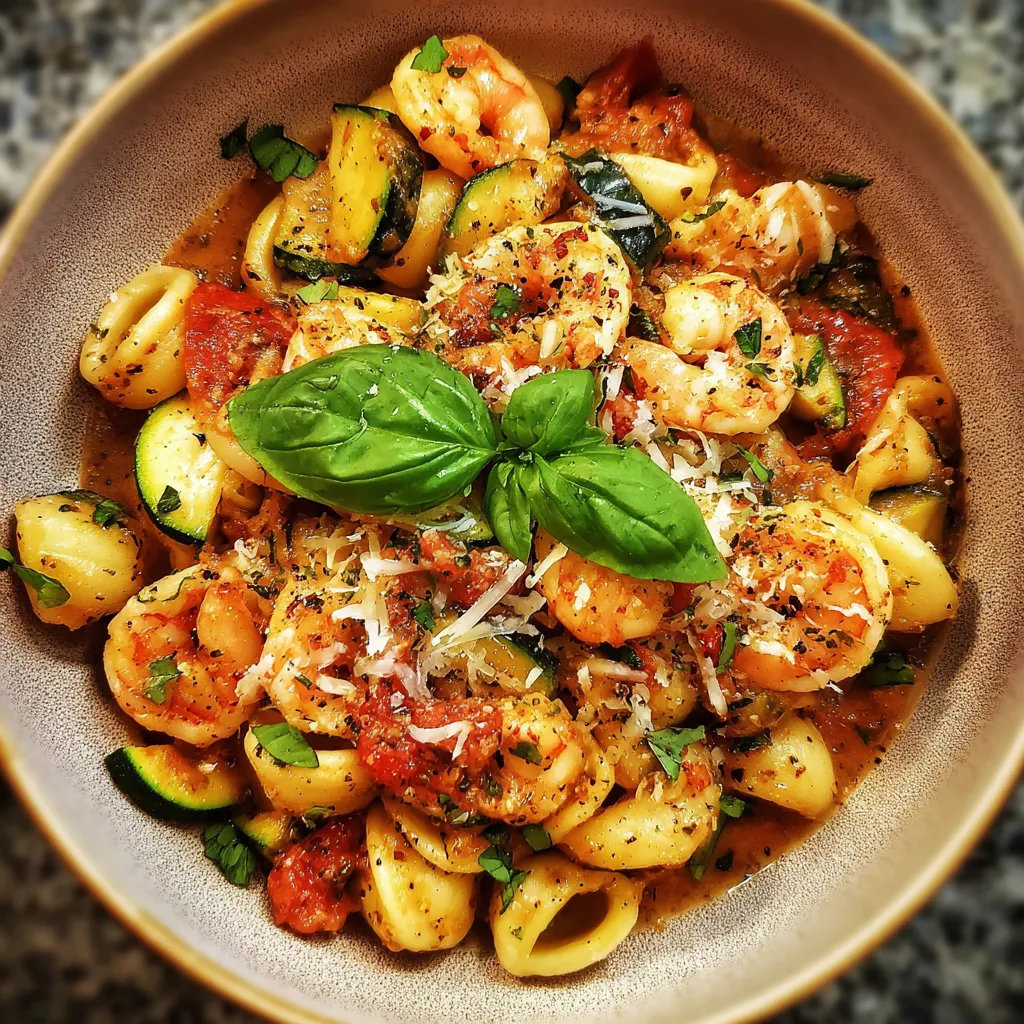

Shrimp Pasta with Tomato and Zucchini
Description
Voices of sizzling shrimp and garlic fill the kitchen as fresh tomatoes and zucchini simmer in white wine, creating a light, fragrant sauce that coats each al dente pasta strand.
Ingredients
Instructions
-
Bring a large pot of salted water to a boil and cook the pasta until al dente, about 8–10 minutes; reserve 1 cup of pasta water, then drain the pasta.
-
While the pasta cooks, heat the olive oil and butter in a large skillet over medium heat until the butter melts and begins to foam.
-
Add the diced onion and sauté until translucent, about 3 minutes, then stir in the minced garlic and red pepper flakes and cook for 1 minute more.
-
Add the shrimp to the skillet and cook until they turn pink and opaque, about 2–3 minutes per side.
-
Stir in the sliced zucchini and cook until just tender, about 3–4 minutes.
-
Pour in the diced tomatoes and white wine, bring to a simmer, and cook for 2–3 minutes to meld the flavors.
-
Add the drained pasta to the skillet, tossing to combine and adding reserved pasta water a little at a time until the sauce reaches your desired consistency.
-
Season with salt and black pepper, then stir in the chopped basil and grated Parmesan cheese before serving immediately.
Nutrition Facts
Serving Size 4
- Amount Per Serving
- Calories 125kcal
Note
- Use your favorite pasta shape, such as linguine or penne, for a different texture.
- Adjust the amount of red pepper flakes to control the level of heat.
- For a richer flavor, leave the shrimp tails on and remove them as you eat.
- Freshly grated Parmesan cheese melts better and enhances the overall taste.

